September 11, 2026 • Callum Dray • 10 min reading time • Prices verified June 6, 2026
Big-Head Buyers: How to Size an Outback Hat When Standard Charts Let You Down
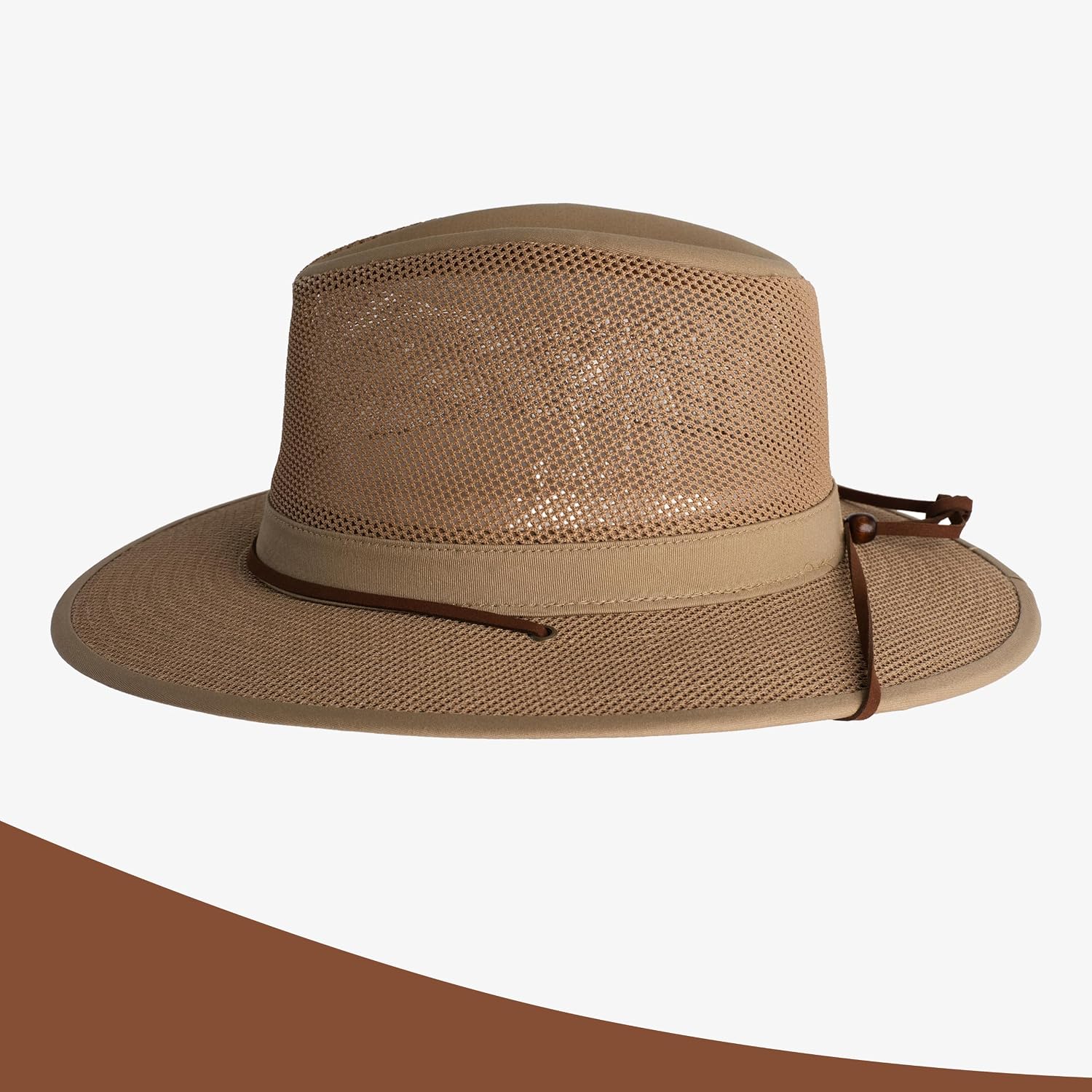
An outback hat is a broad-brimmed hat — typically with a brim measuring 3 to 5 inches wide — designed to keep serious Australian sun off your face, neck, and ears. The iconic styles include the Akubra Snowy River, the Barmah drover, and the wide-brimmed Territory shape. They’re built from fur felt (short for “fur-felt,” a dense, water-resistant material pressed from animal fur rather than woven fabric), oilskin (a waxed canvas), or wool felt. Sizing these hats isn’t like buying a baseball cap — there’s no one-size-fits-all stretch band. You’re buying a moulded shell that must match your skull circumference within a few millimetres, or it won’t sit correctly. If your head circumference runs above roughly 59 cm (23¼ inches), you’re in what the trade quietly calls “large head” territory — and the comfortable majority of standard retail stocking ends right around there. This guide is specifically for buyers in that position: how to measure accurately, which brands actually stock above a 7⅝ (US sizing), and what your real options are when the chart still leaves you stranded.
| EDITOR'S PICKStetson Hawk Wool Crushable Out… | Mid-tierScala Classico Men's Crushable… | Budget pickHenschel Hats Original Aussie B… | |
|---|---|---|---|
| Size | Small | X-Large | Large |
| Color | Black | Chocolate | Khaki |
| Material | Wool | Felt | — |
| Crushable | ✓ | ✓ | — |
| Style | Cowboy | Outback | Sun |
| Chin cord | — | — | ✓ |
| Price | $144.99 | $79.99 | $59.00 |
| See on Amazon → | See on Amazon → | See on Amazon → |
Why Standard Sizing Charts Break Down at the Large End
Most outback hat brands publish sizing charts that run from roughly 6⅞ to 7⅝ in US hat sizing, or 55 cm to 61 cm in metric. That upper boundary — 61 cm, or about 24 inches — is where many mass-production runs stop. The tooling cost of blocking an additional size (blocking means shaping the felt cone over a wooden or aluminium form) is non-trivial, and the market thins out. So brands quietly omit 7¾, 7⅞, and 8 from their standard range, even when they technically have the raw felt capacity to produce them.
The practical result for large-head buyers is a frustrating loop: you find a hat you like, check the chart, land between two sizes, order the larger one, and receive something that perches on top of your head rather than sitting on it. One owner review of the Dorfman Pacific Saguaro — which features a crushable wool-felt construction popular with travellers — describes measuring their head correctly multiple times and still landing squarely between the brand’s 7½ and 7⅝ options, with neither size giving a secure fit. That’s not user error; it’s a structural gap in the product range.
A separate but related problem affects buyers with oval or elongated head shapes. Hat sizing charts measure circumference only — the total distance around your head at the widest point, roughly a finger’s width above your ears. They say nothing about the ratio of front-to-back length versus side-to-side width. A hat blocked on a round form (called a “round oval” block in the trade) will fit a round head well at any circumference but will feel pinched front-to-back on a long oval skull at the same measurement. This is why two buyers with an identical 60 cm head can have completely different fit experiences in the same hat.
How to Measure Correctly — and What to Do With the Number
The basic measurement: Use a flexible tape measure (a soft sewing tape, not a hardware tape) and wrap it around your head approximately 2.5 cm (1 inch) above your ears, keeping it level all the way around. The tape should sit snugly but not tightly — you’re measuring bone and skin, not compressing them. Take the reading in centimetres and convert if needed: divide by π (3.14159) to get diameter, or use the brand’s conversion table directly.
Do it twice, at different times of day. Heads swell slightly in heat and after physical activity. If you’re buying a hat you intend to wear in high-UV outdoor conditions — station work, long rides, extended travel — measure in the afternoon after some activity, not first thing in the morning when your head is at its smallest.
For oval heads, measure two diameters: front-to-back (forehead to back of skull) and side-to-side (ear to ear). If your front-to-back measurement is more than about 15 mm longer than your side-to-side measurement, you have what hatters call a “long oval” head. Note this when contacting a hatter or retailer — it matters enormously for fit, especially in structured fur-felt styles that hold their block shape rigidly.
By the Numbers — Large Head Reference Points
| US Hat Size | Metric (cm) | Imperial (inches) | Typical availability |
|---|---|---|---|
| 7⅝ | 60.6 | 23⅞ | Standard upper limit for most brands |
| 7¾ | 61.9 | 24⅜ | Stocked by Akubra, Tilley; limited elsewhere |
| 7⅞ | 62.9 | 24¾ | Special order or custom only at most milliners |
| 8 + | 64+ | 25¼+ | Custom block only; contact hatter directly |
Which Brands Actually Stock Large Sizes — and What Owners Report
Akubra is the most important name here for buyers in the heritage fur-felt tier. Akubra’s published sizing documentation, available via the official akubra.com.au site, runs to 63 cm (approximately 7⅞ US) across several of their stockist lines, and the brand has historically produced 64 cm pieces on request through authorised retailers. Australian Geographic’s feature on the Akubra notes that the Kempsey factory’s hand-blocking process — where individual fur-felt hoods are shaped over wooden block forms by skilled operators — makes non-standard sizes significantly more achievable than they are in machine-blocked import hats. For a large-head buyer, this is one of the clearest cases where the premium tier genuinely earns its price: the manufacturing process itself accommodates variation.
Tilley Endurables is called out by name in owner reviews — including one 7⅞ owner who cites Tilley’s published ⅛-inch precision sizing as the specific reason they chose the brand over competitors. Tilley’s fit documentation explicitly acknowledges that customers with large or atypical heads should contact customer service directly, and the brand’s lifetime guarantee includes re-blocking if the fit changes over time. For buyers who want certainty at the large end without going fully custom, Tilley’s sizing transparency is among the best in the category. Outside Online’s hat coverage has noted Tilley’s fit documentation as a benchmark in the category.
Bigalli hats — a smaller Australian-linked maker — appear repeatedly in large-head buyer accounts. Multiple reviewers specifically cite having a large head as the reason they switched away from cheaper imported options, with one account describing years of failed purchases before finding a hat that actually sat correctly. Bigalli’s construction and sizing approach appears to accommodate head sizes that leave buyers stranded in mass-market ranges.
Henschel (particularly the Breezer line) has a positive track record among large-head buyers in the enthusiast mid-range tier. One owner with a large head reports four years of successful warm-weather use after simply knowing to order XL — the lesson being that Henschel’s XL genuinely corresponds to a large head rather than being a nominal size-up on a standard last. Heddels’ overview of fur felt construction notes that crushable and ventilated styles (like the Breezer) have more tolerance for slight fit variation than rigid blocked crowns, which helps at the margins.
Barmah canvas and leather styles tend to have more natural give than structured fur felt, and several buyers with large heads report success by sizing up one step from their measured size. However, canvas and oilskin styles that rely on drawstrings or bungee adjusters — common in bucket-hat and drover silhouettes — offer a different kind of solution: one reviewer with a 24-inch head measurement explicitly credits a bungee adjuster band (a cord-and-toggle system inside the sweatband that cinches the hat to fit) as the feature that made an otherwise-oversized hat wearable.
Can a Hat Stretcher Fix a Hat That Arrived Too Small?
This is one of the most common questions from large-head buyers who took a chance on a size and lost. The honest answer is: sometimes, within limits, and it depends heavily on material.
Fur felt does have meaningful stretch capacity, but it’s not the same as leather. Heddels’ feature on fur felt hat construction explains that fur felt is a compressed, interlocked fibre matrix — it has some elastic give, but stretching it aggressively risks distorting the crown shape or thinning the felt at stress points. Owner reports suggest that a quality hat stretcher (a wooden or aluminium expanding form you insert and leave for 24–48 hours) can realistically add about ¼ to ½ inch of circumference to a fur felt hat without damage. That’s enough to rescue a hat that arrived one size smaller than expected; it won’t save two sizes. Apply steam from a kettle to the inside of the sweatband first — warm felt stretches more safely than cold felt.
Wool felt (common in the mid-range crusher tier) is generally more forgiving than fur felt and responds well to gentle stretching. It’s also more susceptible to permanent deformation if overstretched, so the same principle applies: one size of recovery is realistic, two is risky.
Oilskin and canvas don’t meaningfully stretch at the crown; fit depends on the drawstring or adjuster system. If those are maxed out, you’re out of options without structural alteration.
The clear decision rule: if you’re between sizes, order up and plan to stretch down with sweatband foam inserts if needed — not the reverse. Shrinking a hat that’s too large is far easier than expanding one that’s too small.
Frequently Asked Questions
What is the correct way to measure your head for an outback hat if you have a large or oval head? Use a soft tape measure wrapped around your head about 2.5 cm above the ears, pulled snug but not tight. Measure twice — morning and afternoon — and use the larger number. If you suspect an oval head shape, also measure front-to-back and ear-to-ear; report both dimensions to any retailer or hatter you contact directly.
Should big-head buyers always size up or trust the brand’s chart? Trust the chart as a starting point, then cross-reference with owner reviews for that specific model. Charts are averages; if multiple large-head reviewers of a specific hat report that it runs small, weight that over the chart. When in genuine doubt, size up — stretching down is easier than stretching up.
Can a hat stretcher fix a hat that arrived one size too small? For fur felt and wool felt hats, a hat stretcher can realistically recover about ¼ to ½ inch. Apply gentle steam to the sweatband first. This works for one-size mismatches; it’s not reliable for larger gaps and risks distorting the crown shape.
Which outback hat brands reliably stock sizes above 7⅝? Akubra (through authorised Australian stockists, up to approximately 63–64 cm), Tilley (with direct customer service contact for large sizes), and Bigalli are the most consistently cited options at the large end. Henschel’s XL sizing in the Breezer line is reliable for large-head buyers in the mid-range tier.
Does fur felt stretch and relax with wear the way leather does? Not to the same degree. Fur felt has some natural break-in — a new hat will typically feel slightly snugger than the same hat after a season of wear as the sweatband softens and the felt yields marginally. But the structural stretch over time is far less pronounced than leather. Per Akubra’s published care documentation, fur felt hats hold their blocked shape for decades when stored and maintained correctly — which is the point, but it also means you shouldn’t rely on break-in to fix a genuinely too-small hat.
The bottom line for large-head buyers is this: if your head measures 61 cm or above, treat brand sizing charts as a starting point rather than a guarantee, prioritise brands with documented large-size stocking or custom-block capability, and build one hat-stretcher session of recovery margin into your plan. The hat that fits is out there — it just requires more homework than a standard-size purchase, and the premium heritage tier (Akubra in particular) is genuinely better positioned to meet you there than most mid-range mass-market options.