August 4, 2026 • Callum Dray • 11 min reading time • Prices verified June 6, 2026
Breathability Versus Weather Protection in Bush Hats: The Honest Trade-Off
If you have spent any time seriously shopping for an Australian-style bush hat — the wide-brimmed, durable kind built for sun, wind, and the occasional downpour — you have probably noticed that the hats most praised for keeping rain out are often the same ones flagged for trapping heat. That tension is not a manufacturing flaw or a marketing oversight. It is a structural reality of hat design, and understanding it is probably the single most useful thing you can do before committing to a hat you plan to wear hard for the next decade. This article walks through the main construction types — fur-felt, wool-felt, oilskin, and mesh-panel designs — and explains, in plain terms, what each one actually does to the air around your head. By the end, you will have a clear decision rule for matching construction to climate, not just to style.
| EDITOR'S PICKOutback Trading Company Unisex… | Mid-tierHenschel Hats Original Aussie B… | Budget pickDorfman Hat Co. Weathered Outba… | |
|---|---|---|---|
| Material | Cotton oilskin | — | — |
| Waterproof | ✓ | — | — |
| Ventilation | Mesh | — | — |
| Chin cord | — | ✓ | ✓ |
| Sun protection | ✓ | — | — |
| Price | $74.99 | $59.00 | $43.99 |
| See on Amazon → | See on Amazon → | See on Amazon → |
Why the Trade-Off Is Real, Not Marketing Spin
Let’s name the physics first. A hat manages your comfort through two separate mechanisms: shade (blocking solar radiation before it hits your scalp) and airflow (allowing body heat to escape from your head). The problem is that the same material density that provides structural rigidity and weather resistance also impedes airflow. A dense fur-felt crown — the kind used in a heritage Akubra, where rabbit fur is steamed, compressed, and blocked into shape — creates an insulating shell. That shell does something surprising in moderate heat: it slows the absorption of radiant heat from above, which is why owners of full-brim felt hats consistently report feeling cooler wearing them than a baseball cap at temperatures around 90°F (32°C). The felt’s insulation works both ways, and the shade from a wider brim amplifies the effect.
But here is where the trade-off bites: once ambient temperature climbs above that felt-insulation sweet spot, or once you are working at exertion levels that generate significant body heat, that same dense crown becomes a liability. Reviewers of premium crushable wool-felt designs with strong crossover appeal among Australian buyers consistently describe them as noticeably warm in summer conditions. These hats earn their reputations in cooler months, but owners are unambiguous: a solid wool-felt crown is not the hat you reach for in a Darwin January.
Heddels, in their editorial overview “Understanding Felt: From Wool to Fur,” notes that fur-felt (made from rabbit or hare fur, as opposed to wool felt) sits at the denser, more weather-resistant end of the spectrum — which is precisely why Akubra’s Fur Felt grade ratings matter so much. Higher fur-felt grades mean more tightly compressed fibres, better rain resistance, and, unavoidably, lower breathability. You are not getting cheated. You are paying for a specific performance envelope.
The Breathability Spectrum: A Construction-by-Construction Breakdown
Understanding where each major construction sits on the breathability-versus-protection axis is the core decision tool here. Rather than treating all bush hat styles as equivalent, it helps to evaluate each construction category on its own terms.
Oilskin and Waxed Cotton
Oilskin sits at the weather-protection extreme of the spectrum. Country Life, in their feature “The Working Hat: Field Notes on Oilskin and Felt,” is unambiguous: the waxed cotton construction that makes a drover hat essentially waterproof in horizontal rain also makes it one of the warmest options in the category. A well-maintained oilskin hat — re-waxed with a product like Otter Wax or the proprietary compounds sold by makers such as Kakadu Traders — will shed water impressively, but it will not let your head breathe. Owner reports on extended summer wear in oilskin are consistent: manageable in the morning, a problem by midday in genuine heat.
The honest answer to the question “can an oilskin hat be worn comfortably in Australian summer?” is: at a pinch, in a coastal breeze, if you are not working hard. For genuine summer station work or long days in 35°C-plus temperatures, it is the wrong tool.
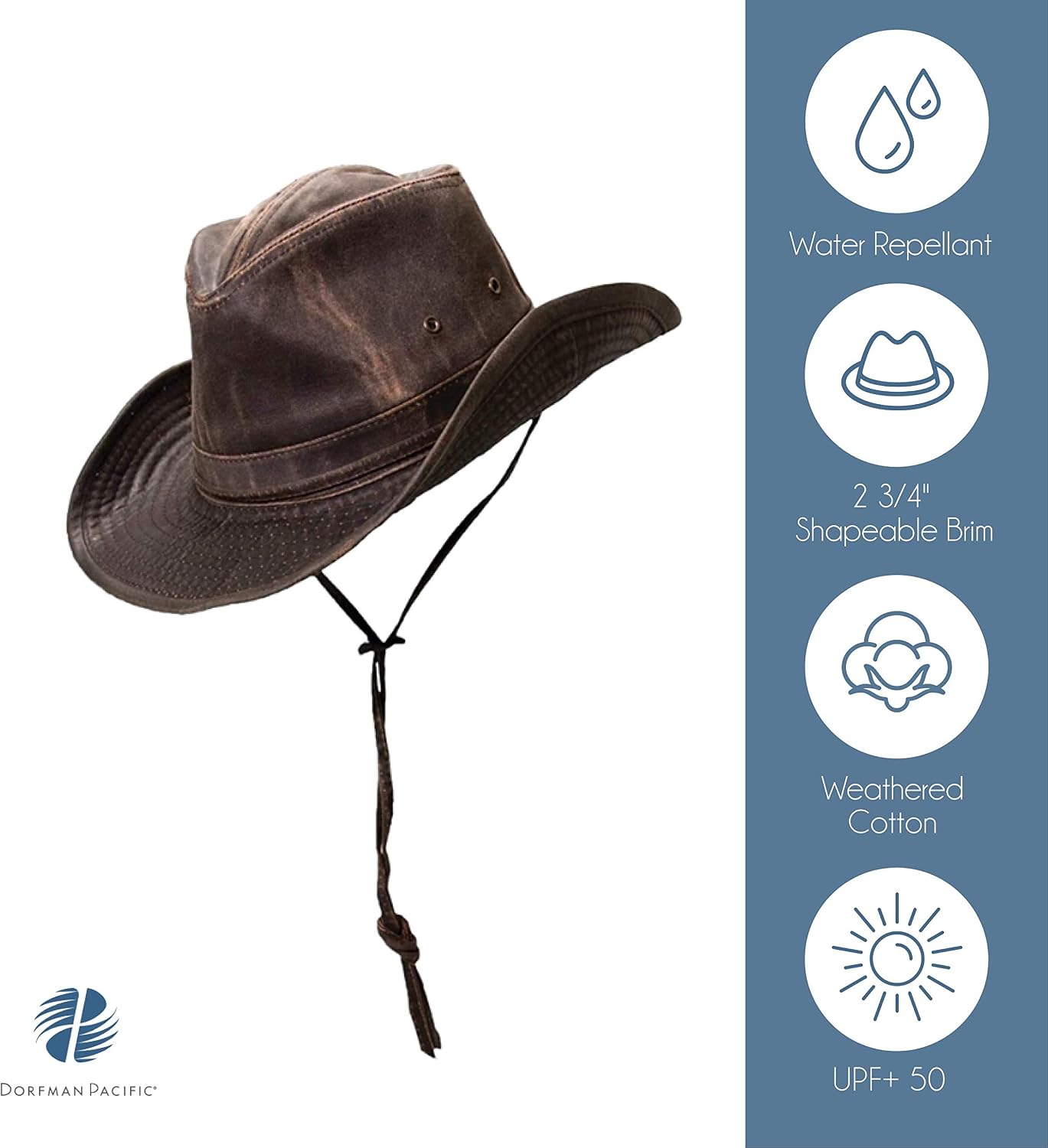
Dorfman
$43.99
In stock on Amazon
Check price on AmazonDense Fur-Felt and Wool-Felt Constructions
Dense fur-felt performs better than oilskin in breathability terms, but not dramatically. The insulation paradox — cooler than a baseball cap at moderate temperatures, warmer than a mesh hat in extreme heat — is real and worth taking seriously. The felt creates a micro-climate under the crown that can genuinely moderate temperatures in the 28–34°C range, especially when combined with a wide brim that keeps direct sun off your neck and face. Above that range, or in high humidity, the felt’s inability to wick or ventilate becomes the dominant factor.
Australian Geographic, in their editorial piece “The Akubra Story: A Century of Felt,” notes that the fur-felt grades used in heritage Akubra hats were developed specifically for the variable-but-cold conditions of inland Australian winters and the pastoral work that came with them — not for Darwin in February. Understanding that origin clarifies why felt performs the way it does: it was engineered for a different stressor than midsummer heat.
Wool-felt crushable designs — lighter and more packable than dense fur-felt — sit in a middle zone. They offer more versatility across seasons than a heritage-grade fur-felt hat, with the honest caveat that they will be a liability in genuine summer heat and should be understood as three-season tools rather than year-round solutions.
Henschel
$59.00
In stock on Amazon
Check price on AmazonMesh-Panel Hybrid Designs
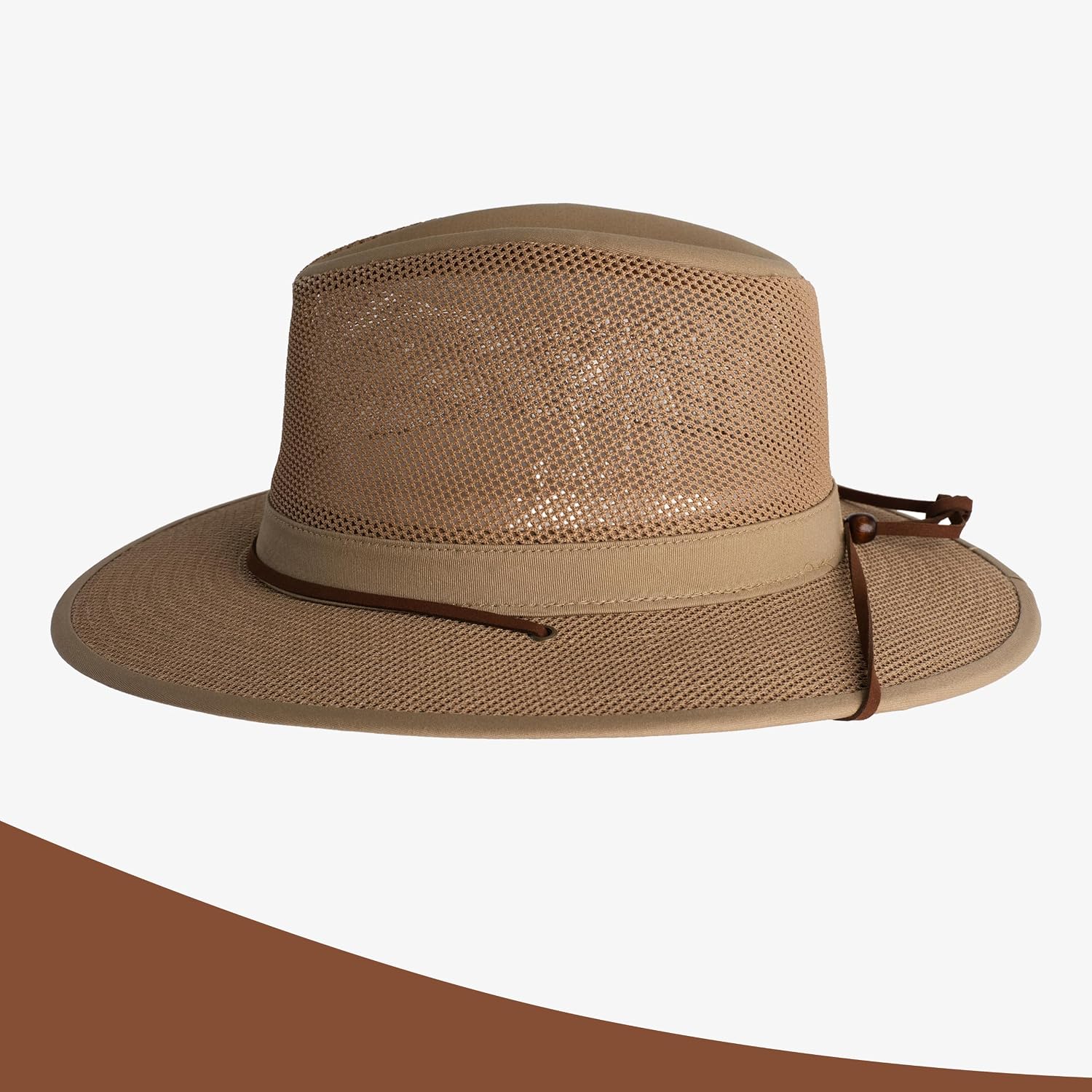
Mesh-panel hybrids — designs that pair a conventional felt or structured brim with a mesh crown insert — represent the most direct engineering answer to the breathability problem. Outside Online, in their roundup “Best Sun Hats for Hot Weather Hiking,” makes a point that applies directly to the Australian bush context: the right hat for a given environment is the one that addresses the dominant stressor. In high-UV, high-temperature Australian conditions, a mesh crown that allows active airflow while a full structural brim provides shade coverage is the strongest available compromise.
Owner reports across this construction category are consistent: buyers who tried a solid-crown hat first and then switched to a mesh hybrid typically do not go back for summer use. The Kodiak with Mesh earns strong marks in aggregated owner reviews precisely for this reason — the combination of full brim coverage and mesh-crown airflow is repeatedly described as the most capable answer for working in genuine Australian heat.
But mesh designs carry a caveat that is genuinely important for bald wearers or anyone with thinning hair: mesh hole size is a real variable affecting sun penetration, not just airflow. A coarse mesh that provides excellent ventilation may still allow enough UV through the crown to cause scalp burn. Smithsonian Magazine, in their feature “The Science of Staying Cool: Shade, Airflow, and the Human Head,” notes that radiant solar load on the scalp — not just ambient temperature — is the dominant driver of heat discomfort and UV exposure for outdoor workers. A mesh weave that admits direct radiation defeats the purpose of wearing a protective hat. If scalp protection is a priority, examine the mesh weave density specifically. A tighter mesh provides better UV protection but gives up some airflow. A coarser mesh breathes freely but requires sunscreen on the scalp regardless.
The Elias Mesh Breezer earns attention in this category because reviewers explicitly compare it against competing mesh alternatives, and the competitive claim is specific: the Elias version is reported to arrive with superior out-of-box brim geometry — the brim holds its intended curve and sun-coverage angle without needing to be re-blocked or shaped after purchase. Brim geometry matters enormously for sun coverage. A brim that droops or rolls inward after a few wears is not providing the shade coverage its width implies. Owners comparing mesh hats note this difference directly.
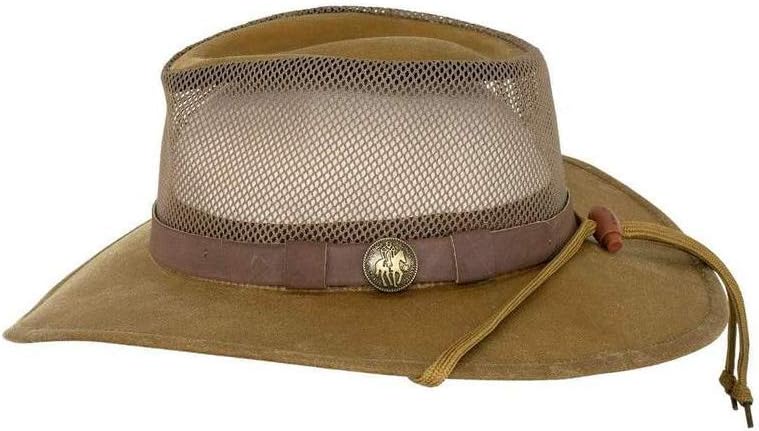
Outback
$74.99
In stock on Amazon
Check price on AmazonThe Brim Geometry Question: Does a Wider Brim Trap Heat?
This is one of the more persistent buyer misconceptions, and it is worth addressing directly. The intuitive concern is that a wide brim creates a warm pocket of still air around the face and neck, making the wearer hotter. In practice, the evidence from owner reports does not support this as a meaningful summer liability.
Smithsonian Magazine’s reporting on shade and human thermal comfort is instructive: the dominant factor in perceived heat around the face is direct solar radiation, not still air. A wide brim that eliminates that radiation source more than compensates for any minor reduction in airflow around the face. The more relevant brim variable is brim roll and stiffness.
A brim that can be snapped up on one or both sides — the classic drover configuration — allows the wearer to manage airflow and sun angle dynamically. A rigidly flat brim provides maximum shade but no adaptability. The pencil-curl brim (where the brim edge is rolled tightly upward, creating a distinctive silhouette most associated with the Snowy River shape) provides good lateral airflow but less front-and-back coverage than a flat or downward-swept brim. Understanding what your actual use case demands — overhead sun on flat terrain versus angled sun on variable terrain — should drive this brim choice before material selection does.
The Decision Framework: Matching Construction to Conditions
The core principle, drawn from Outside Online’s analysis of outdoor headwear performance, is straightforward: you cannot optimise for maximum rain resistance and maximum breathability in the same construction. The honest trade-off demands that you rank your priorities before you choose a hat.
Here is the decision rule, stated plainly:
If your primary condition is heat and UV (Australian summer, station work, extended outdoor exposure above 30°C): a mesh-crown hybrid with a full structural brim is the correct tool. Check mesh weave density if you have minimal hair cover. The Kodiak with Mesh and the Elias Mesh Breezer are the designs with the strongest owner-reported evidence for this use case. For a useful comparison point, long-term owner reports on a solid-construction canvas or felt hat consistently rate durability highly but are direct that breathability is a limitation — and some buyers still consider that trade-off worth it, which tells you that weather-resistance and durability can outweigh ventilation for certain buyers even in warm conditions.
If your primary condition is wet-cold (Southern Highlands, alpine, or coastal winter): dense fur-felt or a well-maintained oilskin is the correct tool. Accept the breathability limitation as the deliberate cost of performance in that envelope. Australian Geographic’s documentation of Akubra’s manufacturing heritage confirms that heritage fur-felt construction was purpose-built for variable-cold inland Australian winters and pastoral work — not for summer heat management.
If your conditions are genuinely mixed (travel, variable seasons, unpredictable weather): a premium wool-felt crushable gives you the most versatility across the year, with the honest caveat that it is a three-season hat and will underperform in genuine summer heat.
Frequently Asked Questions
Does a felt crown hat actually keep your head cooler than a baseball cap in summer heat? Counterintuitively, yes — up to a point. Owners report this effect consistently in the 28–34°C range. The felt creates an insulating shell that slows radiant heat absorption from above, and the wider brim eliminates the direct solar load that makes a baseball cap uncomfortable. At higher temperatures or in high humidity, the felt’s lack of ventilation becomes the dominant factor and the advantage reverses.
Why do mesh-crown hats sometimes let too much sun through for bald wearers? Mesh hole size varies significantly between designs. A coarse mesh that maximises airflow may still allow meaningful UV transmission directly through the crown. Owners with minimal hair cover report scalp burn from mesh designs with larger apertures. If scalp protection matters to you, examine mesh weave density specifically — it is not standardised across the category.
Can an oilskin hat be worn comfortably in summer or is it strictly a cold-weather piece? Strictly speaking, oilskin is a cold-weather and wet-weather construction. Owner reports on summer oilskin use are mixed: manageable in low exertion, coastal, or early-morning conditions; uncomfortable during extended work in heat above 30°C. For genuine summer outdoor use in Australian conditions, it is the wrong tool.
Does a wider brim make a hat hotter by trapping warm air around the face? The evidence from owner reports and thermal comfort research does not support this as a meaningful liability. The reduction in radiant solar load from wider brim coverage consistently outweighs any minor still-air effect. Brim rigidity and roll configuration matter more than brim width for managing airflow.
Which outback hat construction gives the best balance of sun protection and breathability for Australian summer conditions? Based on aggregated owner reviews, a mesh-crown hybrid with a full structural brim is the strongest available answer for hot-weather Australian outdoor use. It does not replicate the weather resistance of a dense felt or oilskin, but for high-UV, high-temperature conditions where breathability is the dominant concern, it is the design that owner reports consistently return to as the most capable compromise.