August 28, 2026 • Callum Dray • 11 min reading time • Prices verified June 6, 2026
Crushable and Packable Bush Hats: Which Felt and Wool Styles Survive Real Travel
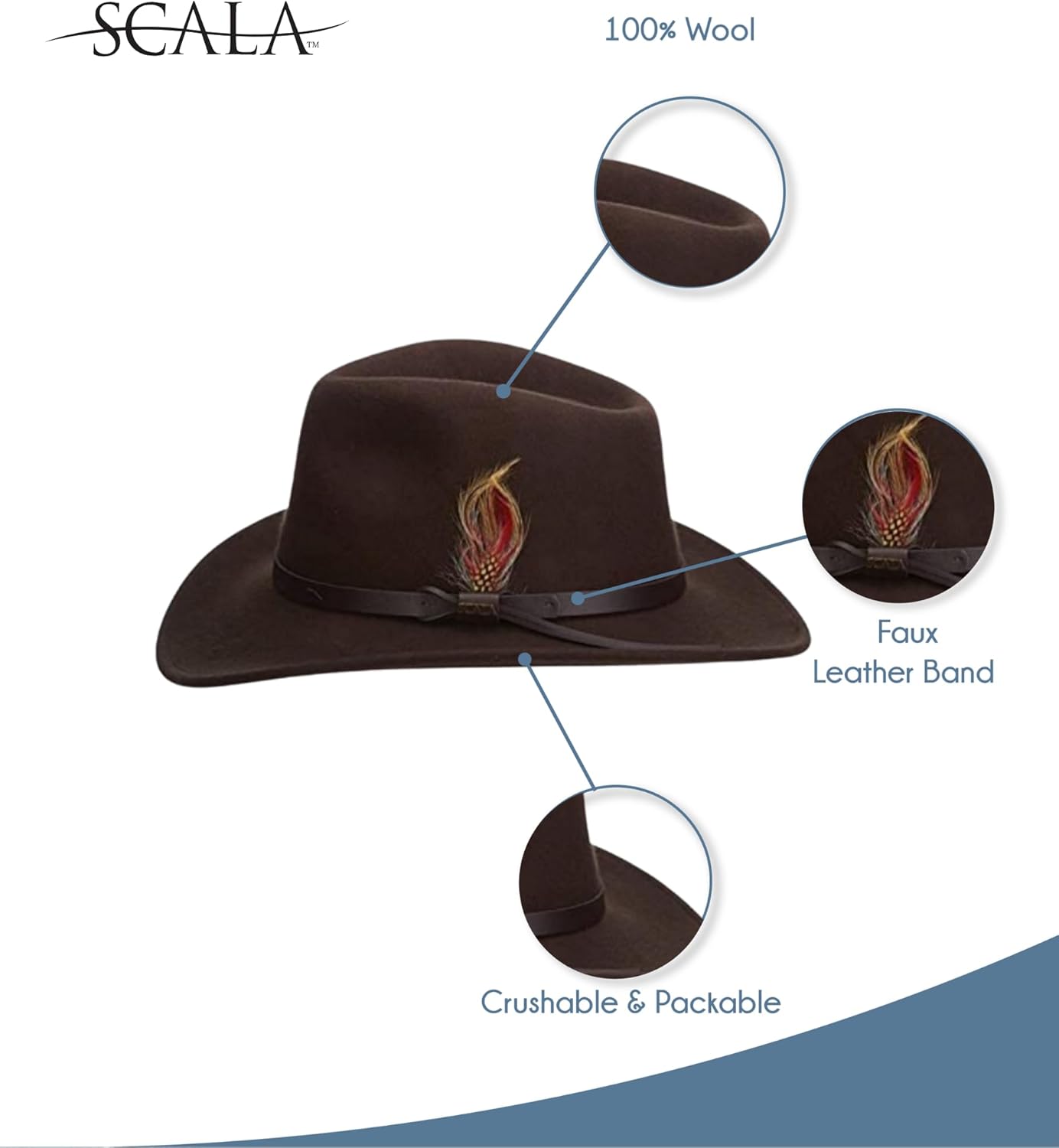
Crushable and Packable Bush Hats: Which Felt and Wool Styles Survive Real Travel
A “crushable” hat is exactly what it sounds like — one designed to be squashed, folded, rolled, or sat on during travel, then expected to spring back to something close to its original shape without a hat box or a steamer. That’s the pitch, anyway. The honest answer is that not every hat marketed with that word earns it. The difference usually comes down to material: whether the hat is made from wool felt (fibres of sheep’s wool compressed and matted together), natural-fibre weaves like papyrus or seagrass, or fur felt (the premium end, made from rabbit or hare fur with finer, denser interlocking fibres). For practical travel, most packable styles land in the wool-felt or natural-fibre category, priced between about $60 and $180 Australian retail. This article breaks down which specific styles hold up, what the tradeoffs look like when you’re choosing between them, and how long real owners say their shape retention lasts.
If you’re currently deciding between two or three candidates — hat in cart, trip approaching — this is the decision-frame you need.
What “Packable” Actually Requires of a Hat
Before comparing specific models, it’s worth being precise about what you’re asking a packable hat to do. There are three distinct scenarios, and not every hat is good at all three:
- Overhead-bin crush — the hat goes into a bag that gets compressed by other luggage for a few hours.
- Duffel storage — the hat is folded or rolled and lives in a bag for days at a time, possibly with clothing wedged around it.
- Repeated casual abuse — the hat gets sat on, rained on, spilled on, and generally mistreated across a working trip or long station stay.
A hat that handles scenario one gracefully may fail scenario three over eighteen months. A hat that thrives under scenario three may never fully recover from scenario two. Knowing which scenario is your real use case is the first decision gate.
The structural mechanism that allows recovery is fibre memory — the tendency of compressed fibres to re-expand toward their original orientation when pressure is released. Wool felt has decent fibre memory, particularly in thicker, denser constructions. Fur felt has superior fibre memory, which is one reason heritage Akubras survive decades of punishment. Natural fibres like seagrass or papyrus behave differently — they flex rather than compress, which is why they pack flat rather than recovering from a crumple.
How These Hats Compare: Five Styles Ranked by Real-World Travel Behaviour
Scala Classico — The Workhorse Standard
Across aggregated owner reviews of the Scala Classico wool felt fedora collected across verified retail platforms spanning 2022–2025, a consistent pattern emerges: this is the hat reviewers return to after trying pricier alternatives. Owners report it surviving rain, being sat on across airport seats, and taking spills during station work, with shape recovery they describe as genuinely surprising given the price tier. Several reviewers specifically note it outperforms Bailey and Stetson options they had previously owned for workhorse daily use — not in refinement, but in practical durability.
The Classico is a wool-felt fedora-style hat with a mid-width brim (the flat projecting part that shades your face and neck — typically 7–9 cm wide in this style) and a pinched crown. It is not a wide-brimmed Territory drover, so its sun coverage will not rival a full-brim outback style — but for mixed-use travel between urban environments and moderate outdoor exposure, the shape-to-durability ratio is hard to argue with.
Decision signal: If scenario three (repeated casual abuse across weeks) is your primary use case and you are not prioritising maximum UV coverage, the Scala Classico is the pragmatic pick in this tier.
Bigalli
$95.00
In stock on Amazon
Check price on AmazonWallaroo Outback Fedora — Flat-Pack Champion with a Caveat
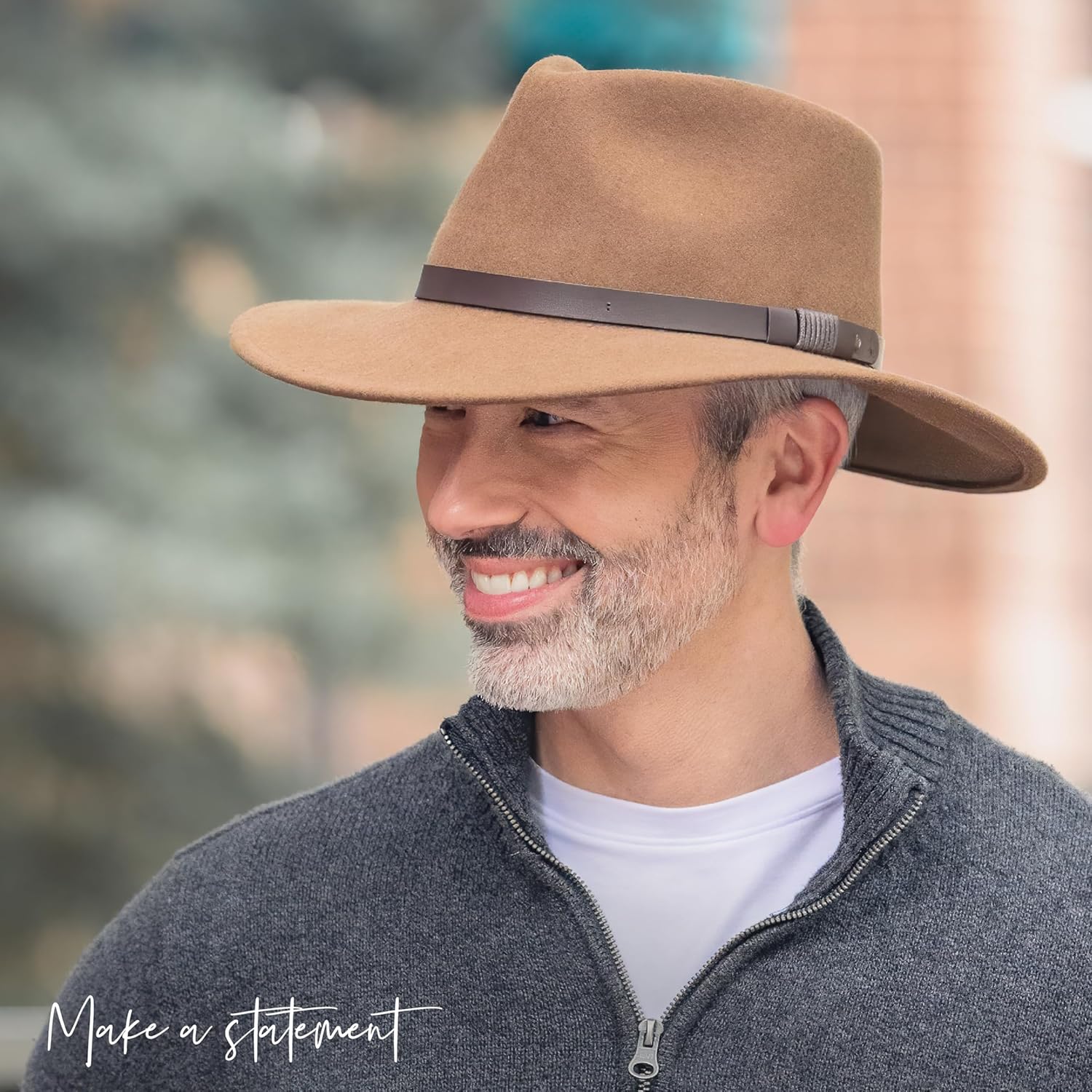
The Wallaroo Outback Fedora occupies a different niche: owners consistently praise its ability to compress completely flat for suitcase packing — genuinely flat, not just somewhat flexible. This makes it exceptional for air travel where checked luggage is tight. The material is a natural-fibre weave rather than wool felt, which is why it flexes rather than compresses: you are not fighting the fibres, you are folding between them.
The honest caveat, and Wallaroo owners are candid about this in aggregated reviews collected across verified retail platforms through 2025: after six to eight years of use, brims can develop a permanent crumple that reshaping cannot fully address. Several reviewers note they planned for a second hat eventually and were fine with that expectation. This is not a defect — it is the honest lifespan of natural-fibre construction under real use. The payoff is genuine packability and a lighter carry weight than wool felt.
Decision signal: If your primary constraint is flat suitcase packing and you are comfortable with a 6–8 year replacement cycle, the Wallaroo model earns its reputation. If you want a single hat to last fifteen-plus years without brim fatigue, look at fur-felt alternatives in the $250-plus tier.
Scala
$79.99
In stock on Amazon
Check price on AmazonBigalli Wool Felt — Strong Out-of-Box Shape, Watch the Brim
Bigalli owners in aggregated reviews collected across verified retail platforms through 2025 frequently credit the brand’s box packaging for why the hat arrives in excellent shape — the structure is protected in transit rather than shipped in a flat mailer. Once on the head, owners report good shape retention across the first year or two of regular wear. The recurring qualifier across reviews, however, is that the brim runs “a little soft” — meaning it holds its curve but does not have the stiffness of a heavily sized (starch-treated to add rigidity) premium felt.
This matters in one specific context: if you need a brim that holds a defined downward angle against strong wind, a softer brim may flutter or lift. For calm-weather walking travel or station work without sustained high winds, it is a non-issue. For exposed coastal or high-altitude use, it is worth knowing.
Decision signal: If brim stiffness under wind load is a priority, either look for a Bigalli style with a stiffer sizing treatment or weight up to a denser fur-felt construction. If it is not a priority, the shape-on-arrival quality is genuinely praised and the soft-brim qualifier is more of a feel preference than a functional defect.
Bigalli
$95.00
In stock on Amazon
Check price on AmazonB&S Premium Lewis Wool Felt — Early Indicator, One to Watch
The B&S Premium Lewis is a newer entrant in aggregated review data collected across verified retail platforms for 2024–2025, which means the long-tail evidence is not there yet. What is there: owners report strong shape retention across one year of heavy farm and animal-handling use. That is a meaningful data point — animal handling is genuinely punishing for hats, involving dust, contact with livestock, sweat, and being knocked off and retrieved repeatedly.
The one-year window is encouraging but is not the same as seven-year evidence. Treat this as a hat worth tracking rather than a proven decade-long workhorse.
Decision signal: If you need a working wool-felt hat now and the longer-term owner data on a proven model matters to you, the Scala Classico has deeper review history. If you are drawn to the Lewis specifically, one year of positive reports under hard conditions is a legitimate green flag — just go in knowing you are buying on early-stage evidence.
Scala
$79.99
In stock on Amazon
Check price on AmazonBozeman Outdoor Hat — Springback Is Real, Warmth Is Real
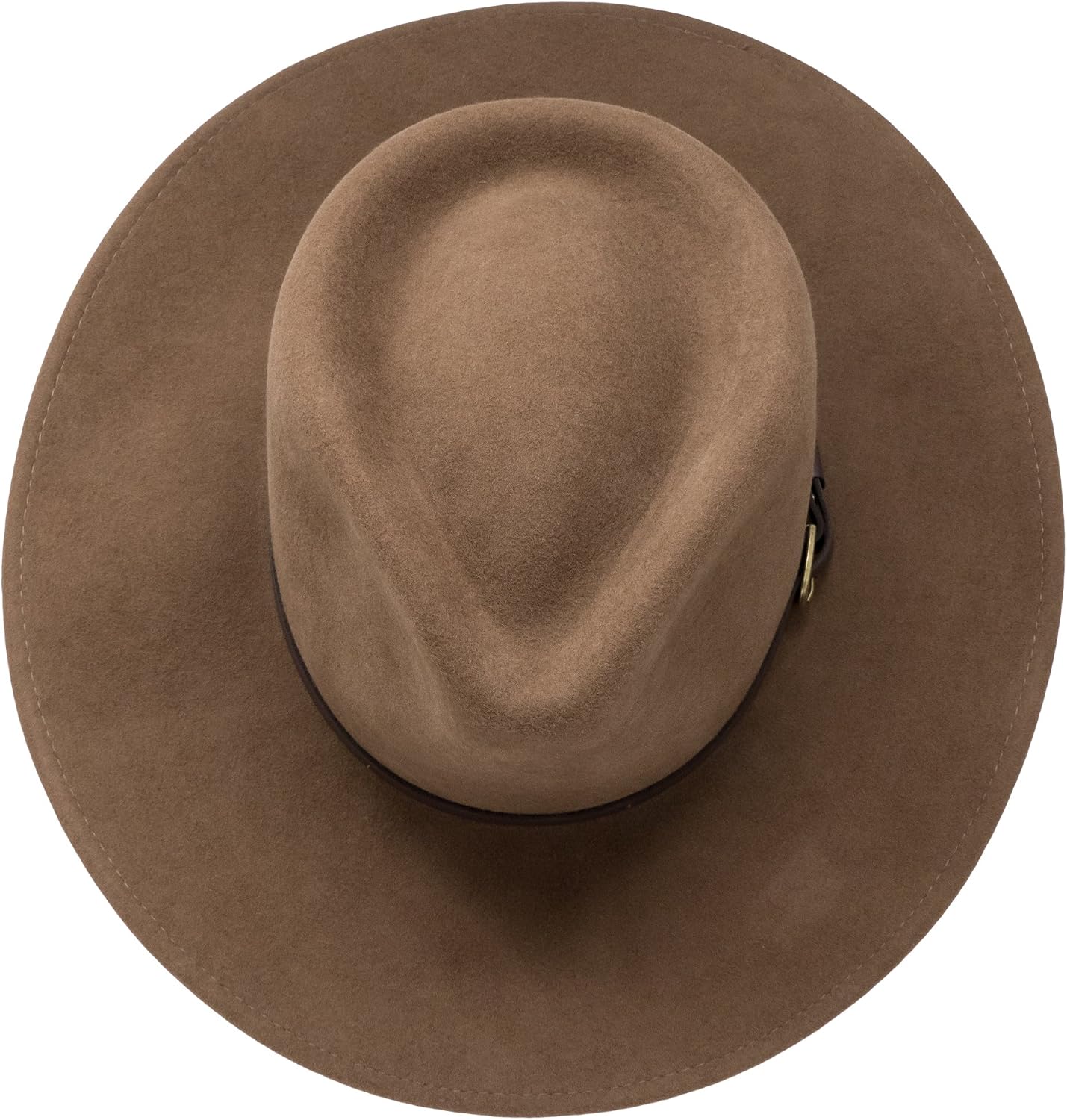
The Bozeman Outdoor Hat draws specific praise from owners for one quality: springback after rolling. Reviewers describe putting it through a backpack, pulling it out, and wearing it without re-blocking. That is genuine packability. The equal-and-opposite note that appears consistently across aggregated owner reviews collected across verified retail platforms, 2022–2025: this hat wears warm. The construction density that gives it structural recovery also traps heat.
For travel to alpine destinations, southern Australia in winter, or high-altitude environments, warmth is neutral-to-positive. For Queensland in October, northern Territory work, or any high-UV hot-climate travel, warmth becomes a real comfort problem over a full day.
Decision signal: If you are travelling to warm climates, the Bozeman’s warmth is the tradeoff you need to price in explicitly. If your travel context is cool-to-cold, the springback quality makes it one of the stronger packable performers in the field.
B&S
$96.95
In stock on Amazon
Check price on AmazonAt a Glance: Shape Retention by Style
| Hat | Construction | Flat-pack? | Est. Shape Lifespan | Brim Character | Tier |
|---|---|---|---|---|---|
| Scala Classico | Wool felt | No — springback | 10+ years (owner reports) | Firm, holds curl | Bigalli — $95.00 |
| Wallaroo Outback Fedora | Natural fibre weave | Yes — folds flat | 6–8 years before brim fatigue | Flexible, not stiff | Scala — $79.99 |
| Bigalli wool felt | Wool felt | Partial — crushable | 2–5 years (limited data) | Soft — flagged repeatedly | Bigalli — $95.00 |
| B&S Premium Lewis | Wool felt | Partial — crushable | 1 year confirmed, longer TBD | Firm (early reports) | Scala — $79.99 |
| Bozeman Outdoor Hat | Dense wool felt | Yes — rolls and springs | Strong (limited long-term data) | Stiff, structured | B&S — $96.95 |
Frequently Asked Questions
Will a wool-felt hat truly recover after being stuffed in an overhead bin?
In most cases, yes — with caveats. A quality wool-felt hat with good fibre density will recover its general crown shape within an hour of being out of compression, especially if you reshape it with your hands while it is slightly warm. The brim is more vulnerable than the crown: a brim that takes a sharp crease in transit may need light steaming (holding it briefly over a hot shower, not a direct iron) to relax the fold. Owner reports on the Scala Classico and Bozeman specifically describe this recovery happening without intervention. The key variable is compression duration: two hours in a bin is recoverable; two weeks folded into a packed bag is a harder ask for any wool felt.
How do natural-fibre hats compare to wool felt for long-term crush recovery?
They operate on different principles. Natural-fibre hats flex and return — they are not compressing fibres, they are folding a weave structure that has inherent spring. Short-term recovery (hours to days) is often better than wool felt. Long-term resilience across years is lower: the woven structure develops permanent flex points over time, which is why Wallaroo owners report brim crumpling after six to eight years. Wool felt, particularly in denser constructions, holds its shape longer under repeated compression because the interlocked fibre mat is harder to permanently deform.
Is a slightly soft brim a deal-breaker for sun coverage or just a feel preference?
Mostly a feel preference — unless you are in high-wind conditions or need a tightly defined downward angle for targeted sun coverage. A soft brim still provides the same projected shade as a stiff one when you are standing still or moving in low wind. Where stiffness matters is wind resistance: a softer brim will lift in sustained wind, reducing coverage at exactly the moment sun intensity and wind often co-occur (open country, coastal areas). If your travel context includes those environments regularly, brim stiffness is a functional consideration. If you are in sheltered environments or urban-to-outdoor mixed use, it is genuinely just feel.
How many years before a packable hat’s brim permanently loses its shape?
Based on aggregated owner reports collected across verified retail platforms, the honest range is:
- Natural-fibre weaves (Wallaroo-style): 6–8 years before permanent brim crumple under regular use
- Wool felt, standard density: 8–12 years before brim fatigue becomes irreversible without professional reblocking
- Dense wool felt or fur felt (premium tier): 15-plus years with reasonable care, sometimes longer
These figures assume regular wear, not storage. A hat stored in a cool, dry environment without compression will preserve its shape considerably longer. The brim almost always fatigues before the crown — the crown’s depth and curve are supported by the hat’s own structure, while the brim is cantilevered and takes repeated contact with hands, bags, and surfaces.
The Decision Rule
If this is your call, here is the frame:
- Overhead-bin travel, warm climate, wide sun coverage needed: Wallaroo natural-fibre weave for packability — accept the 6–8 year lifespan — or weight up to a fur-felt premium style that packs less easily but lasts decades.
- Repeated daily abuse, mixed climate, decade-plus durability: Scala Classico is the pragmatic answer across aggregated evidence. The springback is genuine and the workhorse reputation is well-earned.
- Cool-to-cold travel, rolling or backpack packing: Bozeman Outdoor Hat for its documented springback, factoring warmth as a feature rather than a bug.
- Farm or station work, early budget: B&S Premium Lewis is a reasonable bet on early-stage evidence, with the caveat that you are buying on one year of data, not ten.
- Brim softness is a concern: Bigalli is a quality hat with well-documented shape on arrival, but if you need a stiff brim under wind load, the soft-brim qualifier that appears repeatedly in owner reviews is a real signal, not noise.
The hat that survives real travel is not necessarily the one with the most impressive spec — it is the one whose failure mode matches the scenario you are actually in.