September 10, 2026 • Callum Dray • 12 min reading time • Prices verified June 6, 2026
The Everyday Crushable Hat: Wool Felt Workhorses That Survive Real Abuse
The Everyday Crushable Hat: Wool Felt Workhorses That Survive Real Abuse
There’s a category of hat that doesn’t get nearly enough editorial respect: the crushable wool felt. Not the fur-felt showpiece you store brim-up in a cedar-lined box, and not the canvas knockabout you’d grab for a beach walk — but the hardworking middle ground. A wool felt hat is made from compressed sheep’s wool fibres, as opposed to premium fur felt, which uses rabbit or hare underfur. “Crushable” simply means the construction tolerates being folded, packed, sat on, or jammed into an overhead locker without permanently losing its shape. For buyers who need a hat that performs in real conditions — station work, equestrian use, long-haul travel, high-UV outdoor environments — this category deserves the same scrutiny we’d apply to any serious gear purchase. This article names the specific tradeoffs between four frequently reviewed options, shows you where the patterns in owner reports diverge, and ends with a clear decision rule so you can match hat to use case with confidence.
| EDITOR'S PICKStetson Gallatin Outdoor Hat Sa… | Mid-tierB&S Premium Lewis - Wide Brim F… | Budget pickScala Classico Men's Crushable… | |
|---|---|---|---|
| Material | — | 100% Wool Felt | Felt |
| Waterproof | — | Water Resistant | — |
| Crushable | — | — | ✓ |
| Brim Type | — | Wide | — |
| Band | — | Leather | — |
| Style | Outdoor | Fedora | Outback |
| Price | $144.99 | $96.95 | $79.99 |
| See on Amazon → | See on Amazon → | See on Amazon → |
What “Crushable” Actually Promises — and What It Doesn’t
The word crushable is used loosely by manufacturers, which is the first thing to understand before reading any spec sheet or owner review. At its most honest, it describes a hat whose felt has been processed and blocked — shaped under steam and pressure — in a way that allows the fibres to spring back after compression. What it does not guarantee is unlimited shape recovery over years of heavy use, nor does it tell you anything useful about brim stiffness, sweat resistance, or thermal load.
Heddels, in their felt hat construction guide titled “The Felt Hat Guide: Materials, Construction, and Care,” draws a useful distinction here: the quality of shape recovery in wool felt depends heavily on the wool grade (finer micron counts spring back more reliably), the density of the felt itself, and whether the hat has been properly finished at the brim edge. A hat described as crushable by its maker might be a tightly felted, brim-finished piece that genuinely bounces back — or it might be a loosely constructed hat that’s soft simply because the felt is thin. Owner reviews are where this distinction surfaces most clearly, and the four hats below have generated enough real-world feedback to make meaningful comparisons.
By the numbers: wool felt crushable category at a glance
| Hat | Crown style | Brim finish | Hard-use strength | Notable limitation |
|---|---|---|---|---|
| Scala Classico | Pinch-front fedora | Bound edge | Shape retention after repeated crushing | Narrow brim for UV coverage |
| Stetson Hawk | Open-road / Western | Bound edge | Resilient felt; accurate sizing | Runs warm in summer |
| B&S Premium Lewis | Broad-brim drover | Stiffened edge | Farm and animal-contact durability | Less widely distributed |
| Stetson Gallatin | Pinch-front | Bound edge | Overall construction quality | Brim arrives flat |
Hat by Hat: Where Owner Reports Actually Diverge
The Scala Classico: The Benchmark for “Don’t Worry About It”
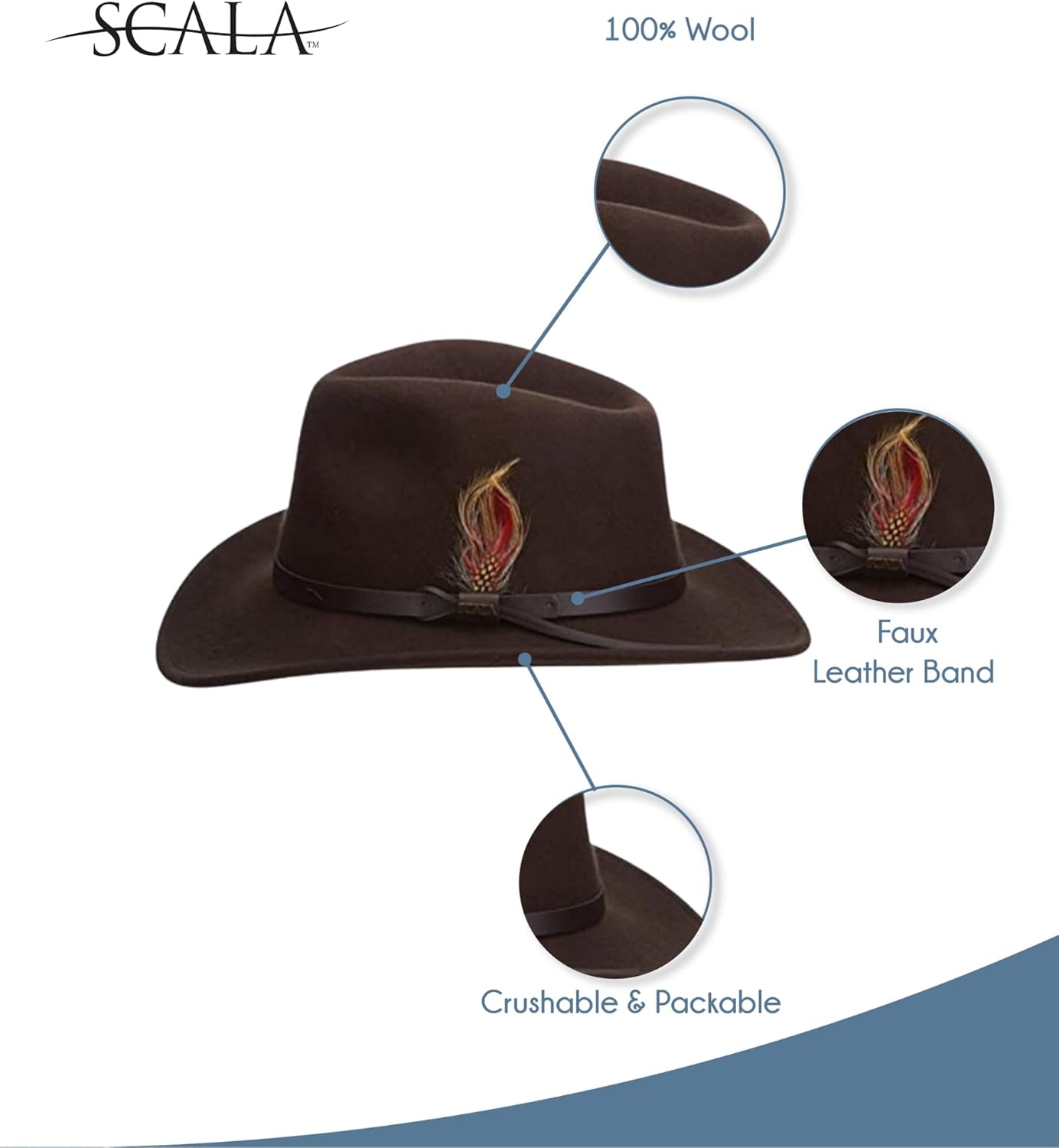
If there’s a hat in this category that has genuinely earned the descriptor everyday hat you don’t have to worry about, it’s the Scala Classico. Aggregated owner reviews consistently return to the same cluster of behaviours: crushed in a bag, sat on accidentally, caught in rain, and restored to shape by hand in under a minute. One pattern that stands out across reviews is the explicit comparison owners make to other hats they own — Bailey and Stetson pieces they treat with more care — positioning the Scala as the hat they reach for precisely because the stakes feel lower. That’s a meaningful endorsement from people who clearly know what a considered hat purchase looks like.
The felt on the Classico is a medium-grade wool felt — not the fine merino construction you’d find in a premium crushable touring hat, but dense enough that reviewers report no thinning or deformation after extended use. The brim geometry is a classic fedora profile: roughly 2.5 inches, moderately stiff, with a bound edge — a strip of ribbon or leather stitched around the brim perimeter to seal the felt and reinforce the edge. Country Life UK, in their working hat guide “How to Choose a Working Hat That Lasts,” notes that bound-edge brims hold their profile better over time than raw-edge cuts, which aligns closely with what Classico owners report.
The tradeoff to name explicitly: The Classico’s strength is low-maintenance resilience. Its limitation is that it’s a fedora silhouette — not a drover brim, not a wide-brim Territory shape. If you need serious sun coverage across the back of your neck and ears, this hat’s brim geometry is not optimised for that. It’s the right choice if wearability and pack-ability are your primary criteria and UV coverage is secondary.
Scala
$79.99
In stock on Amazon
Check price on AmazonThe Stetson Hawk: Resilient, But Watch the Temperature
The Stetson Hawk earns consistent praise in two areas that matter for the working buyer: the felt holds up well under regular outdoor use, and the sizing runs true — notably so for larger head sizes, which is a recurring pain point in hat purchasing that many reviewers flag explicitly. One reviewer’s note that the Hawk is “sometimes too hot for a summer hat” is worth taking seriously and unpacking honestly rather than dismissing.
Stetson’s published construction specs for the Hawk describe a ProTek wool felt — a proprietary process the company describes as producing a tighter, more moisture-resistant fibre matrix than standard wool felt. Outside Online, in their roundup “Best Sun Hats for Outdoor Workers,” notes that denser felt construction creates a warmer wearing environment because it reduces air permeability through the crown. This is not a defect; it’s a physics tradeoff. The same density that makes the felt resilient and water-resistant also traps more heat. For station work in Australian summers or extended equestrian use in high-UV conditions, this matters: the Hawk is a better autumn-through-spring hat than a midsummer workhorse.
The tradeoff to name explicitly: If you sweat heavily during physical work, the Hawk’s thermal profile is a genuine consideration, not a minor footnote. Pair it with a moisture-wicking sweatband or expect to retire it to shoulder-season use. If you’re buying one hat for all-year station work in Queensland or the Northern Territory, the thermal limitation is a real one.
B&S
$96.95
In stock on Amazon
Check price on AmazonThe B&S Premium Lewis: The Farm-Use Benchmark
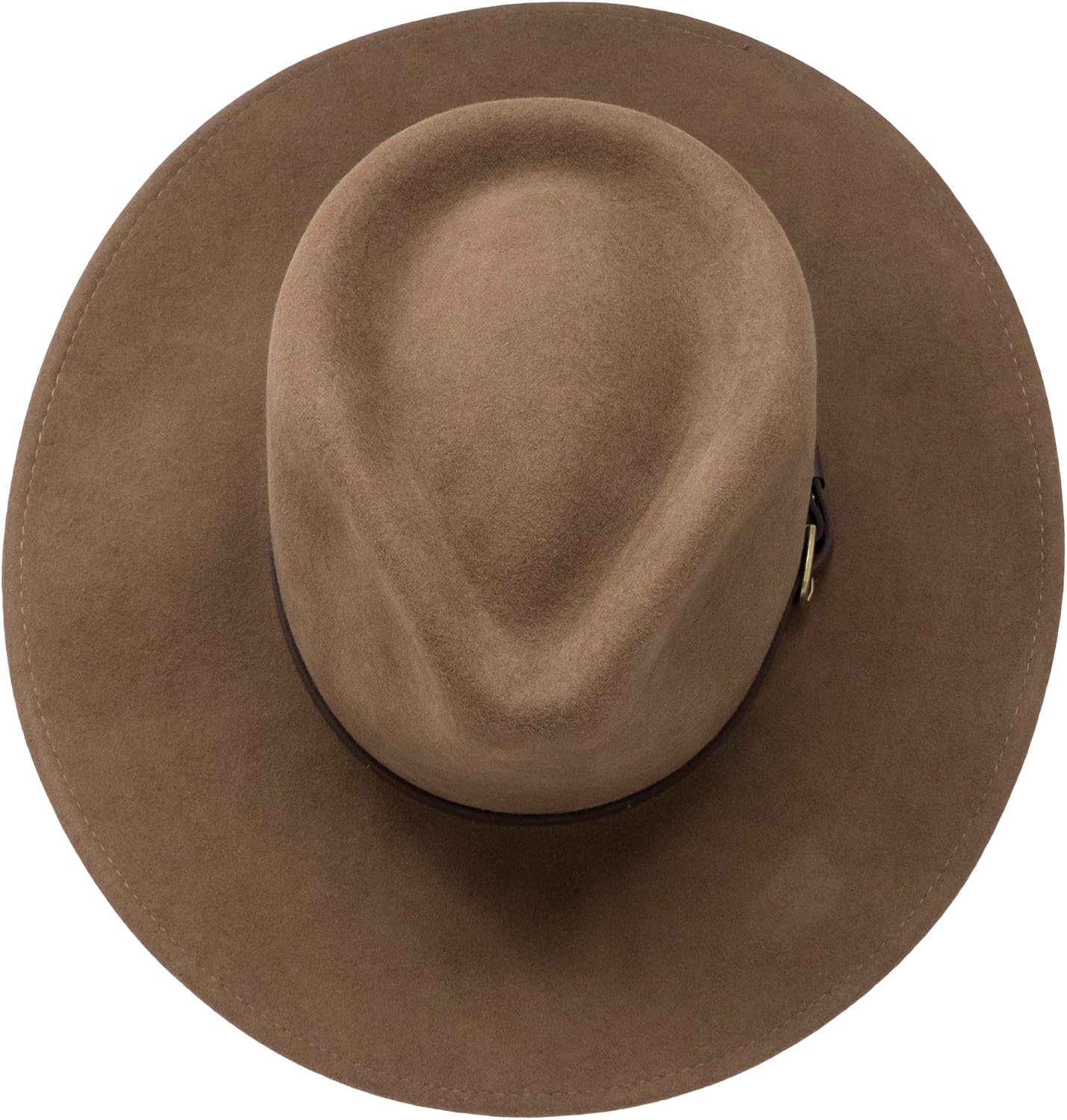
The B&S Premium Lewis generates a smaller volume of reviews than the Stetson products — it’s less widely distributed — but the reviews it does attract describe an unusually demanding real-world test: a full year of farm use that includes heavy sweating, animal contact, and what one owner described simply as “the kind of treatment that would ruin most hats.” No structural failure. That’s a meaningful data point.
The Lewis is a broader-brimmed silhouette than the Classico or Hawk, sitting closer to the drover style that Australian Geographic, in their feature “Bush Hat Culture and the Working Drover,” describes as optimised for open-country, high-UV work. The wider brim provides meaningfully better sun coverage across the ears and the back of the neck — the areas most at risk during ground-level outdoor work. The felt is described in owner reviews as stiffer than the Scala Classico, which trades some of the pack-flat convenience for structural rigidity that holds the brim profile under repeated wetting and drying cycles.
The tradeoff to name explicitly: The Lewis is the strongest real-world candidate for genuine farm or station use based on what owner reports document. Its limitation is distribution — it’s harder to source through authorised retailers, and the smaller review pool means there’s less aggregated data to draw from compared to Stetson’s wider review base. If you can source it through a legitimate retailer and the drover brim silhouette suits your use case, the farm-use evidence is the best in this comparison.
Stetson
$144.99
In stock on Amazon
Check price on AmazonThe Stetson Gallatin: Understand the Brim Before You Buy
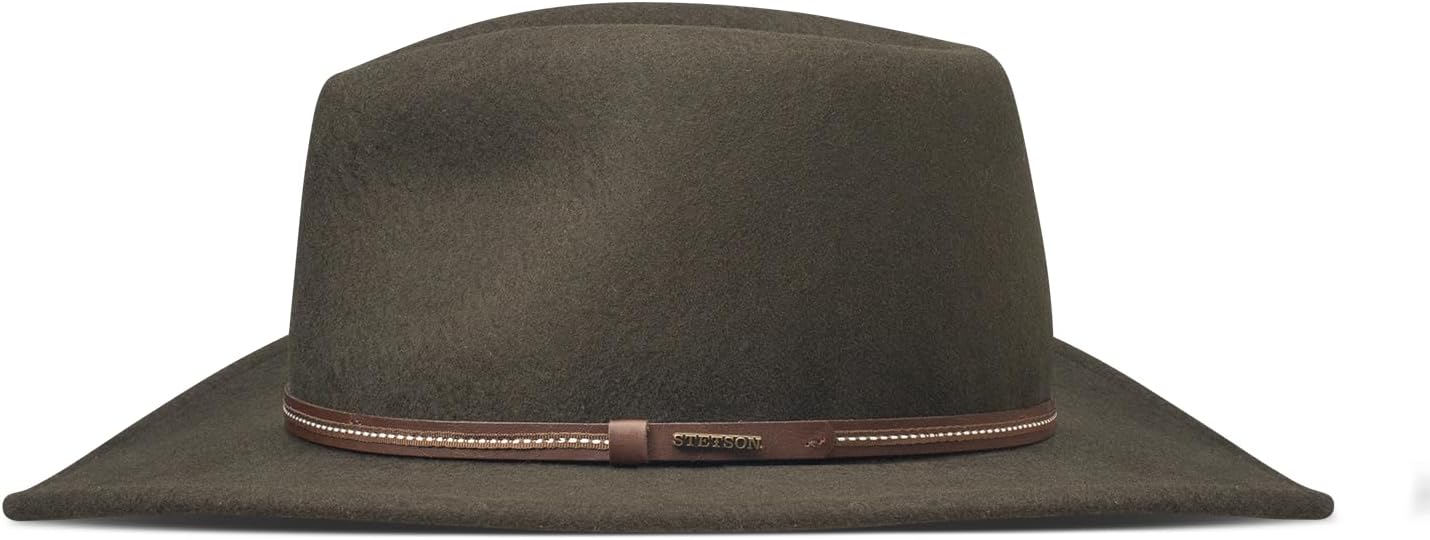
The Stetson Gallatin draws one recurring complaint that deserves direct treatment: the brim arrives flat and requires manual shaping before it wears well. Multiple owner reviews describe this, and it’s worth framing correctly — this is a production-finishing characteristic, not a manufacturing defect. Some manufacturers block the crown to final shape but leave the brim in a flat or minimally curled state, expecting the buyer or a hatter to finish it. Heddels, in “The Felt Hat Guide: Materials, Construction, and Care,” notes this is common practice at certain price points and with certain hat styles, particularly those intended to be worn with custom brim curvature.
The practical implication: if you buy the Gallatin and the brim arrives flat, steaming it and rolling it by hand to your preferred curl is the correct response — not a return. The felt is responsive to steam reshaping, which is actually a positive indicator of wool felt quality. The limitation is that buyers who don’t know this going in feel they’ve received an unfinished product, which explains the review pattern. Overall construction quality in the Gallatin reviews is positive — the felt holds up well and the crown shaping is consistent. The Gallatin rewards the buyer who knows what they’re getting.
The tradeoff to name explicitly: The Gallatin is a good hat that requires one extra step to wear well. If you’re not prepared to steam and curl the brim yourself, or take it to a hatter for finishing, buy the Hawk instead and get a shaped hat out of the box.
B&S
$96.95
In stock on Amazon
Check price on AmazonThe Bigalli Footnote: When Presentation Outpaces Durability
Bigalli hats consistently attract praise for packaging and out-of-box presentation — reviewers note the unboxing experience feels premium. What the same reviews flag is that the brim is “a little soft” by the standard set by the Stetson and B&S pieces. Country Life UK, in their working hat guide “How to Choose a Working Hat That Lasts,” describes brim edge stiffening as the single most predictive factor in brim longevity for hats used in agricultural and equestrian environments. A soft brim that performs adequately for weekend wear and travel will deform under sustained wetting-and-drying cycles or heavy physical work. If your use case is occasional travel or smart-casual wear, the softness is a style characteristic, not a problem. If your use case resembles what B&S Lewis owners describe, the Bigalli’s brim construction is not rated for that load.
Frequently Asked Questions
Can a crushable wool felt hat genuinely recover its shape after being sat on repeatedly, or does it eventually lose memory?
Owner reports suggest quality wool felt does recover reliably from occasional crushing — the Scala Classico reviews are the strongest evidence of this. What degrades over years is the felt’s fibre density: repeated compression cycles, particularly combined with moisture and heat, will eventually reduce the hat’s spring-back response. Consumer Reports, in their hat durability overview “Hat Durability and Material Ratings Overview,” notes that storage matters even for crushable hats — resting them on a flat surface brim-down rather than crushed flat between uses extends the felt’s shape memory significantly.
How do wool felt hats from Scala, Stetson, and B&S compare for users who sweat heavily during physical work?
The B&S Premium Lewis has the strongest documented performance under sustained sweat and physical work, based on owner-reported farm use. The Scala Classico handles incidental moisture well. The Stetson Hawk’s denser ProTek felt offers good moisture resistance but creates a warmer wearing environment — heavy sweaters in high-temperature conditions should factor that in. None of these hats include a moisture-wicking interior sweatband as standard; adding an aftermarket sweatband liner is worth considering for heavy-use buyers across all three.
Is a soft brim a structural weakness or just a style preference — when does it become a problem?
It depends entirely on use case. A softer brim is a reasonable style choice for travel and casual wear; it allows the hat to pack more easily and sits comfortably without a rigid edge. It becomes a structural limitation when the hat is regularly wetted and dried through rain, sweat, or irrigation contact, because the brim edge loses its profile faster without a stiffened foundation. Country Life UK, in “How to Choose a Working Hat That Lasts,” describes brim edge stiffening as the single most predictive factor in longevity for hats used in agricultural and equestrian settings.
What should a buyer do when their wool felt hat arrives with a flat or unformed brim?
Steam the brim using a clothes steamer or kettle steam, keeping hands clear of direct steam, then curl and hold the brim to your preferred shape while the felt is warm. Release when the felt has cooled — it will hold the new profile. This is standard hat-finishing practice and works reliably on quality wool felt. Heddels, in “The Felt Hat Guide: Materials, Construction, and Care,” confirms that felt responsive to steam reshaping is generally an indicator of adequate fibre density, not a fault. If the brim reverts or won’t hold a curl, a hatter can apply a stiffening compound to the brim underside to correct it.
Does wool felt provide meaningful water resistance or just light drizzle protection?
Wool felt’s natural lanolin content — the waxy coating inherent to sheep’s wool fibres — provides genuine light-to-moderate rain resistance, meaningfully better than canvas or cotton, but not waterproof. Heddels, in “The Felt Hat Guide: Materials, Construction, and Care,” describes this as shower-resistant: sustained heavy rain will eventually saturate the felt and cause temporary brim softening. Drying naturally and reshaping while slightly damp restores the profile. Applying a water-repellent spray formulated for wool extends the protection. None of these hats are rated for extended rain exposure without periodic retreatment.
The Decision Rule
If your primary need is a low-maintenance everyday hat you can pack, crush, and restore without thinking about it: the Scala Classico is the one to buy. The owner evidence is deep, the shape recovery is well-documented, and the fedora silhouette works across casual and smart-casual contexts.
If you’re buying for genuine outdoor work — station, farm, equestrian — and need the widest brim coverage and the strongest durability evidence: the B&S Premium Lewis is the farm-use benchmark this comparison produces. Source it carefully through authorised channels.
If sizing accuracy for larger heads matters and you’re using the hat in shoulder-season or cooler conditions: the Stetson Hawk earns its reviews, with the explicit caveat that its thermal profile makes it a poor choice for midsummer hard use.
If you’re comfortable doing one round of brim shaping on arrival and want a Stetson construction at a mid-range price: the Gallatin delivers, once you know what to expect. Steam the brim, shape it yourself, and the complaints in the reviews become a non-issue.
The crushable wool felt category rewards the buyer who understands what the hat is optimised for. None of these hats do everything — but each does its specific job well.