June 20, 2026 • Callum Dray • 10 min reading time • Prices verified June 6, 2026
Hat Care Products Under Scrutiny: Foam Cleaners, Chin Cords, and What Actually Works
If you’ve just paid $300 for a quality felt hat — the kind made from rabbit or hare fur pressed and steamed into a dense, water-resistant shell — the last thing you want is to ruin it with the wrong cleaning product. Felt is not fabric in the usual sense. It’s a compressed mat of interlocked fibres, and it responds to moisture, oils, and abrasion in ways that cotton or linen simply don’t. A foam cleaner, for instance, works by suspending the dirt in a foam layer and drawing it to the surface as it dries — a process that can look alarming until you understand what’s actually happening. A chin cord (the strap that runs under your jaw to keep the hat in wind or on horseback) sounds like a simple accessory but has real construction variables that determine whether it lasts a season or a decade. And a hat stretcher — a wooden or metal device inserted into the crown to hold or gently widen the hat’s internal circumference — is one of those tools that once you own one, you wonder how you managed without it. This article works through each product category in turn: what the owner record shows, where the products genuinely succeed, and where the cracks show up in real-world use.
Foam Cleaners: The Bickmore Evidence, Honestly Assessed
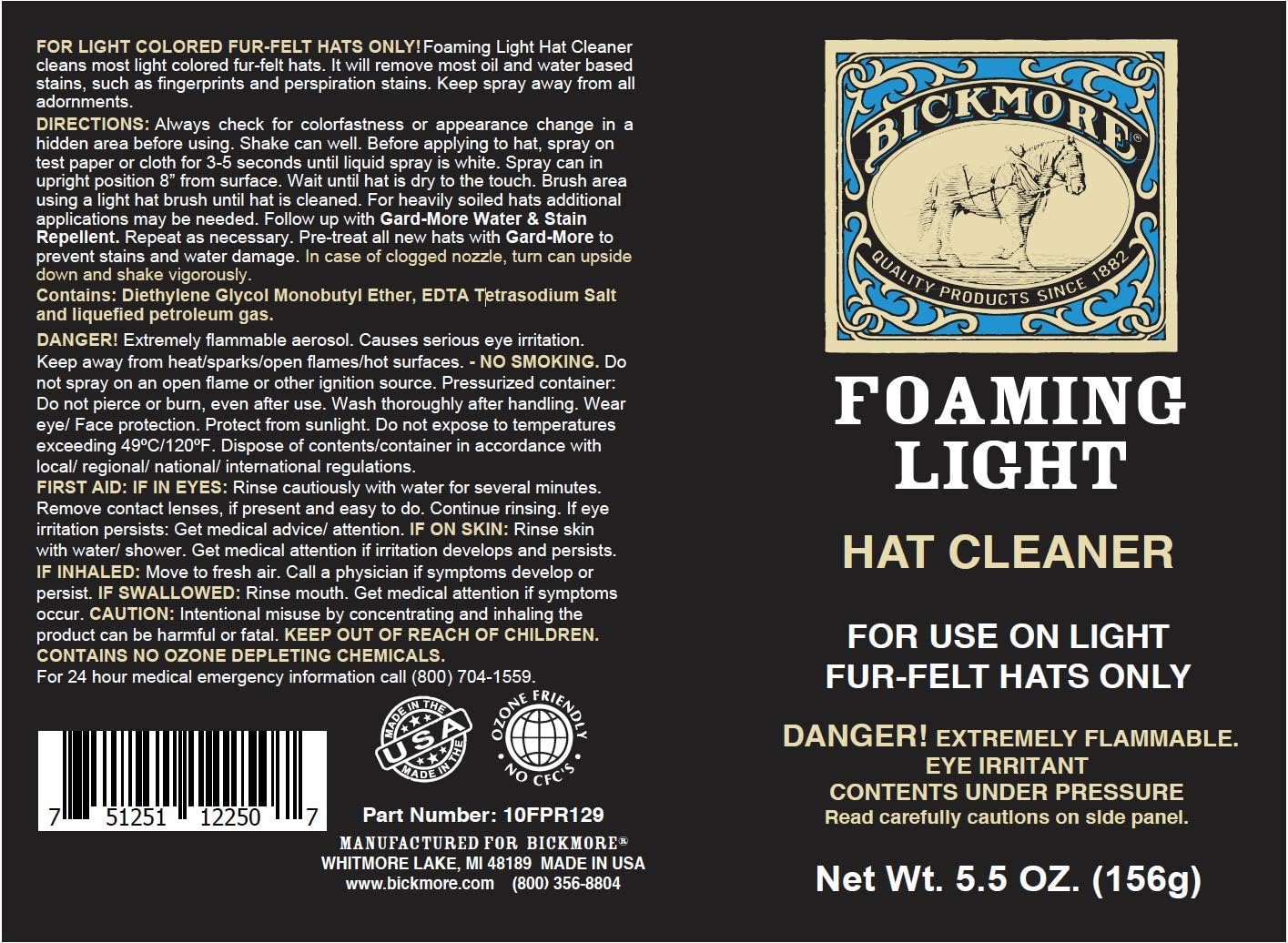
The Bickmore Foaming Hat Cleaner is the product that comes up most consistently in serious felt-hat owner circles, and the review pattern around it is worth reading carefully because it reveals something true about this whole category: the chemical performance and the mechanical delivery are two separate questions, and conflating them will lead you to the wrong conclusion.
On chemical performance, the picture is genuinely positive. The foam-migration technique — where you apply a foam, allow it to dwell on the felt surface, and watch the dirt appear to “rise” as the foam dries — is described by multiple owners as counterintuitive but effective. One reviewer, per aggregated platform data reviewed for this article, described the process as “alarming at first” because the hat visibly looks worse in the drying stage before it looks better. This is not product failure; it is the mechanism working as intended. The foam is lifting oils and particulate matter out of the felt’s compressed fibres toward the surface where they can be brushed away. Heddels’ editorial overview of felt hat care corroborates this general principle: felt cleaning relies on surface extraction rather than rinsing, because saturating felt disrupts the fibre matrix and can cause irreversible distortion.
The mechanical failure is a separate and more frustrating story. A four-star review — not a one-star, notably — describes the spray mechanism failing on the second use, rendering the product unusable despite the owner being satisfied with the first application’s results. Four stars suggests the owner weighted the product’s efficacy highly enough to still recommend it, but the frustration is real and documented. This is a known failure mode in pump-spray mechanisms for foam products more broadly, and it argues for buying the Bickmore cleaner from a retailer with a straightforward return policy rather than in bulk.
The decision frame here: If you own a fur-felt Akubra, a quality Barmah wool-felt, or any hat in the $150+ tier, the Bickmore foam cleaner earns a place in your kit on its chemical merits alone. Buy one, use it, and if the mechanism fails early, treat it as a warranty issue rather than a product indictment. What you should not do is assume a failed spray head means the formula doesn’t work — the owner record says otherwise.
Chin Cords: Real Weaknesses in an Underrated Accessory
A chin cord — also called a chin strap or, on older bush hats, sometimes a pugaree attachment point (the pugaree is the decorative band around the crown, a separate component) — is one of those accessories that buyers ignore until the moment they actually need it: a gallop across open paddock, a coastal headland in a 40-knot southerly, a long-haul flight where losing a $300 hat in the overhead locker isn’t a theoretical concern.
The Barmah chin cord occupies an interesting position in the reviewed record. The most enthusiastic data point comes from a kangaroo leather hat owner who reports a ten-second installation onto a hat that shipped with eyelets already punched but no cord supplied. This speaks to a genuine gap in the market: premium hats are sometimes delivered ready for a chin cord without actually including one, and buyers who discover this in the field are exactly the audience this product serves. The installation experience — quick, intuitive, secure — is described in terms that suggest the fit of the product to purpose is well-designed.
But two structural weaknesses surface consistently in the review record. First, the leather stopper — the small toggle or bead at the cord end that prevents the cord from pulling through the eyelet — is described by at least one reviewer as “very thin and flimsy.” On a $300 hat in serious use, a stopper failure is more than an inconvenience. Second, the shipping cost is flagged as “outrageous for something that would fit in a regular envelope.” Both criticisms are specific and credible: the stopper concern is a materials and manufacturing quality issue; the shipping cost issue is a logistics and pricing decision that the retailer controls.
The decision frame here: If your hat has eyelets and didn’t ship with a cord, the Barmah chin cord solves the problem efficiently. If you’re in a genuinely demanding use case — station work, equestrian, high-wind environments — inspect the leather stopper carefully on receipt and consider whether reinforcing it is worth the ten minutes before you trust it in the field. The cord itself appears well-regarded; it’s the stopper that carries the risk.
Hat Stretchers: The Storage Use Case Nobody Talks About Enough
Most people who search for hat stretchers are trying to solve a sizing problem — a hat that fits slightly too tight after storage, or a vintage find that needs a half-size of coaxing. The four-way wood-frame stretcher (a device with four expanding arms that apply gentle outward pressure inside the crown) consistently earns strong owner reviews for exactly this, with specific praise for the incremental precision of the stretching mechanism. Multiple owners note that they can advance the stretcher a fraction of a turn and leave it overnight, checking progress before committing to further expansion — a level of control that cheaper spring-loaded designs don’t offer.
But the review record contains a secondary use case that deserves more attention: long-term storage maintenance. Several owners report using the wood-frame stretcher not to resize a hat, but to store it. Inserting the stretcher at the hat’s current fitted size — not expanded beyond it — holds the crown geometry through seasonal humidity changes that would otherwise cause a felt hat to relax, sag, or distort. Australian Geographic’s coverage of Akubra manufacturing notes the role of steam and pressure in shaping fur-felt hats, which implies the inverse: unconstrained storage in variable humidity can work against that original forming over time. The stretcher as a storage tool is the logical response.
By the numbers:
| Use case | Stretcher setting | Dwell time |
|---|---|---|
| Resizing (half size) | Expand incrementally, one quarter-turn per session | 8–12 hours per session |
| Resizing (full size) | Same method, more sessions | 2–5 days total |
| Storage maintenance | Set to current fitted circumference only | Indefinite |
The decision frame here: If you own more than one quality felt hat, a wood-frame stretcher pays for itself as a storage tool before you ever use it to resize anything. If you’re buying it purely to resize a single hat, go slowly — the owner record is clear that patience with incremental adjustment produces better results than forcing the pace.
Frequently Asked Questions
Is it normal for the Bickmore foam cleaner to make a hat look worse before it looks better?
Yes, and understanding why makes it less alarming. The foam is designed to draw suspended oils and particles from within the felt fibres up toward the surface as it dries. That migration process makes the contamination visible before you can brush it away. Per the owner record, the hat should look markedly better once fully dry and brushed — if it looks worse after that point, you’ve either over-applied or you’re dealing with a stain that needs a different approach.
Can you use a foam felt cleaner on a leather or oilskin hat?
No. Felt foam cleaners are formulated for the compressed fibre structure of wool or fur felt, where the foam can penetrate slightly and then draw back out. Leather requires conditioners and specific leather-safe cleaners — using foam felt cleaner on leather risks stripping natural oils and causing surface damage. Oilskin (waxed-cotton canvas) has its own chemistry: water is generally fine, but foam or solvent-based cleaners can compromise the wax treatment. Akubra’s published care instructions and the general guidance across reputable hat-care sources are consistent on this point.
How often should you replace a chin cord on a daily-wear outback hat?
There’s no universal schedule, but the practical answer is: inspect it annually and replace it when you see wear at the stress points — the stopper, the eyelet contact zone, and the adjustment toggle. A chin cord in genuine daily use (station work, equestrian, outdoor guiding) is carrying real load intermittently and is worth treating as a consumable. The kangaroo leather variants documented in the Barmah review record appear to age well except at the stopper; that’s where to look first.
Will a hat stretcher damage the sweatband if left inserted during long-term storage?
At the hat’s current fitted size, the evidence from owner reports suggests no — the stretcher is simply maintaining a circumference that already exists. The risk of sweatband damage arises if the stretcher is left over-expanded, exerting ongoing outward pressure on leather or cotton sweatband material that isn’t designed for sustained tension. The storage-use case works specifically because the stretcher is set to hold, not to force.
What is the minimum hat-care kit a serious felt hat buyer should own?
Based on the owner record and published care guidance from sources including Heddels’ felt hat care editorial and Akubra’s own documentation, the honest minimum is three things: a quality foam felt cleaner for spot and surface cleaning; a natural-bristle hat brush for routine maintenance between deeper cleans; and a wood-frame hat stretcher for storage and minor fit correction. A chin cord is not universal, but if your hat has eyelets and you’re in any environment where hat retention matters, it belongs in the kit. Everything else — hat jacks, specialist stain removers, brim-shaping irons — is legitimately optional until you have a specific problem to solve.
The through-line across all three product categories is the same: the products that earn genuine owner loyalty solve specific, real problems efficiently, and the complaints that surface in reviews are almost always about delivery (a failed spray mechanism, an outrageous postage charge, a flimsy stopper) rather than about the core product concept. If you’re managing a quality felt hat over years of serious use, none of these tools is a luxury. They’re the difference between a hat that ages gracefully and one that quietly deteriorates between wearings.