June 25, 2026 • Callum Dray • 9 min reading time • Prices verified June 6, 2026
Packaging, Shipping, and Arrival Condition: The Hidden Risk in Buying a Serious Hat Online
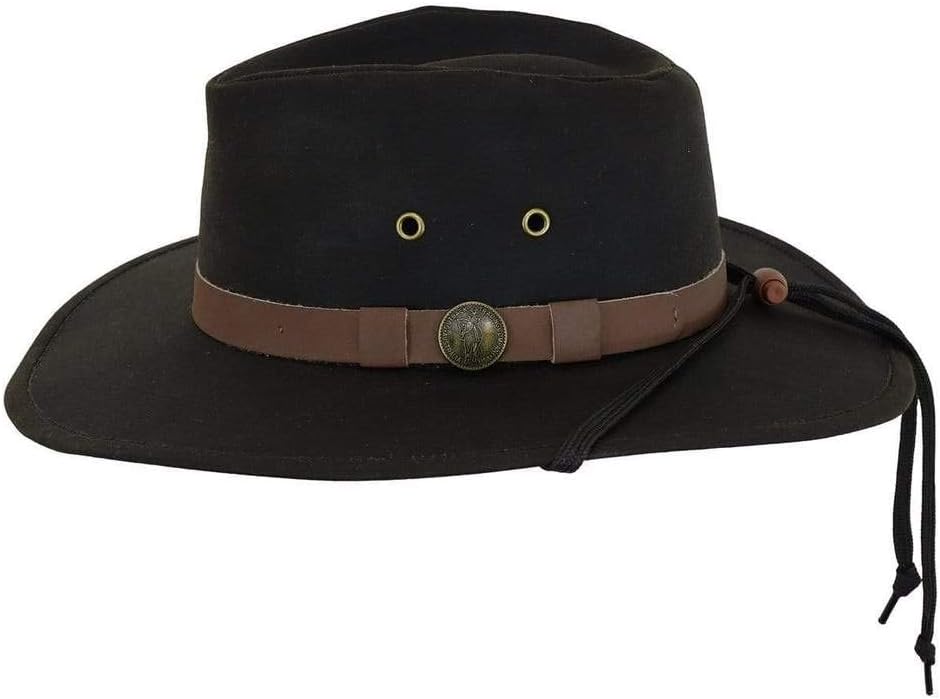
You’ve found a hat you want — maybe a heritage-grade fur-felt Akubra (fur felt means the brim and crown are moulded from compressed animal fur fibres, not woven fabric), or a structured oilskin drover (oilskin is a waxed cotton canvas that holds a rigid shape), or even a quality wool-felt crushable for travel. You’ve done the research. You’ve committed to the spend. Then the box arrives and the brim is torqued — one side bent sharply up, the other sharply down — because the retailer packed a $300 hat in a box sized for a pair of boots. This scenario appears in owner reviews more often than it should, and it represents a genuinely avoidable loss. This guide is about that gap between the hat you ordered and the hat that arrives: what makes certain constructions vulnerable, how to read a seller’s listing for packaging clues before you buy, and what your real options are when the box disappoints.
| EDITOR'S PICK[Stetson Gallatin Outdoor Hat Sa…](https://www.amazon.com/dp/B0041LY208?tag=greenflower20-20) | Mid-tier[Outback Trading Company Men's 1…](https://www.amazon.com/dp/B0047E0BD6?tag=greenflower20-20) | Budget pick[Scala Classico Men's Crushable…](https://www.amazon.com/dp/B001COCPNS?tag=greenflower20-20) | |
|---|---|---|---|
| Material | — | Cotton Oilskin | Crushable Felt |
| UPF Rating | — | UPF 50 | — |
| Waterproof | — | Waterproof Breathable | — |
| Crushable | — | — | Crushable |
| Price | $144.99 | $79.99 | $79.99 |
| See on Amazon → | See on Amazon → | See on Amazon → |
Why Hat Construction Determines Transit Risk
Not all hats are equally fragile in a parcel. The single most important variable is whether the hat is set — meaning it has been steamed and blocked (shaped on a wooden or aluminium mould) into a fixed geometry that the material wants to hold — or whether it is designed to compress and recover.
Structured fur felt and stiff oilskin are high-stakes. A fur-felt hat like an Akubra Snowy River or a quality Barmah blocked felt style has a brim that has been shaped under heat and pressure. That set is semi-permanent: the felt will hold the shape reliably through years of wear and light reshaping, but a sustained lateral load during transit — a heavy object resting on the brim, or a box that forces the brim against the cardboard wall — can create a crease or warp that is genuinely difficult to remove at home. Heddels’ complete guide to hat felting and blocking notes that the fibre-locking process that gives a quality felt hat its structure is the same property that makes aggressive deformation hard to reverse without professional tools and steam. Structured oilskin drovers are in the same risk category: the waxed canvas is deliberately stiff, and a bent brim on an oilskin hat may not respond to home reshaping at all.
Crushable wool felt and canvas are low-stakes — by design. A crushable wool-felt hat (think travel-oriented Barmah wool styles or packable options from Jacaru’s lighter range) is engineered to be compressed, stuffed into a bag, and shaken back into shape. These hats can survive genuinely bad packaging and arrive looking dishevelled but recoverable in minutes. The same applies to canvas and cotton-drill hats at the entry tier. Recognising this distinction before you buy protects you from applying the same level of scrutiny to a $45 canvas hat that you rightly apply to a $320 fur-felt piece.
A concrete pattern from owner reviews. Across aggregated owner accounts, a consistent pattern emerges: buyers of structured felt and oilskin hats report arrival damage at a meaningfully higher rate when purchased through general marketplace sellers compared to specialist hat retailers. One reviewer of the Outback Trading Kodiak — an oilskin-adjacent structured style — opens an otherwise positive assessment with a detailed account of a brim bent sharply up on one side and down on the other, attributing the damage directly to an undersized box, and notes the reshaping effort was substantial. Contrast that with a Bigalli fur-felt buyer who describes the hat arriving “perfect right out of the box unlike many of the others” — the difference being Bigalli’s own specialist packaging. These aren’t edge cases; they represent a genuine split between sellers who understand what they’re shipping and those who don’t.
Reading a Seller’s Listing Before You Commit
By the time a hat arrives damaged, your options narrow to a return dispute or a home-repair attempt. The smarter intervention is upstream — reading the listing for signals about packaging quality before you place the order.
Specialist versus general-marketplace sellers. The single most reliable predictor of good packaging is whether you’re buying from a retailer whose primary identity is hats. A specialist hat retailer — whether a direct brand store, an authorised stockist like Rod’s Western Palace in the US context (cited by multiple buyers specifically for crown-down packing in a dedicated crown cutout), or an Australian authorised Akubra dealer — has genuine reputational skin in the game around arrival condition. A general marketplace third-party seller moving hats alongside garden tools and kitchen appliances has no such incentive. Country Life UK’s hat-care guidance notes that specialist retailers consistently invest in branded boxes and crown-support inserts as a function of brand integrity, not altruism.
What to look for in listing photos and descriptions. Sellers who pack well tend to show it: look for listing images that include the shipping box, a hat box, or a crown-support insert. Descriptions that mention “arrives in a dedicated hat box,” “crown-down packing,” or “tissue-wrapped brim” are meaningful signals. Their absence isn’t conclusive, but its presence is a real positive indicator. Review sections are your best evidence: sort by “most recent” and scan specifically for any mention of arrival condition, not just hat quality.
The brand-box question. Some manufacturers include a branded hat box as standard — Akubra’s official documentation references presentation boxes for certain retail lines. Others ship without a box, relying on the retailer’s own materials. When a hat like the Stetson Gallatin arrives without a dedicated hat box but in adequately padded wrapping, buyers consistently report easy recovery precisely because the hat’s felt weight and construction tolerate moderate transit stress. The lesson: a dedicated hat box matters most for high-structure hats and matters less for medium-weight crushable styles.
The Numbers: Risk by Material and Price Tier
| Hat type | Transit risk | Home reshapeable? | Specialist retailer premium justified? |
|---|---|---|---|
| Fur felt, structured (blocked Akubra, Barmah felt) | High | Sometimes — depends on severity | Yes, strongly |
| Oilskin / waxed canvas, stiff brim | High | Rarely | Yes |
| Wool felt, crushable | Low–medium | Usually yes | Situational |
| Canvas / cotton drill | Low | Yes | No — general sellers fine |
Home Reshaping: What Actually Works and What Doesn’t
If your hat arrives damaged, you face a decision: attempt home reshaping, request a return, or seek professional re-blocking. The right answer depends on material and damage severity.
For fur felt: steam is your tool, patience is your constraint. A domestic kettle or clothes steamer can introduce enough moisture and heat to relax the felt fibres and allow gentle reshaping by hand. Outside Online’s outdoor gear care guidance confirms that light steaming followed by slow, hand-moulding over a rounded surface (a bowl turned upside down works for crown reshaping) can recover moderate brim warps. The critical rule: work slowly, hold the shape until the felt cools completely, and do not attempt to force a sharp crease out in a single pass. Multiple gentle sessions outperform one aggressive one. Deep creases — the kind caused by sustained pressure from an undersized box — may not fully recover without a professional hatter’s blocking iron and steam press.
For oilskin and structured canvas: steam helps less. The wax coating on an oilskin hat resists moisture penetration, meaning the steam-reshaping technique that works on felt has limited effect on oilskin brims. Gentle warmth (a hairdryer on low, keeping movement constant to avoid hot spots that can mark the wax) can soften the canvas enough for hand reshaping, but severe bends may require a professional. Australian Geographic’s coverage of Australian hat-making heritage notes that most capital-city Akubra stockists and quality hat retailers offer re-blocking services — worth asking about before writing off a damaged hat.
When to return rather than repair. If the damage is a sharp structural crease in a fur-felt brim (not a gentle warp but an actual fold line), or if you have a hat valued above $200 and any reshaping attempt risks making the damage permanent, return is the correct call. Document the damage immediately with photographs before attempting any reshaping — this protects your return claim. Most reputable specialist retailers have straightforward return policies for transit damage; general marketplace sellers vary significantly.
Frequently Asked Questions
Can a bent felt brim be reshaped at home after a bad shipment, and how? Yes, for moderate warping. Use a clothes steamer or kettle steam held 10–15 cm from the brim, work in short passes to avoid over-wetting, then gently coax the brim back into shape by hand and hold it flat or in the correct curve until the felt cools completely. Repeat across several sessions rather than forcing the reshape in one attempt. Deep creases or fold lines in high-quality blocked felt may need professional attention.
Which hat materials are most vulnerable to damage during transit? Structured fur felt (blocked Akubra and similar) and stiff oilskin/waxed canvas are the most vulnerable — both hold their shape well in wear but are difficult to reshape after serious deformation. Crushable wool felt and canvas hats are designed to compress and recover, making them genuinely transit-resilient.
Is it worth paying more to buy from a specialist hat retailer rather than a general marketplace seller? For any structured hat above roughly $150, yes — the evidence from owner reviews is consistent and the cost of a damaged hat (financially or in reshaping effort) exceeds the typical price premium of buying through an authorised specialist retailer. For crushable or canvas hats under $80, the premium is harder to justify.
What should I do if my hat arrives with a misshapen brim — return it or fix it? Photograph the damage immediately, before touching the hat. For mild warping on a crushable or wool-felt style, attempt home reshaping — you have little to lose. For a structured fur-felt or oilskin hat with a visible crease, contact the seller before attempting repairs: a repair attempt, even a well-intentioned one, can complicate a return claim or worsen a crease. Return is the lower-risk path for expensive structured hats.
How can I tell from a seller’s listing whether they pack hats properly? Look for listing photos that show a hat box or crown-support packaging, and read the most recent reviews specifically for arrival-condition comments. Specialist hat retailers with strong reputations — authorised brand stockists, dedicated millinery retailers — consistently outperform general marketplace sellers in this regard. A seller’s willingness to describe their packaging in the listing copy is itself a positive signal; it means they’ve heard the complaints and taken them seriously.
The decision rule here is simple: the more structure your hat needs to hold its shape in wear, the more structure it needs to survive its journey to you. Match the seller’s specialism to the hat’s fragility. A crushable wool felt can forgive a general-marketplace box; a hand-blocked fur felt cannot. Spend thirty minutes reading recent arrival reviews before you commit, and you’ll spend your money on the hat — not on the lesson.