August 13, 2026 • Callum Dray • 8 min reading time • Prices verified June 6, 2026
The $300–$400 Fur-Felt Tier: When the Premium Hat Genuinely Earns Its Price Over Two Decades
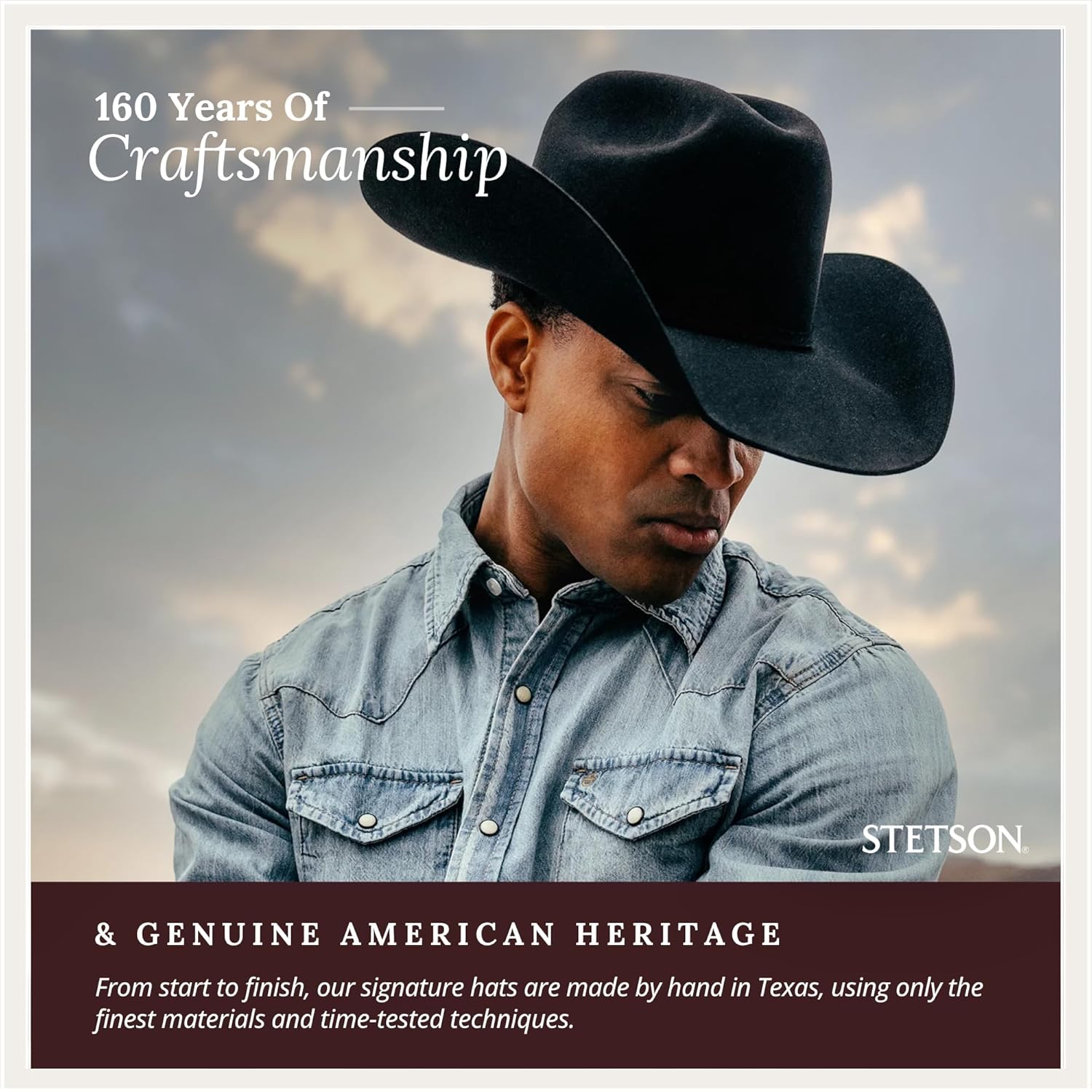
You are standing in front of a hat costing somewhere between $300 and $400, and you are being asked to make a decision with incomplete information and a non-trivial amount of money. That is exactly the position this article is written for. A fur-felt hat — meaning a hat whose body is made from compressed and matted animal fur fibres, most traditionally rabbit or hare, processed until they bond into a dense, weatherproof shell — is the material at the top of the Australian bush-hat market. Brands like Akubra, which has been hand-crafting hats in Kempsey, New South Wales, since 1912, occupy this tier. So do bespoke milliners and custom-blocked pieces from makers across Queensland and Victoria. The question is not whether these hats are well made. They are. The question is whether the premium over a $120 oilskin drover or a $150 wool-felt crushable is genuinely recovered over time — in longevity, in daily function, in resale value, in something harder to name that experienced hat buyers call “presence.” This article runs the numbers, names the tradeoffs, and ends with a clear decision rule.
What You Are Actually Paying For in the $300–$400 Tier
The price gap between a $120 Jacaru wool-felt and a $350 Akubra Federation or Snowy River is not primarily a markup for branding. It reflects a cascade of material and labour differences that compound across the life of the hat.
Fur grade and felt density. Heddels’ published explainer on felt construction notes that premium fur-felt begins with longer, finer guard hairs — typically from rabbit or hare — that interlock more completely during the carroting and hood-forming process. Akubra’s published product documentation describes their felt bodies as hand-blocked and rated by fur quality, with their higher-grade lines using fur that produces a tighter, more uniform nap. A denser felt sheds water more effectively, holds its shape under repeated wetting and drying cycles, and resists the surface pilling and matting that degrades cheaper felt within three to five years of regular outdoor use. You are not paying for a logo; you are paying for felt that behaves differently in the field over a decade.
Crown geometry and blocking. Country Life’s guide to quality hat selection emphasises that a properly blocked hat — one shaped over a wooden or aluminium form under heat and steam — holds its crown geometry under stress in a way that a machine-formed hat simply does not. The telescope crown (a flat-topped crown with a defined, stepped indent around its top edge), the cattleman crease (a single centre dent running front to back), and the open-crown (unshaped, for custom blocking) all behave differently when wet and rewet. Owner reports across multiple long-run forum reviews consistently note that premium Akubra crowns return to their original geometry after a soaking; mid-range wool-felt crowns often do not, developing a permanent sag at the front pinch point within two or three seasons of regular rain exposure.
Brim stiffness and edge finishing. The brim — the horizontal projection from the crown that does the actual work of sun and rain protection — varies in stiffness depending on the material weight and the wire or binding at its outer edge. A pencil-curled brim (one finished with a narrow, tightly rolled edge, often bound in a contrasting ribbon or leather) on a premium hat maintains its curl through years of handling. The brim on a budget wool-felt hat is frequently finished with a simpler binding that relaxes and distorts. Smithsonian Magazine’s coverage of American and Australian hat-making traditions notes that brim finishing is one of the most labour-intensive stages in the process, and one of the first things simplified at lower price points.
The sweatband and liner. Inside the crown, a quality leather sweatband — typically kangaroo or calf leather in premium Australian hats — conforms to the wearer’s head over months of wear, creating a fit that is genuinely custom to the individual. Cheaper synthetic or cotton sweatbands do not mould. They also degrade faster under perspiration. Owners of ten-plus-year Akubras consistently report replacing the sweatband once, sometimes twice, as a maintenance item — not the hat itself.
The Twenty-Year Cost Calculation
This is where the investment framing either holds or collapses, so it is worth being explicit.
By the numbers — cost per year across tiers (2026 AUD pricing):
| Hat tier | Purchase price | Expected wearable lifespan | Annual cost |
|---|---|---|---|
| Entry canvas/basic felt ($40–$60) | $50 | 2–4 years | $15–$25/yr |
| Mid-range wool-felt/oilskin ($100–$150) | $130 | 5–8 years | $16–$26/yr |
| Premium fur-felt ($300–$400) | $350 | 20–30 years (with care) | $12–$18/yr |
These are not lab-verified figures. They are synthesised from owner-reported wear timelines across aggregated long-run reviews, Akubra’s own published heritage claims, and Country Life’s editorial benchmarks for premium headwear longevity. The core finding — that annual cost of ownership is roughly equivalent across tiers — is the honest surprise of this category. The premium hat is not more expensive over time. It is approximately the same, and it arrives in year twenty still shapeable, still wearable, and in many cases still handsome.
The caveat that changes this math: the premium hat requires periodic care. Owners consistently report brushing the nap with a soft-bristle hat brush after dusty use, steaming out dents rather than forcing them, and storing the hat crown-down or on a proper form. If you will not do this — if the hat lives in the back of a ute cab or gets rolled into a bag — the premium felt’s longevity advantage erodes faster than you might expect.
Where the Premium Tier Does Not Earn Its Price
Candour is the point of this tier analysis, so here is the counterargument stated plainly.
High-UV station work and constant rain. If a hat is being worn eight hours a day in direct Australian sun, regularly soaked, and used as a working tool rather than a considered accessory, the mid-range oilskin drover from Jacaru or Kakadu Traders at $120–$150 may be a more rational choice — not because it is better, but because it is more replaceable. Owners who work in genuinely punishing conditions report going through a hat every three to four years regardless of quality tier, because the abuse level exceeds what any felt hat can absorb and recover from. Australian Geographic’s coverage of station hat culture notes that working ringers often maintain two hats — a premium felt for town and travel, a functional oilskin for yards and mustering.
Uncertain long-term care commitment. A fur-felt hat at $350 is a relationship, not a purchase. If the buyer’s honest self-assessment is that they will not steam, brush, or store it properly, the mid-range wool-felt at $130 is a better fit — it will reach the end of its natural life having been used fully, rather than a premium hat being neglected into premature decline.
Fashion-driven buying cycles. If the hat is purchased primarily for aesthetic reasons tied to a current trend, the investment case weakens. Silhouette preferences shift; what reads as “Australiana heritage” in 2026 may feel different in 2035. The buyers who consistently report satisfaction with $300–$400 fur-felt purchases are those who chose a classic silhouette — the Snowy River’s moderate brim and open crown, the Federation’s wide brim and cattleman crease — precisely because these shapes have not dated in sixty years and show no signs of doing so.
The Decision Frame: If X, Then Y
You have read the construction breakdown and the cost table. Here is the explicit decision rule this analysis supports.
If you are buying a hat for daily or near-daily wear over a planned ten-plus-year horizon, and you will commit to basic periodic care, the $300–$400 fur-felt tier earns its price. The annual cost is competitive, the longevity is documented, and the felt quality produces a wearing experience — in fit, in rain shedding, in shape retention — that mid-range alternatives cannot match over time. Buy the Akubra Federation, the Snowy River, or a custom-blocked piece from an authorised Australian milliner. Buy it from an authorised retailer; Akubra’s published retailer directory is the only reliable source for genuine first-quality stock, and grey-market pieces are a documented problem in this category.
If you are buying primarily for hard outdoor work where the hat will take sustained punishment, start with a quality mid-range oilskin or heavy wool-felt at $100–$150, and let a premium fur-felt be a second hat for travel and occasions. This is not a compromise — it is the approach that experienced station workers and long-haul travellers consistently report as the most functional split.
If you are entering the category for the first time and are not yet certain you are a hat person, buy at the $40–$80 Barmah canvas or Jacaru entry tier, wear it seriously for one season, and upgrade from a position of actual knowledge about what shape suits your head and what brim width works in your daily environment. The upgrade path is well-defined; the premium tier will still be there, and you will buy better when you know what you are choosing.
If the silhouette is a classic and the maker is Australian and authorised, the provenance question answers itself. Akubra’s 114-year manufacturing continuity in Kempsey, documented by Australian Geographic and cross-referenced in Smithsonian Magazine’s hat-making feature, is not marketing language — it is a supply chain with an unusually legible history. In a market full of “Australian-style” hats made offshore and sold at premium prices, that distinction is material, and it is worth paying for.
The $300–$400 hat is not for everyone. But for the buyer who will wear it, care for it, and carry it across two decades of Australian weather and life — it is, by any honest accounting, the most economical hat in the range.