September 24, 2026 • Callum Dray • 11 min reading time • Prices verified June 6, 2026
Kangaroo Leather Australian Outback Hats Head to Head: Barmah, Oztrala, and the Aussie-Made Benchmark
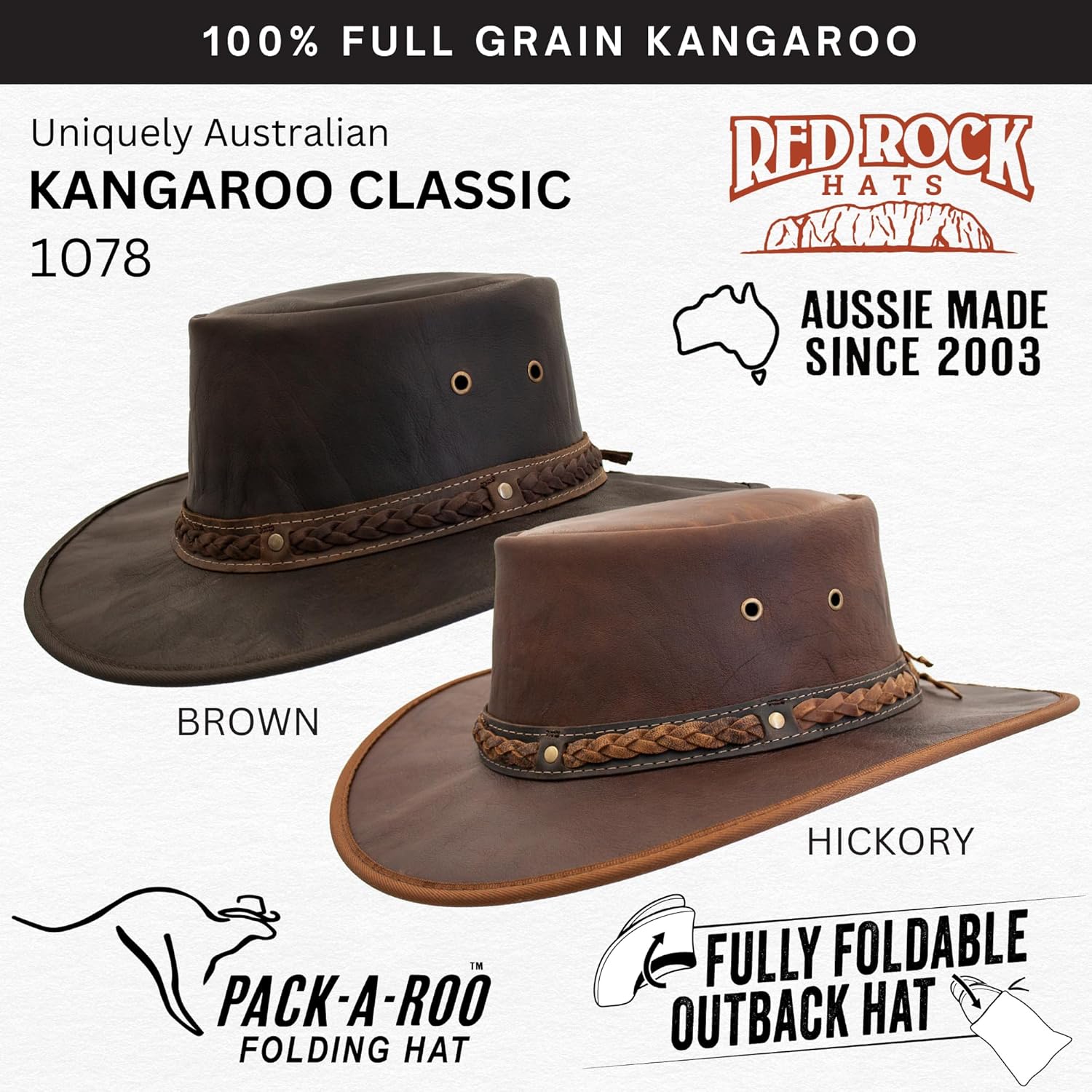
If you’ve ever watched a perfectly good straw hat collapse into a sad taco shape after one dusty drive through the Pilbara, you already understand the appeal of a leather outback hat. Leather outback hats are wide-brimmed, sun-blocking hats made from animal hide — usually cattle or kangaroo — that hold their shape under hard use and develop a personal character over years of wear. Within that category, kangaroo leather (sometimes called “roo leather”) has earned a reputation as the lighter, tougher, more supple alternative to conventional cowhide. “Supple” here just means the hide flexes without cracking, which matters enormously in a hat that spends half its life folded under a seat or stuffed into a pack. This article puts three names you’ll see repeatedly in the kangaroo leather space — the Barmah 1078 Kangaroo Classic, the Barmah 1036 Full Grain Cattle, and the Oztrala HL31 — alongside broader signals from the reviewed market, so you can frame your own decision before spending serious money.
A quick note on editorial framing: the judgments here are built from aggregated owner reviews, published manufacturer specifications, and sourced material-science reporting. Neither this publication nor its editors has physically worn or lab-tested these specific hats. What follows is the result of reading the evidence carefully — which is exactly what you’d do yourself with more time.
| EDITOR'S PICK1078 Kangaroo Classic - Austral… | Mid-tierOztrala HAT Leather Australian… | Budget pickLeather Down Under HAT Aussie B… | |
|---|---|---|---|
| Leather | Kangaroo | Leather | Leather |
| Foldable | ✓ | — | — |
| Travel bag | ✓ | — | — |
| Made in | Australia | — | — |
| Oiled | — | ✓ | — |
| Sizes | — | Small | X-Large |
| Price | $125.00 | $69.90 | $47.99 |
| See on Amazon → | See on Amazon → | See on Amazon → |
Why Kangaroo Leather Deserves Its Own Category
The claim that kangaroo leather is categorically superior to cattle leather gets repeated so often it starts to sound like marketing. The reality is more specific. As reported by Australian Geographic in their overview of roo-hide tanning and leather properties, kangaroo hide has a more uniform fibre bundle structure than bovine hide, which means it achieves comparable tensile strength at a thinner cross-section. In practical hat terms, that translates to a crown and brim that flex without fatiguing — the hide bends back without the stress lines that eventually become cracks in stiffer cattle leather.
Heddels, in their field guide to hat materials and construction, notes that this fibre uniformity also affects finish: roo leather tends to take dye and conditioning oils more evenly, which is why owners of roo-leather hats frequently describe the surface as “soft and even” rather than the slightly waxy hand that some full-grain cattle hides start with. The trade-off is scarcity and cost — kangaroo hide is a byproduct of a tightly regulated harvest, which limits production volumes and keeps per-unit prices elevated relative to cattle leather at equivalent grades.
Kangaroo vs. cattle leather in hat construction — key properties:
| Property | Kangaroo leather | Full-grain cattle leather |
|---|---|---|
| Typical crown thickness at gauge | ~0.8–1.0 mm | ~1.2–1.6 mm |
| Relative weight per sq. cm | Lighter (≈20–30% less mass) | Heavier baseline |
| Initial suppleness (owner reports) | Soft from day one | Requires break-in period |
| Long-run durability | High tensile, resists fatigue cracking | High, but more prone to crease lines |
Sources: Australian Geographic, kangaroo leather overview; Heddels, field guide to hat materials and construction.
The Three Hats: A Tier-by-Tier Assessment
The following three sections each address one hat in the comparison, structured from premium to entry level. Each section closes with a tier marker so you can scan to your budget quickly.
Barmah 1078 Kangaroo Classic — Where the “Forever Hat” Reputation Comes From
The Barmah 1078 is the hat that generates what product researchers call “conversion reviews” — buyers who open by listing the cheaper hats they ran through before arriving here. The pattern is consistent enough to be diagnostic: straw hats that lost their shape, synthetic crushables that went limp in humidity, and then the 1078 presented as the resolution. Owners consistently use phrases like “forever hat” and “wish I’d bought it first,” which signals genuine satisfaction with durability rather than honeymoon enthusiasm.
What the spec sheet and owner accounts together suggest about why: the Barmah 1078 uses a single-piece roo-leather crown construction — no panels stitched together at stress points — over a wire-reinforced brim. The wire brim, a thin steel or alloy rod running the brim perimeter, is what allows the hat to be shaped and reshaped without collapsing, and it’s what separates a genuinely packable leather hat from one that merely claims to be. Owners report being able to roll the brim up for travel and have it return to shape, a behaviour that relies entirely on the wire foundation holding its memory.
The practical concern worth naming: single-piece kangaroo crowns are costlier to cut because they require larger, higher-quality hide sections. That cost is one reason the 1078 sits at a premium price point. For a buyer who has already burned through two or three cheaper alternatives, the math is straightforward — you’re not paying for a brand, you’re paying to stop paying for replacements.
1078
$125.00
In stock on Amazon
Check price on AmazonBarmah 1036 Full Grain Cattle — Honest Assessment of a Real Compromise
The 1036 sits alongside the kangaroo line in Barmah’s catalogue and earns its own “supple and luxurious” praise in owner reviews. The handle — how a hat feels in your hands and against your head — is genuinely well-regarded. Full-grain cattle leather, as Heddels’ field guide to hat materials and construction explains, means the outermost layer of the hide is preserved without sanding or buffing, which retains the natural grain pattern and a degree of natural oil content. That makes it more durable and more water-resistant than corrected-grain or split leathers, which are cheaper alternative cuts from the same hide.
The honest concern — and one specific reviewer flagged this precisely enough that it warrants direct attention — is interior band adhesion. That reviewer noted that the decorative band (the pugaree, which is the ribbon or fabric strip wrapped around a hat’s crown base, sometimes called a hatband) appeared to be attached with hot-melt adhesive rather than stitching, and that the adhesive was already separating after modest use.
This is an actionable quality signal, not a generic complaint. Hot-glue band attachment is a cost-reduction measure that appears in mid-range and some premium hats alike; it’s faster than stitching and invisible when new. Country Life, in their review of equestrian hat construction and the question of what makes a good riding hat, notes that band adhesion is one of the first failure points in leather hats subjected to sweat, heat, and humidity — all of which are guaranteed in Australian outdoor use. A separating band is repairable, but it shouldn’t present in a hat at this price point after light wear.
The 1036’s value proposition is still legitimate for buyers who prioritise the feel of cattle leather and are prepared to have a hatter inspect and potentially re-secure the band early. It is not the right call for a buyer who wants to buy once and ignore it.

Oztrala
$69.90
In stock on Amazon
Check price on AmazonOztrala HL31 — Reading the Signals in Thin Review Data
The Oztrala HL31 draws consistently positive reviews, but those reviews tend to be short on specific detail — “great hat,” “comfortable,” “looks the part” — rather than the deep, time-stamped accounts that signal long ownership. Outside Online, in their practical guidance on evaluating outdoor gear reviews and hat packing, notes that this pattern (positive but thin) often reflects a product that hasn’t been in circulation long enough to accumulate the 12- and 24-month owner reports that would reveal durability stories.
That’s not an indictment of the HL31; it’s a calibration. What the available evidence supports: buyers aren’t returning with complaints, the leather is described as comfortable from first wear, and the silhouette reads as authentically Australian in the broad-brim drover tradition. What the evidence doesn’t yet support is a confident claim about five- or ten-year wearability, which is the relevant time horizon for a considered leather hat purchase.
A specific caution drawn from a separate reviewed leather hat in this category — described as arriving in a plastic bag with crown damage — applies here as a general purchasing principle: leather hats should always be shipped in rigid boxes, not poly bags, because pressure on a leather crown during transit can set a permanent deformation. If you’re ordering a leather hat online, check the seller’s stated packaging before purchase. That same category of buyer also flagged chin-strap design as a practical consideration. A quality chin strap should be adjustable rather than fixed, and should attach to the hat body rather than just the brim edge, where pull force is concentrated.
For a buyer in the entry-to-mid price tier who wants genuine kangaroo leather construction and is comfortable accepting that the long-run track record is still being written, the HL31 is a reasonable entry point.
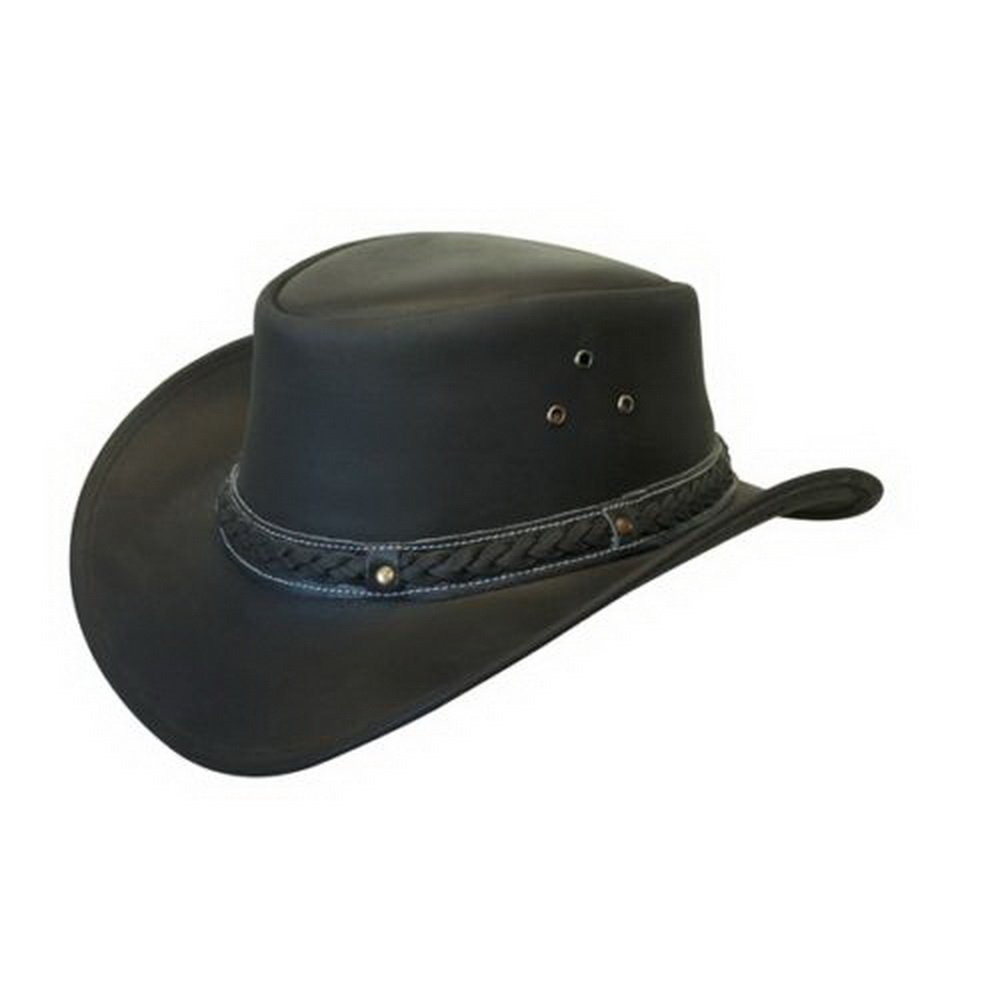
Leather
$47.99
In stock on Amazon
Check price on AmazonDecision Framework: If X, Then Y
You now have the tradeoffs named. Here’s how to apply them:
If you’ve already owned cheaper hats and want to stop replacing them: The Barmah 1078 Kangaroo Classic has the owner testimony to justify its price. The “forever hat” pattern in reviews is a credible signal, not category enthusiasm. This is the one to buy once.
If you want cattle leather and the 1036’s feel appeals to you: Buy it, but within the first month of ownership take it to a hatter or leatherworker and have the band inspected. If it’s hot-glued, have it stitched. That single intervention probably costs less than $30 and converts a quality concern into a non-issue.
If you’re budget-constrained but want genuine kangaroo leather: The Oztrala HL31 is the honest answer at the lower price point. You’re accepting a thinner long-run track record in exchange for a lower entry cost. Keep your receipt; if durability issues emerge in the first year, act on them early.
If you’re buying for airline travel specifically: Any hat with a wire-reinforced brim can be reshaped, but no leather hat should be checked as luggage without a hat box. Outside Online’s guidance on hat packing recommends placing the hat crown-down in a rigid carry-on bag with soft contents packed inside the crown for support.
Frequently Asked Questions
Is kangaroo leather genuinely lighter and more packable than cattle leather?
Yes, with precision. Australian Geographic’s overview of kangaroo leather confirms that roo hide achieves comparable strength at a thinner gauge, which directly reduces hat weight. “More packable” is true in the sense that a thinner, more supple hide returns to shape after flexing more reliably than stiffer cattle leather. The difference is meaningful over a long travel day; it is not dramatic in a five-minute comparison.
Can a leather outback hat be folded flat for airline carry-on?
A wire-brimmed leather hat can be shaped and re-shaped but cannot be folded flat without risk to the crown. Outside Online’s practical guidance on hat packing recommends placing the hat crown-down in a rigid carry-on with soft contents packed inside the crown for support. Flat folding — the way you might fold a canvas bucket hat — is not viable for a structured leather crown.
What does “oiled leather” mean for long-term waterproofing versus oilskin cotton?
Oiled leather means the hide has been treated with conditioning oils during tanning, which fills the leather’s pores and provides inherent water resistance. It is not the same as oilskin cotton, which is a woven fabric coated with a wax or oil film that sits on the surface. Oiled leather repels light rain and morning dew; oilskin cotton performs better in sustained heavy rain because the coating is refreshable and covers a larger surface area more uniformly. For light outback use, oiled leather is adequate. For extended wet-weather work, oilskin outperforms it.
How do I re-shape a leather hat crown that was crushed in shipping?
Steam is your first tool. Hold the crown over a kettle spout or use a clothes steamer until the leather is warm and pliable — not soaked, just gently steamed. Then reshape by hand and hold the crown in the correct shape while it cools. A wooden hat block sized to your head makes this significantly easier and is available from hat-supply retailers. If the crease is deep, repeat the process two or three times. Do not apply a direct iron to bare leather.
Is hot-glue band construction on a leather hat a durability problem?
In principle, no — modern hot-melt adhesives designed for leather are durable in controlled conditions. In practice, outback conditions (sustained heat, sweat, UV exposure) are not controlled conditions, and Country Life’s coverage of equestrian hat construction confirms that adhesive band attachment is consistently the first failure point in hats exposed to these stresses. A stitched band is categorically more durable. If your hat arrives with an adhesive band, have it stitched at the earliest opportunity. Treat it as a known vulnerability and factor it into your purchasing decision if you cannot easily access a hatter post-purchase.