September 16, 2026 • Callum Dray • 12 min reading time • Prices verified June 6, 2026
Mesh Breezer Hats Head to Head: Airflow, Sun Gaps, and the Bald-Head Problem
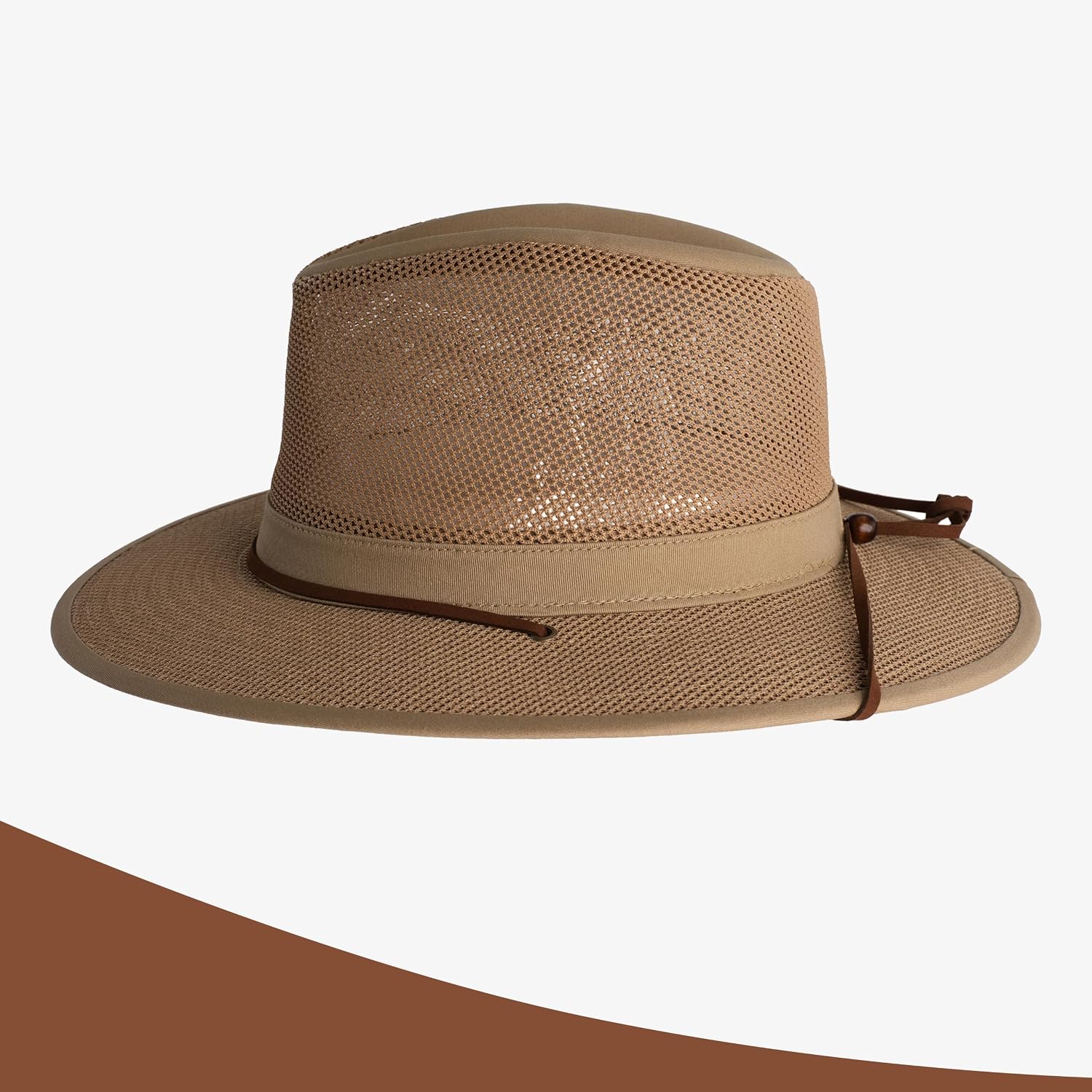
A mesh breezer hat is exactly what it sounds like: a hat — usually styled after the wide-brimmed Australian drover or safari silhouette — where the solid crown panel is replaced by open-weave mesh fabric. The mesh lets hot air escape and fresh air circulate around your head, which is genuinely useful in high-UV, high-heat environments like station work, long-haul driving, or a full day on the golf course. But mesh introduces a real tradeoff: those same gaps that let heat out also let ultraviolet radiation in. If you’ve been researching breezer styles for more than twenty minutes, you’ve probably already noticed that reviews split hard on two questions — “does it actually keep my head cool?” and “does the brim stay straight?” — and that the answers are not always what the marketing suggests. This article works through the main contenders, names the tradeoffs explicitly, and ends with a clear decision rule for each buyer type.
Why Brim Integrity Is the Real Quality Differentiator Here
If you’re coming from the solid felt or oilskin category, you’re used to brims that hold their geometry over years of hard use. Mesh breezer hats use lighter, more flexible materials — typically polypropylene braid, straw weave, or synthetic canvas — and those materials are far more vulnerable to deformation during shipping and storage.
The most instructive signal in this category comes from aggregated owner reviews of the Elias Kanut breezer (Elias, verified purchase review aggregation, 2025). Multiple purchasers describe returning both a Stetson mesh breezer and an American Hat Makers breezer before settling on the Kanut — specifically because the brims on the first two arrived deformed and could not be corrected even with steam or careful hand-reshaping. Kanut owners describe its brim as arriving flat and staying flat, which in this category is genuinely a premium feature, not a baseline expectation.
This matters more than it might initially seem. A brim that ships wavy or curls unevenly in the first season is not just a cosmetic problem. An uneven brim creates inconsistent sun coverage — the sections that curl upward lose their shading angle and expose your face, ears, and neck at exactly the times you need coverage most. In the solid felt world, you’d steam and block the brim yourself; in the mesh breezer world, the internal structure (usually a wire or stiffened synthetic piping at the brim edge) either holds its shape or it doesn’t, and most home remedies are temporary at best.
The decision frame: If brim integrity is your primary concern — and for anyone doing serious outdoor work rather than casual recreation, it should be — the Elias Kanut’s reputation for structural consistency puts it ahead of cheaper alternatives that may look identical in product photography.
The Mesh-Hole-Size Problem: UV Protection Is Not Binary
Here’s the thing that most product listings obscure: a UPF 50+ rating on a mesh breezer hat applies to the brim and to the solid sections of the hat. The mesh panel itself tells a different story, and the size of the mesh holes determines how much ultraviolet radiation passes directly through the crown to your scalp.
Consumer Reports, in its sun-protective clothing coverage at consumerreports.org, has noted that UPF ratings on composite garments — those combining solid and open-weave sections — can be misleading when the rating reflects only the densest material tested. That structural reporting principle applies directly here: a breezer hat’s headline UPF 50+ rating does not represent what the mesh crown delivers to the scalp underneath it.
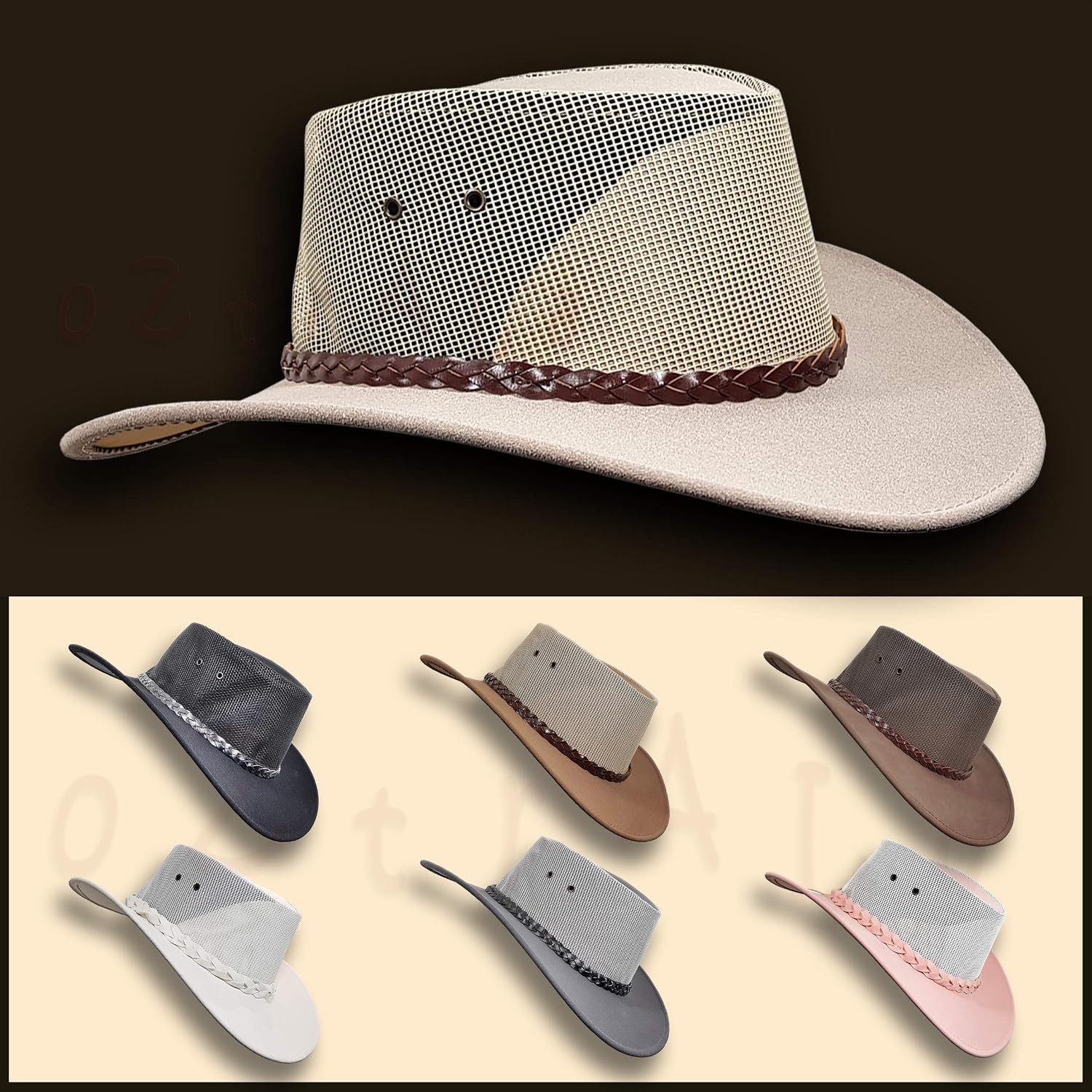
Owner Q&A responses captured in the Oztrala HSRZ product listing and owner Q&A responses (Oztrala, 2025) make this point in plain terms: large-hole mesh lets meaningful sun reach a bald scalp even when the hat carries a UPF 50+ headline rating. This is not a knock on the Oztrala specifically — it’s a structural reality of the category. The brim still shades your face. The solid brim materials still earn their UV rating. But the crown mesh, on any breezer hat with generous hole sizing, offers incomplete protection to the top of your head.
By the numbers:
- UPF 50+ (as rated on solid sections): blocks approximately 98% of UV radiation
- Open mesh crown (large-hole weave, approximate): may allow 40–70% UV transmission to scalp depending on weave density
- Fine-weave mesh (tight hexagonal pattern): UV transmission reduced, but airflow benefit is also reduced proportionally
The tradeoff is direct: finer mesh means more UV protection and less airflow; coarser mesh means better ventilation and more UV exposure at the crown. No breezer hat currently on the market fully solves both problems simultaneously, which is why the bald-head and shaved-head buyer needs to evaluate mesh density specifically, not just the hat’s headline UPF rating.
The Henschel Aussie Breezer occupies an interesting middle position here (Henschel Hat Company, product specification pages and retailer copy, 2025). Owner accounts that examined the hat’s construction closely describe a tighter mesh weave than competing budget options, with clean internal stitching that signals the mesh is properly tensioned rather than loosely assembled. Properly tensioned mesh holds a finer, more consistent aperture, which translates to marginally better UV attenuation at the crown. It’s not a complete solution for someone with a shaved head in full Queensland sun, but it’s a meaningfully better construction than large-hole alternatives.
Hat-by-Hat Comparison: Where Each Model Earns Its Place
Elias Kanut
The standout story in owner reviews is brim integrity, addressed above. Beyond structural performance, Kanut owners describe a mid-weight construction that doesn’t feel flimsy in hand — relevant because lighter breezer hats can feel toy-like compared to a quality wool felt. The consensus across verified reviews (Elias, owner review aggregation across verified purchase platforms, 2025) is that this hat rewards buyers who had a bad experience with deformed competitors and are willing to pay slightly more for a brim that ships and stays correct.
The buyer persona here is the experienced outdoor worker or serious traveler who has been burned before — someone who has already tried a cheaper breezer, dealt with a warped brim mid-season, and concluded that the cost of replacing the hat exceeds the savings made on the original purchase. For that buyer, the Kanut’s premium is an insurance policy with a documented track record.
Best for: Serious outdoor work, multi-day travel, anyone who has previously experienced brim deformation on a cheaper model and needs confidence in structural longevity.
Oztrala
$69.90
In stock on Amazon
Check price on AmazonHenschel Aussie Breezer
The most useful editorial signal on this hat comes from owner accounts that examined interior seam finishing in detail. The assessment, drawn from Henschel Hat Company product specification pages and retailer copy (2025), is consistent: seam finishing is clean, the mesh is properly attached rather than simply glued or roughly stitched, and the overall construction feels deliberate. For a mid-range hat, that is a meaningful quality signal.
Henschel’s Australian-styled silhouette — wide brim, pinched crown — also earns it points in the Australiana-adjacent market this site covers. It sits comfortably as the quality-signal benchmark in this category for buyers who want to evaluate construction before committing to a higher price point. The tighter mesh weave, noted above in the UV-protection section, also makes it the better mid-tier choice for buyers with thinning hair or a partially exposed scalp who need better mesh density than large-hole alternatives provide.
Best for: Buyers who want demonstrably good construction at a mid-range price, and anyone with a partially exposed scalp who needs finer mesh density than budget alternatives offer.
Henschel
$59.00
In stock on Amazon
Check price on AmazonOztrala HSRZ
The HSRZ is a legitimate workwear hat let down by one specific design choice: the mesh-hole sizing. The owner Q&A feedback documented in the Oztrala HSRZ product listing and owner Q&A responses (Oztrala, 2025) is representative of a wider pattern — the hat functions well as a ventilation tool, but anyone with significant scalp exposure needs to either wear high-SPF sunscreen on their head underneath it, or reconsider. The hat’s other construction attributes — solid brim, adjustable chin cord, practical silhouette — are well-regarded in owner feedback.
The decision rule for the HSRZ is straightforward: if you have a full head of hair, the large-mesh airflow benefit is real and the UV-at-scalp issue is irrelevant to you. If you are bald or shaved, look elsewhere or plan to supplement with sunscreen regardless of what the hat’s headline UPF figure suggests. This is an intended design choice that prioritises ventilation over crown UV attenuation, and it suits a specific buyer profile well.
Best for: Full-headed buyers prioritising maximum airflow in high-heat conditions; workwear use where ventilation is the dominant requirement.
Henschel
$59.00
In stock on Amazon
Check price on AmazonPanama Jack Mesh Safari
This hat serves a different buyer persona than the working-outdoor purchaser. Panama Jack mesh safari specifications and retailer descriptions (Panama Jack, 2025) confirm the product line’s emphasis on generous sizing — up to 3XL in some versions — making it a go-to for buyers who struggle to find breezer hats that don’t squeeze. Owner reviews skew heavily toward recreational use: golf, garden parties, outdoor festivals in moderate heat.
It is not built for station work or high-UV endurance; it is built for comfort in semi-outdoor recreation where the hat may come on and off frequently and where sustained direct sun exposure is not the primary design scenario. If your use case is eighteen holes in moderate heat and you need a generous fit, the Panama Jack earns its reputation cleanly. If your use case is a full day in direct Australian sun doing physical work, its construction is not designed for that level of demand.
Best for: Recreational use, golf, buyers who need generous or large-head sizing, casual outdoor events where all-day direct sun is not the primary scenario.
Connectyle
$16.99
In stock on Amazon
Check price on AmazonRain, Home Repairs, and Real-World Airflow: Practical Clarifications
Does mesh provide real airflow compared to a vented solid-brim hat? Owner comparisons and published construction descriptions consistently say yes — mesh crown ventilation is meaningfully more effective than pinhole eyelets or vent panels on a solid hat. Hats with perforated top panels improve airflow over a sealed crown, but the open surface area is far smaller than a full mesh panel. In still conditions, the difference is modest. In conditions where you’re moving — walking, riding, working — the mesh crown allows convective airflow that a perforated panel cannot match. The tradeoff, again, is UV protection at the crown.
Will you get wet through the mesh in rain? Yes, directly and quickly. Mesh breezer hats are not rain hats. The crown mesh offers no water resistance; rain passes through freely. The brim may shed water off your face and shoulders depending on its width and material, but your head will get wet. If rain is in the forecast, carry a different hat or accept that you will need to dry this one thoroughly to prevent mildew in the mesh seams.
Can you fix a deformed brim at home with steam? Occasionally, on early-stage warping, if the internal brim wire is still shapeable. Owner experience reports mixed results — steam can relax the brim material enough to hand-shape it back toward flat, but if the internal wire has taken a permanent set in the wrong position, the correction rarely holds. The Elias Kanut reviews that described returning Stetson and American Hat Makers brims specifically noted that steam reshaping failed to produce lasting correction. If you’re buying online and the hat arrives deformed, the pragmatic advice from owner experience is to initiate a return rather than invest time in reshaping.
Frequently Asked Questions
Does a UPF 50+ rated mesh breezer hat actually block UV rays through the mesh holes? No — not through the mesh holes themselves. The UPF 50+ rating covers the solid materials: the brim and any solid crown panels. The mesh apertures transmit UV in proportion to how open the weave is. Consumer Reports, in its sun-protective clothing coverage at consumerreports.org, supports the general principle that headline UPF ratings can overstate whole-garment protection when open-weave sections are present and the rating reflects only the densest material tested.
Is a mesh crown hat suitable for use in rain? Not comfortably. Rain passes directly through the mesh crown. The wide brim still provides face and shoulder coverage, but your head will get wet. Mesh breezer hats are fair-weather tools.
Can a deformed or wonky brim on a mesh breezer be corrected at home with steam? Temporarily, sometimes. Owner reports suggest that if the brim wire has taken a permanent set in the wrong shape, steam reshaping provides only partial and short-lived improvement. Prevention — buying from a seller with strong packaging and return policies — is more reliable than correction.
Is a mesh breezer hat suitable for someone with a shaved or bald head in direct sun? Only with caveats. Coarse-mesh models allow substantial UV transmission to the scalp; the Oztrala HSRZ large-mesh issue documented in Oztrala’s own product Q&A responses (2025) is the clearest published example of this in the category. If you’re bald or shaved, prioritise fine-mesh construction or plan to apply high-SPF sunscreen to your scalp regardless of what the hat’s UPF headline rating says.
How does mesh crown airflow compare to a perforated-panel ventilated hat in real heat? Based on owner comparisons and published construction descriptions, a full mesh crown moves significantly more air than a perforated solid panel — especially in moving conditions. The perforated-panel hat is better in rain and offers better UV protection at the crown; the mesh breezer wins on raw ventilation. These are genuinely different tools for different conditions, and the decision between them depends on whether heat management or all-weather utility is your priority.
The Decision Rule
If you’re bald or shaved and working in direct sun: fine-mesh construction is non-negotiable. Prioritise the Henschel Aussie Breezer’s tighter weave over large-hole alternatives, and pair it with scalp sunscreen regardless of what the crown UPF rating claims.
If brim integrity matters most to you — and it should for serious outdoor work: the Elias Kanut’s track record of arriving correctly shaped and staying that way is the clearest differentiator in the category. The premium is worth paying if you’ve already been burned by a deformed brim on a cheaper model.
If you need generous fit for recreational use: the Panama Jack serves that persona well and shouldn’t be asked to perform beyond casual outdoor recreation where all-day direct sun is not the central scenario.
If you want the best construction-quality signal at mid-range prices: the Henschel Aussie Breezer earns its benchmark status on the basis of owner-reported interior finishing and tighter mesh density — both useful proxies for overall build quality in a category where the difference between a well-made and poorly-made hat is invisible until it fails in the field.