August 4, 2026 • Callum Dray • 12 min reading time • Prices verified June 6, 2026
Mesh Breezer Hats for Hot-Weather Outback Use: Airflow, Sun Coverage, and the Real Trade-Offs
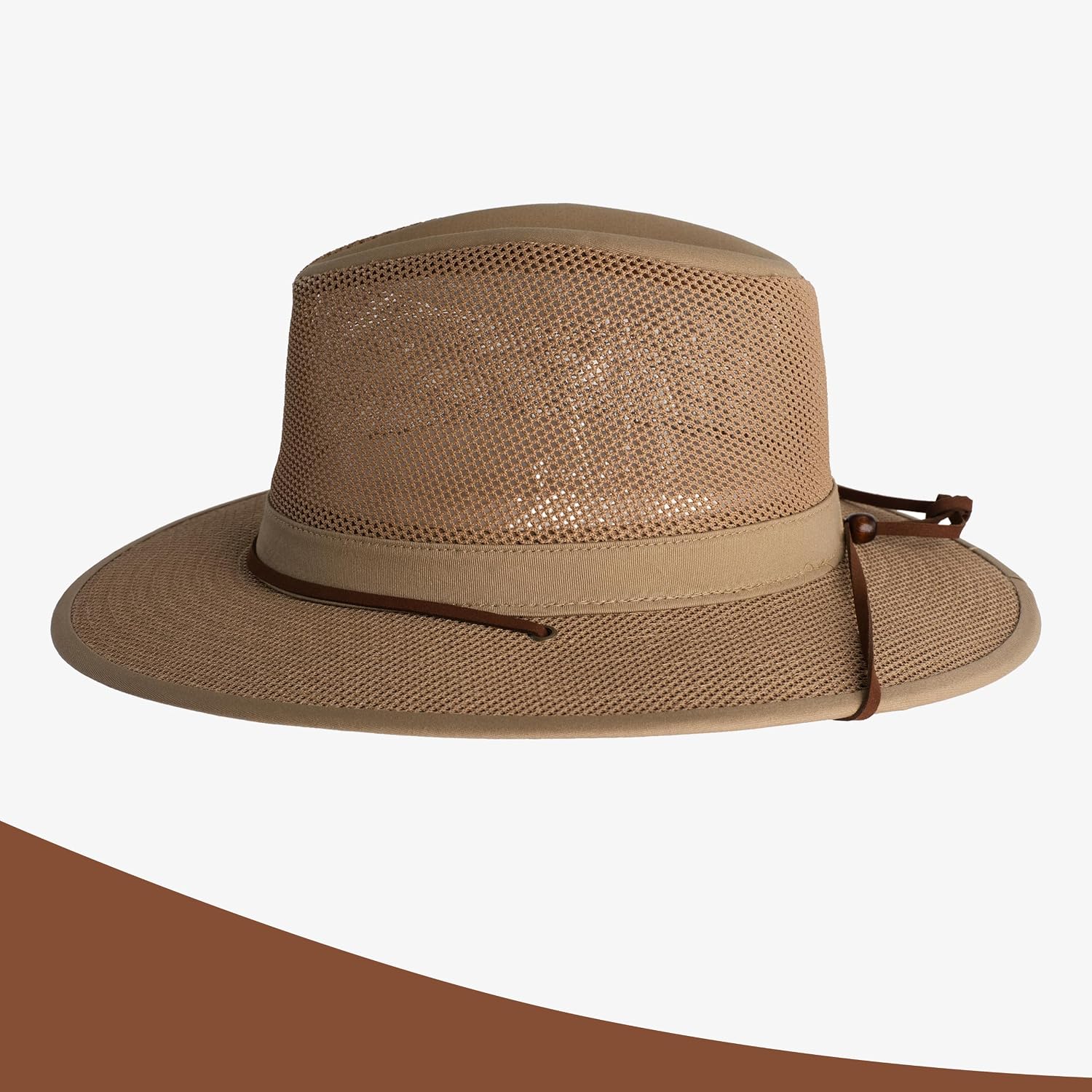
If you’ve ever worn a standard outback-style hat — the wide-brimmed, solid-fabric kind shaped like what you’d see on a drover or a station hand — you already know the problem: they’re brilliant at blocking the sun but they trap heat like a slow cooker on your head. A “mesh breezer” hat solves this by replacing some or all of the crown with open-weave mesh panels, letting hot air escape rather than build up. The brim — the wide projection that shades your face, neck, and shoulders — usually stays solid fabric for UV protection. It sounds like a neat fix, and for many buyers it genuinely is. But the trade-offs are real and worth understanding before you commit. This article lays out what the owner record actually says about airflow, sun protection, brim performance, and sizing — using four of the most-reviewed mesh breezer hats as the comparison frame, and placing each in honest context against the Tilley Airflo’s competing ventilation architecture.
| EDITOR'S PICKOztrala HAT Australian Outback… | Mid-tierHenschel Hats Original Aussie B… | Budget pickElias Mesh Breezer Hat for Men… | |
|---|---|---|---|
| Brim style | — | Wide-brim | Wide brim |
| Chin cord | — | ✓ | — |
| Sizes | US 7 1/8 | Large | Large |
| Color | Sand | Khaki | Coco |
| Gender/audience | — | Men's | Men & women |
| Material | P-leather felt | — | — |
| Price | $69.90 | $59.00 | $36.00 |
| See on Amazon → | See on Amazon → | See on Amazon → |
Why Solid Outback Hats Became the Baseline for This Problem
The Dorfman Pacific Weathered Outback hat has been reviewed by enough long-term owners to constitute a genuine body of evidence. Reviewers who have owned two hats across a decade are explicit about one recurring criticism: the hat “doesn’t breathe at all.” That’s a striking thing to say about a hat you’ve bought twice, and it tells you exactly why the mesh breezer category exists. A solid polypropylene or woven-straw crown is excellent at UV blocking — there are no gaps for photons to sneak through — but it’s also a heat trap. In high-UV, high-temperature environments like inland Queensland, the Northern Territory, or the Pilbara in summer, a hat that doesn’t ventilate is actively uncomfortable for extended outdoor work, and discomfort leads to hat removal, which defeats the entire purpose.
The Dorfman Pacific Weathered Outback is worth naming here not as a flawed product but as a useful reference point. It’s a well-regarded hat in its category. The breathability limitation is an inherent feature of its construction, not a manufacturing defect. If you’re a station worker, a field researcher, or anyone else spending five or more hours a day under direct sun in 35°C-plus conditions, the choice between “fully protected but miserable” and “comfortable but slightly less protected” is a genuine decision with real consequences.
The Mesh Breezer Design: What You’re Actually Trading
Here’s the core tension: mesh lets air in and out, but mesh also lets UV radiation in. The question is how much UV, and whether the marketed UPF (Ultraviolet Protection Factor) rating — UPF 50+ is the standard cited across this category — is honest when applied to a perforated fabric.
By the numbers:
- UPF 50+ on a solid fabric blocks 98% or more of UV radiation, per Standards Australia AS 4399:2020 — Sun protective clothing: Evaluation and classification
- Open-weave mesh can transmit substantially more UV depending on hole size and weave density, per ARPANSA’s published guidance on UV penetration through clothing
- A UPF 50+ rating on a hat’s spec sheet may apply only to the solid brim panels, not to the mesh crown sections
- Cancer Council Australia’s SunSmart guidance notes that clothing UPF ratings apply to the tested fabric panels, not to the garment as a whole
This matters enormously for bald wearers and anyone with a history of skin cancer treatment. Outside Online’s guide to choosing a sun hat makes the same point in a consumer context: headline UPF numbers on packaged hats routinely reflect brim-panel testing, not the crown.
Four Hats, Four Trade-Off Profiles
The following section compares four mesh breezer hats across the variables that matter most to long-term outback wearers: scalp UV protection, brim stiffness, out-of-box wearability, and value for working use. Each is assigned a tier marker reflecting its position in the market.
Oztrala HSRZ — Fine Mesh, Maximum Scalp Consideration
Elias
$36.00
In stock on Amazon
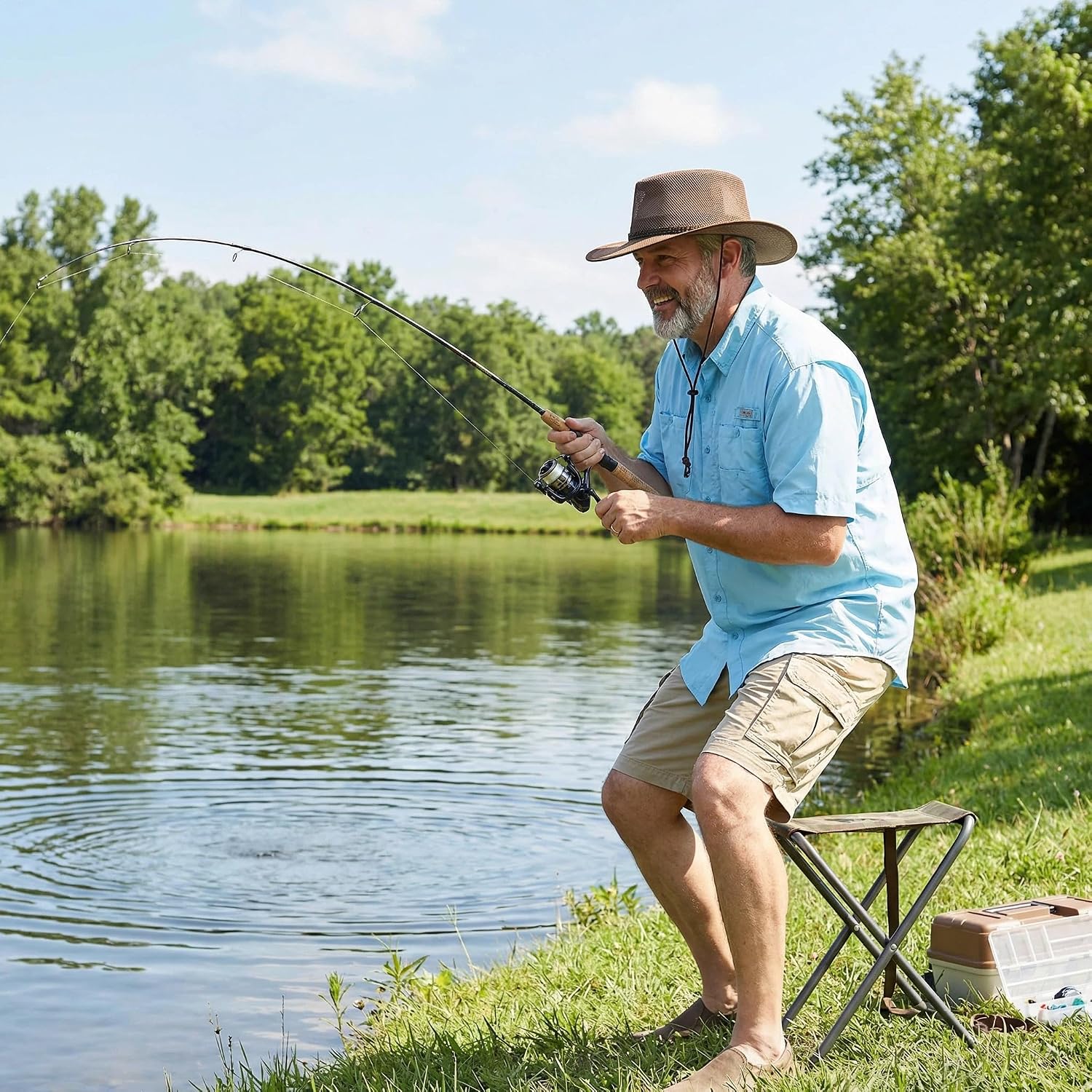
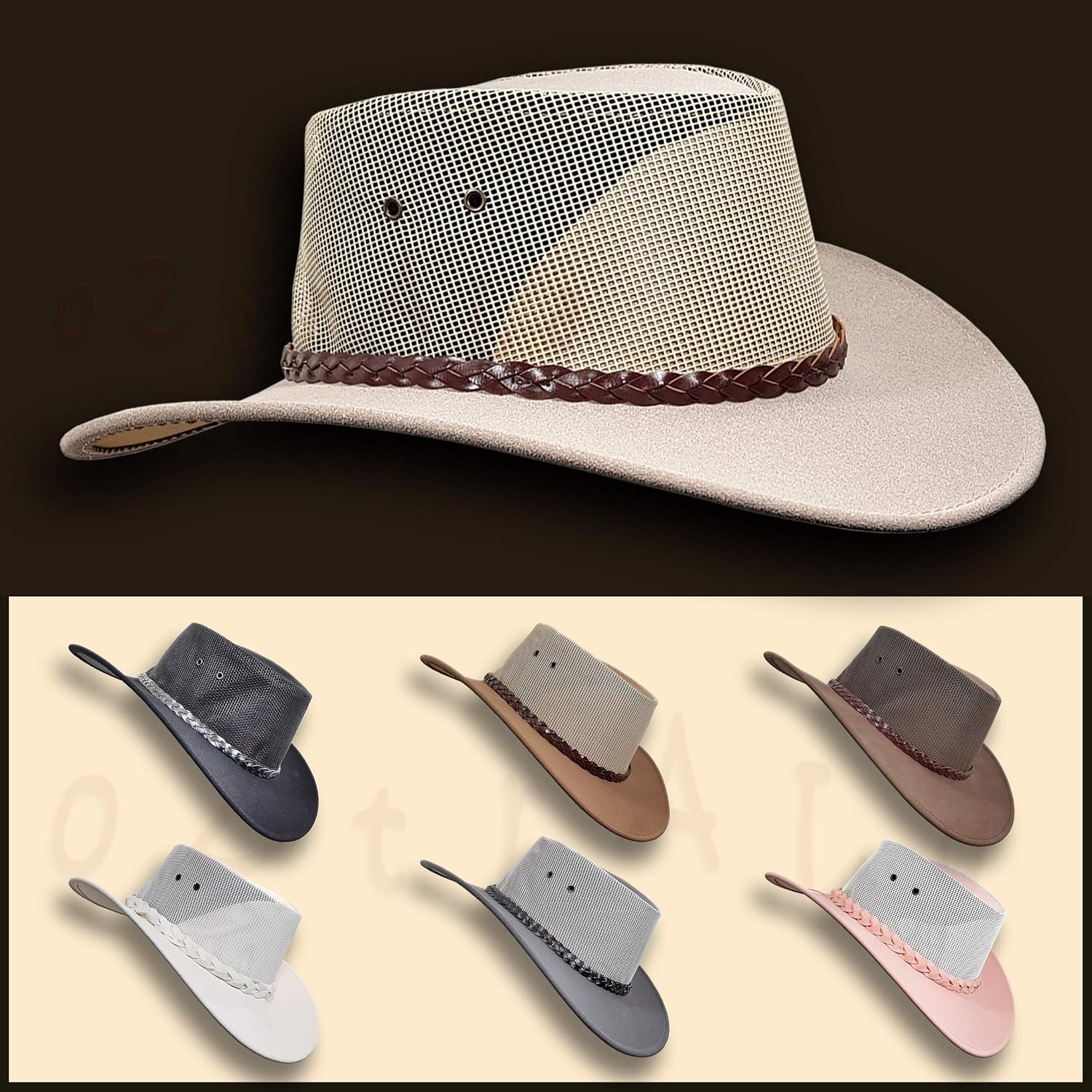
Check price on AmazonOne of the most useful pieces of owner intelligence in this category comes from an Oztrala HSRZ reviewer who identified as a delivery driver — someone wearing a hat for eight-plus hours daily in direct sun. He made an explicit point of choosing the Oztrala specifically because its mesh holes are smaller than competitors he’d tried. His framing was direct: larger-mesh alternatives allowed enough UV through to cause scalp burning on his bald head. He switched to the Oztrala’s finer mesh as a deliberate, experienced response to that failure.
This is a genuinely useful signal. It tells you that within the mesh breezer category, not all mesh is equal, and the marketing UPF rating is insufficient information on its own. If scalp protection is your primary concern — because you’re bald, thinning, or have had basal cell carcinoma or melanoma treated — mesh hole size and density is the variable you need to interrogate, not just the headline UPF number. The Oztrala HSRZ sits at the value end of the market and does the job it promises for everyday working use.
Elias
$36.00
In stock on Amazon
Check price on AmazonDorfman Pacific Weathered Outback — The Honest Baseline
Henschel
$59.00
In stock on Amazon
Check price on AmazonAs established above, the Dorfman Pacific Weathered Outback is not a mesh breezer hat — it’s the reference point against which mesh designs are evaluated. Long-term owners who repurchase it do so because it offers dependable sun coverage and a well-balanced drover brim profile. They accept the heat trap as the price of that coverage. Including it here is useful precisely because it defines the trade-off: if your environment is hot enough that you’re losing compliance — taking the hat off because it’s uncomfortable — then the Dorfman’s UV advantage over a mesh design is theoretical, not practical. A hat you remove isn’t protecting you. Cancer Council Australia’s SunSmart guidance is explicit that hats should be worn consistently; a hat that causes heat stress undermines that goal.
The Dorfman remains the right choice for cooler working environments, overcast days, or buyers who prioritise maximum UV protection over thermal comfort. It is not the right choice for sustained work in summer outback heat.
Henschel
$59.00
In stock on Amazon
Check price on AmazonHenschel Aussie Breezer — Wire Brim, Experienced-Buyer Loyalty
Henschel
$59.00
In stock on Amazon
Check price on AmazonThe Henschel Aussie Breezer draws a notably loyal reviewer base. What’s interesting is who those reviewers are: not first-timers, but experienced hat buyers who report having tried ten or more cheaper alternatives before landing on the Henschel. The consistent reason for switching is the wire-stiffened brim. Henschel uses a sewn-in wire along the brim edge that allows you to shape the brim to your preference — snap it down in front for direct sun, angle it up on the sides — and then keeps it there. Reviewers in windy environments specifically flag this as the differentiating feature.
If you’ve owned a mesh hat where the brim starts sagging by mid-afternoon or flaps audibly in a headwind, you understand why this matters. The wire brim isn’t a gimmick; it’s a structural solution to a known problem with lightweight mesh-panel hats. The Henschel Aussie Breezer occupies mid-tier pricing and represents the category’s clearest answer to the “mesh hat that actually stays functional in wind” brief.
Henschel
$59.00
In stock on Amazon
Check price on AmazonKanut Elias — Pre-Shaped Brim, Out-of-Box Wearability
Oztrala
$69.90
In stock on Amazon
Check price on AmazonThe Kanut Elias offers a slightly different version of the same brim assurance. One well-documented reviewer owns competitor versions from both Stetson and American Hat Makers and prefers the Kanut specifically because the brim arrived correctly shaped from the factory — no need for steaming, blocking, or forcing the brim into the drover-style downslope that provides cheek and neck shade. For buyers who don’t want to fuss with hat blocking (the process of using steam and pressure to reshape felt or stiff fabric), a hat that arrives ready-to-wear is a genuine practical advantage.
The Kanut Elias sits at the upper end of the mesh breezer price range. The premium reflects finish quality and the factory shaping that the Henschel leaves to the owner. If you’ve been frustrated by other designs requiring reshaping, or if you’re buying as a gift for someone who won’t have the patience for hat blocking, the Kanut’s out-of-box presentation is the differentiator worth paying for.
Oztrala
$69.90
In stock on Amazon
Check price on AmazonMesh Breezer vs. Tilley Airflo: A Different Architecture for the Same Problem
The Tilley Airflo takes a different engineering approach to the ventilation problem. Rather than open-weave mesh panels, the Airflo uses a structured ventilation channel built into the crown — the hat maintains a more solid visual profile while creating airflow through designed gaps at the crown seam. Owners of both designs describe the subjective breathability as similar in moderate heat, but mesh-crown wearers report a noticeable advantage in still air and very high temperatures, where passive convection through open mesh outperforms the channelled-gap approach.
The trade-off runs the other way on UV coverage: the Tilley Airflo’s structured crown, even with its ventilation gap, provides more continuous fabric coverage over the scalp than most open-mesh designs. Outside Online’s sun hat guidance identifies the Tilley Airflo as a strong choice for buyers who need all-day sun protection with some ventilation — a different point on the comfort-versus-coverage curve than a full mesh-crown design.
For buyers who run hot and have a full head of hair, a mesh-crown hat is probably the right answer. For buyers with significant scalp exposure who need genuine all-day UV protection without sacrificing all ventilation, the Airflo architecture is worth the honest look. Neither design is wrong; they’re solving the same problem with different tolerances for the UV-versus-airflow trade-off.
Sizing: The Recurring Small-Run Pattern
Across multiple mesh-style outback hats — including several of the models named here — sizing running small is a pattern in owner reviews, not an isolated complaint. If you typically wear a Large and are ordering a mesh breezer, the review consensus strongly suggests sizing up to XL before you try the fit. This is more pronounced in mesh hats than in fur-felt or stiff-straw designs, possibly because the mesh crown panels have less stretch than a continuous woven fabric.
The practical decision rule: if you’re buying online without a try-on, order one size up from your normal hat size and use the return window as your safety net. If a retailer doesn’t offer returns on hats, factor that into your decision.
Frequently Asked Questions
Does a mesh crown hat actually provide UPF 50+ protection, or does sunlight come through the holes?
The honest answer is: it depends on which part of the hat you’re testing. The solid brim panels on most mesh breezer hats carry a genuine UPF 50+ rating — they block 98% or more of UV in the same way any solid UPF fabric does, per Standards Australia AS 4399:2020. The mesh crown panels are a different story. Open mesh transmits UV in proportion to its hole size and weave density. If the spec sheet says “UPF 50+” without specifying which panels were tested, treat that as a brim rating, not a whole-hat rating. The Oztrala HSRZ’s smaller-mesh design is explicitly intended to reduce this gap, but it doesn’t eliminate it entirely.
Which mesh breezer hat has the stiffest brim that won’t flop in a breeze?
Based on the owner review record, the Henschel Aussie Breezer is the consistent answer. The wire-stiffened brim is specifically cited by experienced multi-hat buyers as the reason they switched from other mesh designs. The Kanut Elias also receives good marks for brim shape retention out of the box, though its stiffening approach differs from wire-sewn construction.
If I’m bald or have had skin cancer treatment, which hat gives the best genuine scalp protection?
For genuine scalp UV protection, mesh hole size matters more than the UPF marketing number. The Oztrala HSRZ’s fine-mesh design is the most explicitly documented choice for this use case — the reviewer evidence comes from someone who made this decision after experiencing scalp burning from larger-mesh alternatives. That said, no open-mesh crown provides the same protection as a solid fabric crown. If maximum scalp protection is the priority, a solid-crown hat with ventilation eyelets may serve you better than any mesh-panel design. Cancer Council Australia’s SunSmart guidance recommends combining hat use with SPF 50+ sunscreen applied to any exposed scalp skin.
Do mesh breezer hats run small — should I size up?
Yes, consistently. Sizing small is a pattern across multiple mesh-style designs. Order one size up from your normal hat size when buying online.
How does breathability in a mesh-crown hat compare to the Tilley Airflo?
In still air and very high temperatures, open mesh provides noticeably better passive ventilation than the Tilley Airflo’s channelled-gap design. In moderate conditions with some breeze, owners describe them as roughly comparable. The Airflo provides better continuous scalp coverage; the mesh-crown hat provides better thermal comfort in extreme heat. Choose based on which of those two factors is your harder constraint.
The Decision Frame
If you run hot, have a full head of hair, and spend long days in direct outback sun: a wire-brimmed mesh design like the Henschel Aussie Breezer is the clear answer — airflow plus brim control, from a reviewer base that’s done the comparison shopping for you.
If you’re bald or managing post-treatment skin sensitivity: prioritise fine-mesh construction (the Oztrala HSRZ pattern) over larger-mesh designs, add SPF 50+ to your scalp regardless, and seriously evaluate whether a solid-crown hat with eyelets might serve you better than any open-mesh design.
If out-of-the-box brim shape matters and you want a hat that doesn’t need adjustment on arrival: the Kanut Elias’s pre-shaped brim is the differentiator worth paying for, especially if you’ve been frustrated by other designs requiring reshaping.
If maximum UV protection is non-negotiable and you can tolerate some heat: revisit solid-crown designs with ventilation eyelets, or the Tilley Airflo, rather than treating mesh as the only answer to the breathability problem.
Mesh breezer hats are a genuine solution to a real problem. They’re not a compromise — they’re a different point on the trade-off curve. Knowing where you sit on that curve before you buy is the whole job.