September 8, 2026 • Callum Dray • 12 min reading time • Prices verified June 6, 2026
The Oilskin Outback Hat Ecosystem: Outback Trading Company's Range Honestly Compared for Long Haul Buyers
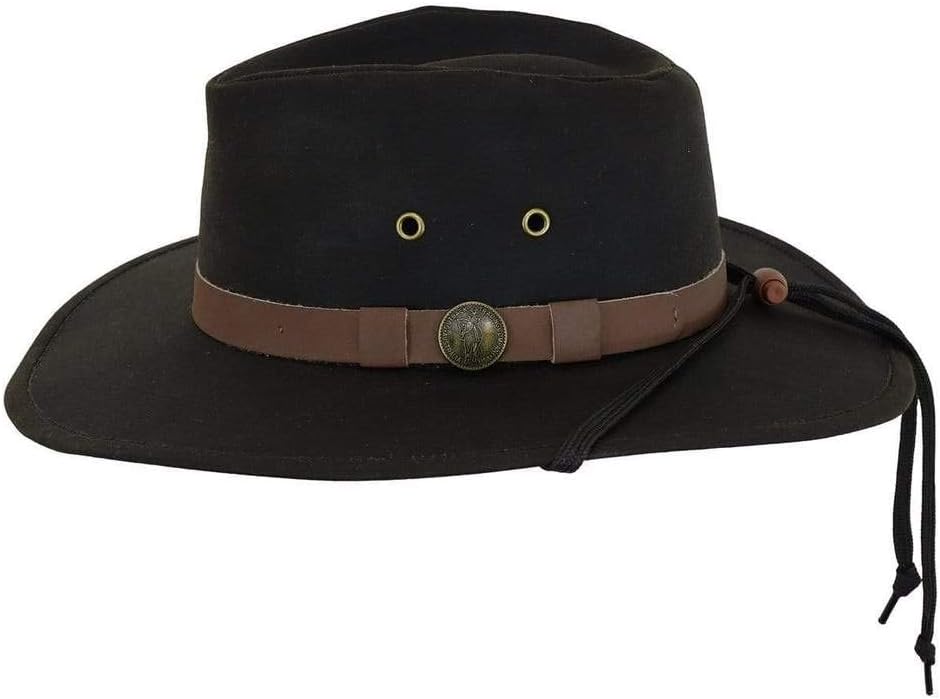
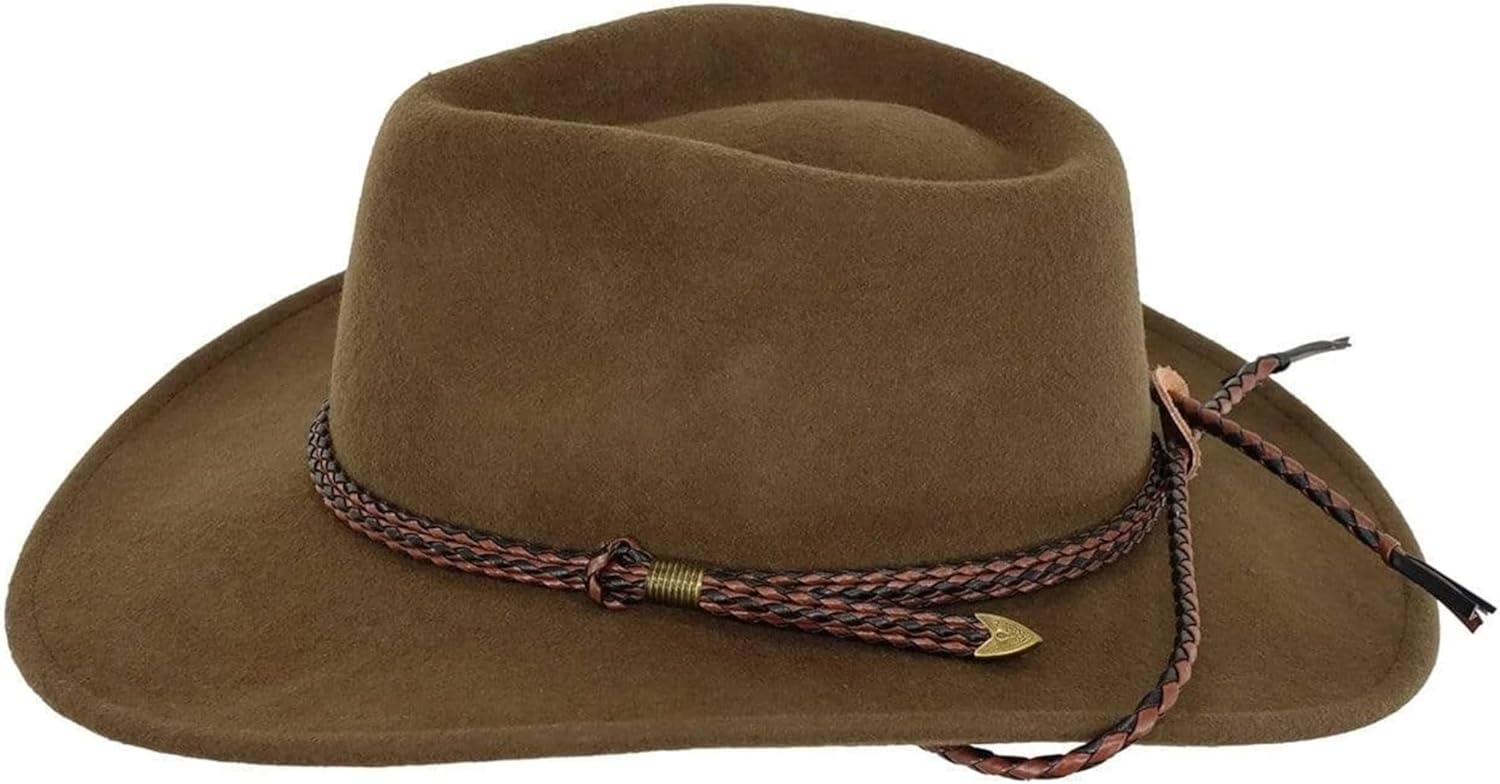
If you’ve ever stood in a farm supply store turning a hat over in your hands and wondering why one dark canvas hat costs twice another that looks nearly identical, oilskin construction is usually the answer. Oilskin is cotton canvas that has been impregnated with an oil or wax treatment — historically linseed oil, today more often paraffin-based or synthetic compounds — to make it water-repellent without adding the weight of a rubber or plastic shell. The result is a hat that sheds rain, resists wind deformation, and develops a working patina over years rather than deteriorating. Outback Trading Company, an American brand that built its identity around Australian-style drover and bush hats, produces one of the widest oilskin hat ranges available outside of fur-felt specialist hatters. This article works through their core lineup in the order most buyers encounter them — from the maximally protective Kodiak down to the lightweight River Guide — and names the real tradeoffs so you can make a call with confidence.
| EDITOR'S PICKOutback Trading Company Men's 1… | Mid-tierOutback Trading Company Women's… | Budget pickOutback Trading Company Unisex… | |
|---|---|---|---|
| Material | Australian wool | Cotton oilskin | Cotton oilskin |
| Waterproof | — | ✓ | ✓ |
| Breathable | — | ✓ | ✓ |
| Crushable | ✓ | — | — |
| Sun rating | UPF 50 | UPF 50 | — |
| Ventilation | — | — | Mesh |
| Price | $79.99 | $79.99 | $74.99 |
| See on Amazon → | See on Amazon → | See on Amazon → |
What “Oilskin” Actually Means in This Range — and Why It Matters for Longevity
Before comparing individual models, it’s worth anchoring on what Outback Trading’s oilskin treatment does and doesn’t do. In their field guide to waxed and oilskin fabrics, Heddels draws a useful distinction: a waxed canvas hat uses a solid wax — often paraffin or beeswax — that melts into the weave, while a true oilskin uses a liquid oil treatment that polymerises over time. Outback Trading Company describes their material as oilskin cotton, and the practical performance difference from the buyer’s side is that the treatment will gradually migrate out of the fabric with heat, UV exposure, and friction — which is why re-oiling is a real maintenance step, not optional marketing language.
Outside Online, in their guidance on sun hat selection for demanding outdoor use, notes that the durability ceiling of any treated fabric hat is almost entirely determined by how consistently the owner re-applies the treatment. This tracks with what long-term Outback Trading owners report: a five-year owner of the River Guide who re-oils annually describes no meaningful degradation in water repellency or fabric integrity. Buyers who skip re-oiling for two or three seasons consistently report that the hat becomes susceptible to water absorption and the brim loses its stiffness. The maintenance cadence isn’t high — most owners settle into an annual or biannual routine — but you need to factor it into your ownership model before committing.
Smithsonian Magazine, in their historical overview of oilskin, traces the material’s appeal in maritime and agricultural contexts to exactly this combination of weather resistance and structural retention — a hat that held its working shape when wet, not just when dry. That heritage context matters practically: oilskin’s longevity is conditional on maintenance in a way that synthetic materials are not, and buyers who treat it like a synthetic hat tend to be disappointed within three seasons.
By the numbers:
- Outback Trading Company oilskin rating: water-repellent (not waterproof — no seam sealing)
- Kodiak brim width: approximately 3.5 inches; River Guide brim width: approximately 3 inches
- Kodiak UPF rating: 50+; Kodiak Mesh UPF rating: 50+ (panel-rated, not whole-hat rated — see FAQ)
- Typical re-oiling interval reported by owners: 12–24 months under regular use
The Core Models Compared
The four models below represent the positions in Outback Trading Company’s oilskin range that account for the majority of purchases. Each occupies a distinct use-case niche, and understanding which niche matches your conditions is the entire job of this article.
The Kodiak: Maximum Protection, Minimum Packability
Outback
$79.99
In stock on Amazon
Check price on AmazonThe Kodiak is the hat in this range that buyers either love without reservation or rule out in the first week based on one specific characteristic: it is genuinely, meaningfully rigid. The crown and brim hold their shape not because the oilskin treatment stiffens them but because the underlying structure of the hat is designed for dimensional stability. Across aggregated verified purchase reviews, the pattern is consistent: Kodiak owners describe a hat that survives being left on a truck dash in summer heat, dropped in creek crossings, and worn through prolonged rain without the brim developing the downward sag that plagues cheaper canvas hats.
The rigidity is also why the Kodiak floats if dropped in water — a genuinely useful property that owners in river-adjacent work regularly mention as the detail that sealed their purchase. That float-on-water characteristic is a direct product of the hat’s structural density and the air trapped within its formed panels; it is not an accident of construction but a consistent reported feature across multiple independent buyer accounts.
The limitation is equally direct: the Kodiak cannot be packed flat or folded into a suitcase. If you travel by air regularly and need your hat in your bag, the Kodiak requires either checked luggage or a dedicated hat box. Buyers who understood this upfront report zero complaints about it. Buyers who discovered it at the airport report frustration. Know your transport reality before you commit.
Best for: Station work, equestrian use, multi-day hiking in variable weather, buyers who will never need to pack the hat flat. Skip if: You travel frequently by air with your hat in-bag, or you need a hat that can be compressed for storage.
Outback
$79.99
In stock on Amazon
Check price on AmazonThe Kodiak Mesh: Heat Management with a Weather Caveat
Outback
$79.99
In stock on Amazon
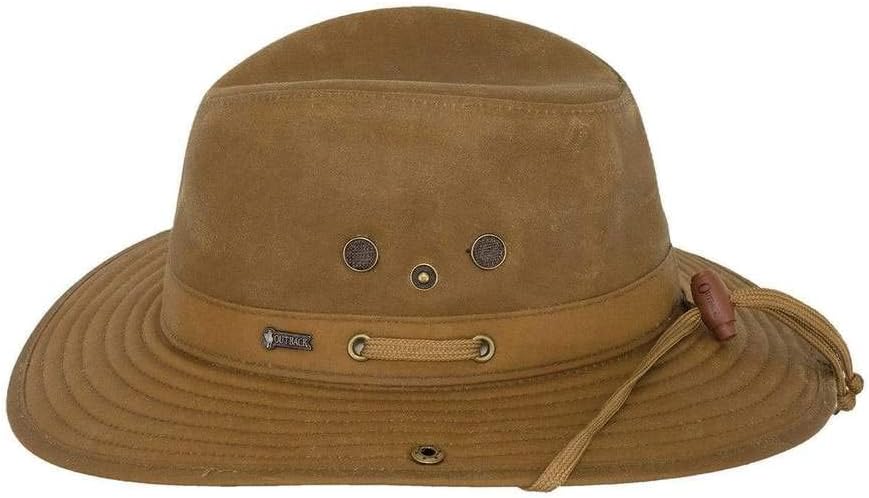
Check price on AmazonThe Kodiak Mesh addresses a specific gap: buyers — particularly those who are bald-headed or working in sustained high heat — who want the Kodiak’s structural protection but need airflow through the crown. The mesh panel replaces the solid oilskin across the upper crown, which meaningfully lowers the temperature under the hat in direct sun.
The tradeoff is straightforward and must be stated plainly: the mesh panels are not oilskin-treated, so rain that falls directly onto the crown will pass through. The hat sheds water off the brim, and the oilskin portions of the crown remain repellent, but it is not a rain hat in the way the standard Kodiak is. Outside Online’s sun hat selection guidance specifically flags mesh crown panels as the structural weak point for both UV coverage and rain protection in any hat design — the Kodiak Mesh is not an exception to that principle.
Kodiak Mesh buyers who understand this — and who are primarily motivated by heat management rather than rain exclusion — are consistently satisfied. Buyers who purchased it as a direct Kodiak substitute for wet-weather work are not. The UPF 50+ rating on this model applies to the oilskin panels; the mesh sections provide significantly less UV protection because they allow light and airflow by design.
Best for: High-heat environments, bald or closely cropped hair, buyers who prioritise cooling over complete rain coverage. Skip if: You need a hat that excludes rain at the crown, or you are buying primarily for cold wet-weather use.
Outback
$79.99
In stock on Amazon
Check price on AmazonThe River Guide and Bootlegger: The Packable, Wearable End of the Range
Outback
$74.99
In stock on Amazon
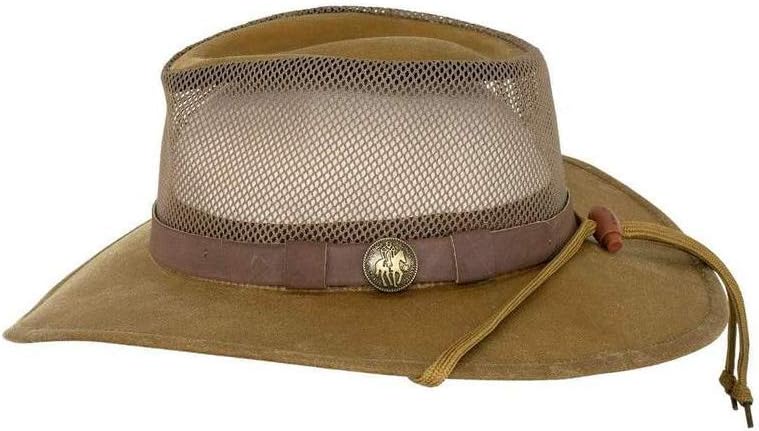
Check price on AmazonThe River Guide occupies an interesting position in this lineup because it carries a “women’s” label in the way Outback Trading markets it, yet owner reviews tell a different story. Across verified purchase reviews, male buyers report purchasing and wearing the River Guide without issue, and the hat’s proportions — a moderate crown height, a medium brim with a gentle downward angle — read as unisex in use. The “women’s” label appears to reflect the colorway options and the marketing context in which it was originally positioned rather than any structural difference that would prevent a male buyer from fitting and wearing it comfortably.
Where the River Guide earns consistent praise is in wearability over time: it is lighter and more flexible than the Kodiak, which makes it the better choice for extended wear in moderate rather than demanding conditions. The five-year owner who re-oils annually and reports no degradation is a River Guide owner — that longevity signal is meaningful for buyers who want a hat that earns its price across a decade of use.
The Bootlegger draws what might be the most self-aware buyer in this range. Reviewers consistently describe a considered, comparison-heavy purchase process, suggesting this is not an impulse buy. The Bootlegger’s profile is a mid-brim, structured-crown hat with a slightly more refined silhouette than the Kodiak’s overtly utilitarian stance. It occupies a middle ground between working hat and presentable travel hat, and buyers who wanted both functions in one piece consistently find it delivers. It tolerates careful packing better than the Kodiak — not flat-packed, but manipulated gently without permanent deformation — which makes it the more practical choice for buyers who move between field and town contexts.
Best for: Extended moderate-condition wear, buyers who travel and need a hat that packs more forgivingly, buyers who want a hat that works in both field and social settings. Skip if: Your conditions are genuinely brutal — sustained heavy rain, extreme UV — where the Kodiak’s structural rigidity pays larger dividends.
Outback
$74.99
In stock on Amazon
Check price on AmazonThe Sizing Problem: Naming It Directly
The single most concrete, repeated complaint across this range is a sizing chart mismatch that affects the Grizzly and, to varying degrees, other models. The specific pattern: buyers who size themselves at XL on Outback Trading’s S/M/L chart report receiving a hat that corresponds to a 7 3/8 fitted hat size — and for buyers whose actual head circumference would put them in a 7 1/2 or above, that XL does not fit.
This is not a one-off complaint; it is a documented pattern across aggregated purchase reviews.
The practical guidance from owners who navigated this successfully: measure your head circumference in centimetres and cross-reference against the brand’s stated centimetre range for each size, not against the S/M/L label alone. If your measurement puts you near the top of a size band, size up. If you are between a 7 3/8 and a 7 1/2 in fitted hat sizing, buyers consistently recommend ordering the next size up and using the internal drawstring — present on most models in this range — to take in the fit rather than ordering to the chart and finding yourself with a hat that won’t clear your head.
The S/M/L system is a real risk point in this range. The centimetre measurement is your protection against it.
Decision Framework: If X, Then Y
If you need maximum weather protection and do not travel by air with your hat in-bag: the Kodiak is the correct answer. Its rigidity is a feature, not a flaw, and longevity reports from demanding-use owners are strong.
If you are bald-headed or work in sustained high heat and can accept reduced rain performance at the crown: the Kodiak Mesh is the rational choice. Understand that the mesh panels are not waterproof and buy accordingly.
If you want multi-year durability in moderate conditions and are willing to re-oil annually: the River Guide earns its price. Ignore the “women’s” label if the silhouette works for you.
If you travel frequently, need the hat to be presentable in non-field settings, and want a middle ground between utility and refinement: the Bootlegger is where considered buyers in this range tend to land.
Regardless of model: measure your head circumference in centimetres before you order, cross-reference against the brand’s centimetre spec, and if you sit near the top of a size band, size up.
Frequently Asked Questions
How often do owners actually re-oil an Outback Trading Company oilskin hat? The most common cadence reported in long-term owner reviews is once every twelve to twenty-four months under regular use. Buyers in very high UV or high-friction environments — equestrian work, station use with constant hat-on-hat-off cycles — tend toward annual re-oiling. Buyers who use the hat seasonally often stretch to every second year without noticeable performance loss. The signal to re-oil is water beading less reliably on the surface rather than a fixed calendar date.
Can any of these hats be folded and packed in a suitcase? The River Guide and Bootlegger tolerate careful packing better than the Kodiak. The Kodiak’s structural rigidity — which is what makes it weather-resistant — also makes it genuinely unsuitable for suitcase packing. Owners who travel with a Kodiak consistently report using a hat box or checking it separately. The River Guide can be gently manipulated without permanent deformation, though owners recommend storing it on a hook or block rather than compressed flat.
What does ‘UPF 50+’ mean on an oilskin hat versus a mesh hat? UPF 50+ on a solid oilskin panel means that panel blocks approximately 98% of UV radiation passing through it. On the Kodiak Mesh, the UPF 50+ rating applies to the oilskin portions of the hat only. The mesh panels themselves provide significantly less UV protection because they allow airflow and light transmission by design. Outside Online’s guidance on sun hat selection notes that mesh panels on any hat are the structural weak point for UV coverage; the Kodiak Mesh’s brim still provides strong shade coverage, but the crown mesh should not be considered UV-blocking in the same way the solid oilskin crown of the standard Kodiak is.
Is the Kodiak truly rigid enough that the brim won’t reshape with use? Based on owner reports across multi-year use, yes. Reviewers in demanding conditions consistently describe a brim that holds its angle and does not develop downward sag with heat, moisture, or pressure. The wire brim structure present in Outback Trading oilskin models contributes to this retention. The Kodiak is the model where structural stability is most consistently reported; the River Guide’s brim is more flexible by design, which is a tradeoff for comfort rather than a defect.
Why does the River Guide say ‘women’s’ when it seems unisex in reviews? The “women’s” designation appears to reflect Outback Trading’s marketing context and colorway selection at launch rather than a structural or sizing difference that limits the hat to female buyers. Male buyers who assessed the silhouette and found it suited their face shape and intended use consistently report no fit or proportion issues. If the profile works for you, the label is not a meaningful constraint on purchase.