September 8, 2026 • Callum Dray • 11 min reading time • Prices verified June 6, 2026
The Serious Sun Hat Decision: Tilley Airflo and T4MO Models Versus Henschel Breezer and Wallaroo for All-Day Coverage
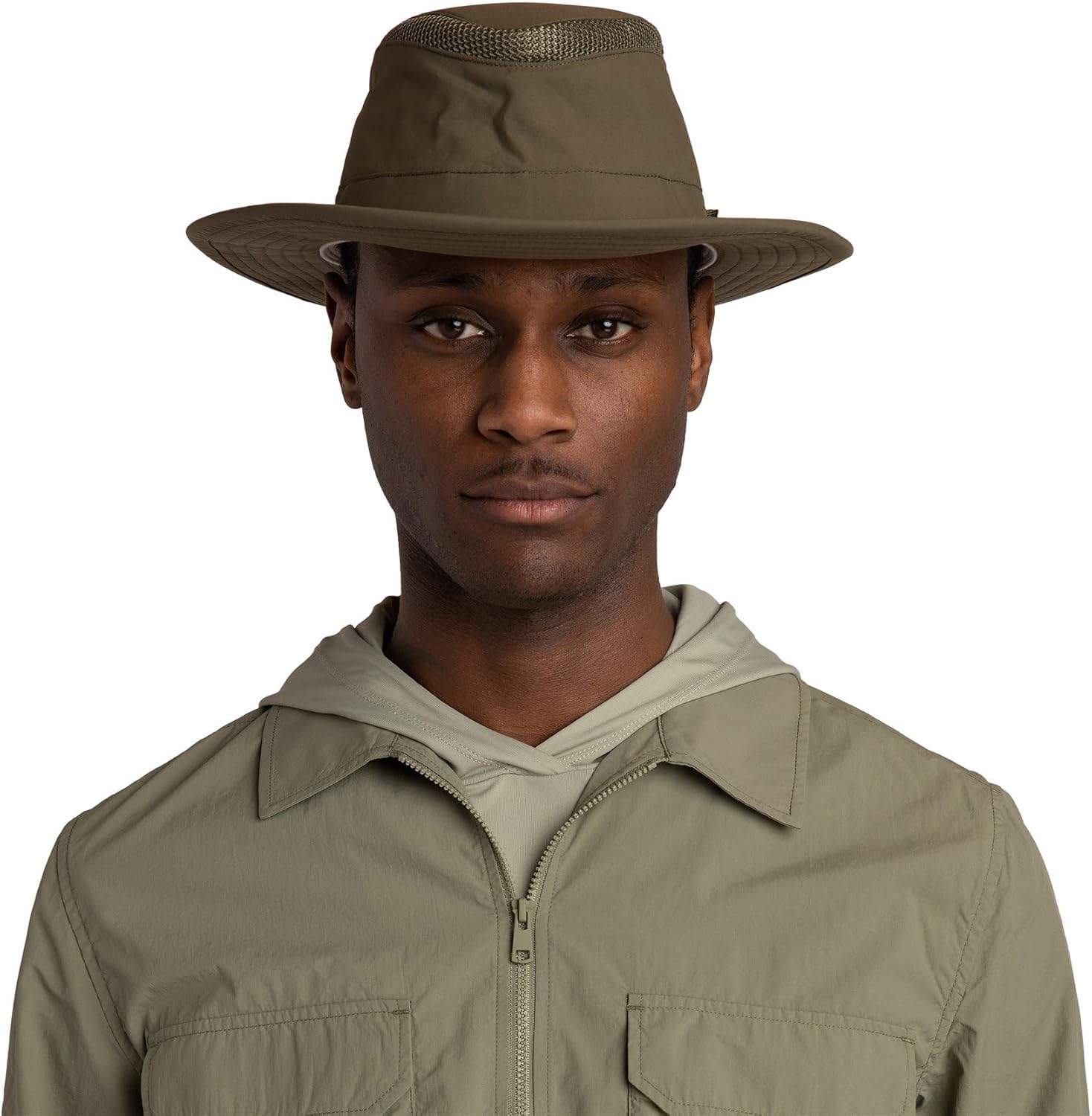
If you’re standing at a shelf — or more likely a browser window — trying to decide between a Tilley, a Henschel, and a Wallaroo for a long day in serious sun, the sheer number of competing claims can make the decision feel murkier than it should. A “sun hat” in this context means something specific: a brimmed hat (the brim is the horizontal rim that casts shadow over your face, neck, and ears) wide enough to provide genuine UV protection rather than just a stylistic nod to the outdoors. The four models we’re comparing — the Tilley LTM6 Airflo, the Tilley T4MO Hiker, the Henschel Breezer, and the Wallaroo Outback Fedora — are all purpose-built for all-day coverage. But they represent meaningfully different design philosophies, and choosing the wrong one for your conditions is a real and frustrating mistake. This article lays out what owners report, what the specs show, and what the tradeoffs are — so you can make a confident call.
| EDITOR'S PICKTilley Unisex Adult Hikers Hat… | Mid-tierTilley Unisex Adult Ltm8 Airflo… | Budget pickHenschel Hats Original Aussie B… | |
|---|---|---|---|
| Brim | — | — | Wide |
| Chin cord | — | — | ✓ |
| Color | Grey | Khaki | Khaki |
| Size | 7 1/2 | 7 3/8 | Large |
| Ventilation | — | Airflo | Breezer |
| Price | $96.00 | $79.20 | $59.00 |
| See on Amazon → | See on Amazon → | See on Amazon → |
The Core Design Philosophies at Play
Before going model-by-model, it helps to understand the fundamental split these four hats represent.
Tilley LTM6 Airflo and T4MO Hiker: Integrated Performance
The Tilley LTM6 Airflo and T4MO Hiker both belong to the integrated performance camp: sun-blocking fabric, wind retention systems (cords or straps that keep the hat on your head in a breeze), and structured brims that hold their shape across sustained wear. Tilley’s brand identity is built on the lifetime guarantee — more on what that actually covers shortly — and on engineering a hat that solves multiple problems simultaneously. Reviewers who own multiple Tilley hats, including khaki, olive, and black versions, and who explicitly compared the line against Stetson and Bailey before settling here, signal the kind of brand loyalty that only comes from a product that consistently delivers.
Outside Online, in their 2024 roundup titled “The Best Sun Hats for Every Kind of Adventure,” positions the LTM6 Airflo as the strongest all-conditions performer in its category — better ventilation than a solid canvas hat, adequate rain resistance for light showers, and a wash-and-wear construction that survives repeated cleaning without deforming. That breadth of conditions performance is the Tilley house advantage.

Tilley
$79.20
In stock on Amazon
Check price on AmazonHenschel Breezer: Ventilation as Primary Goal
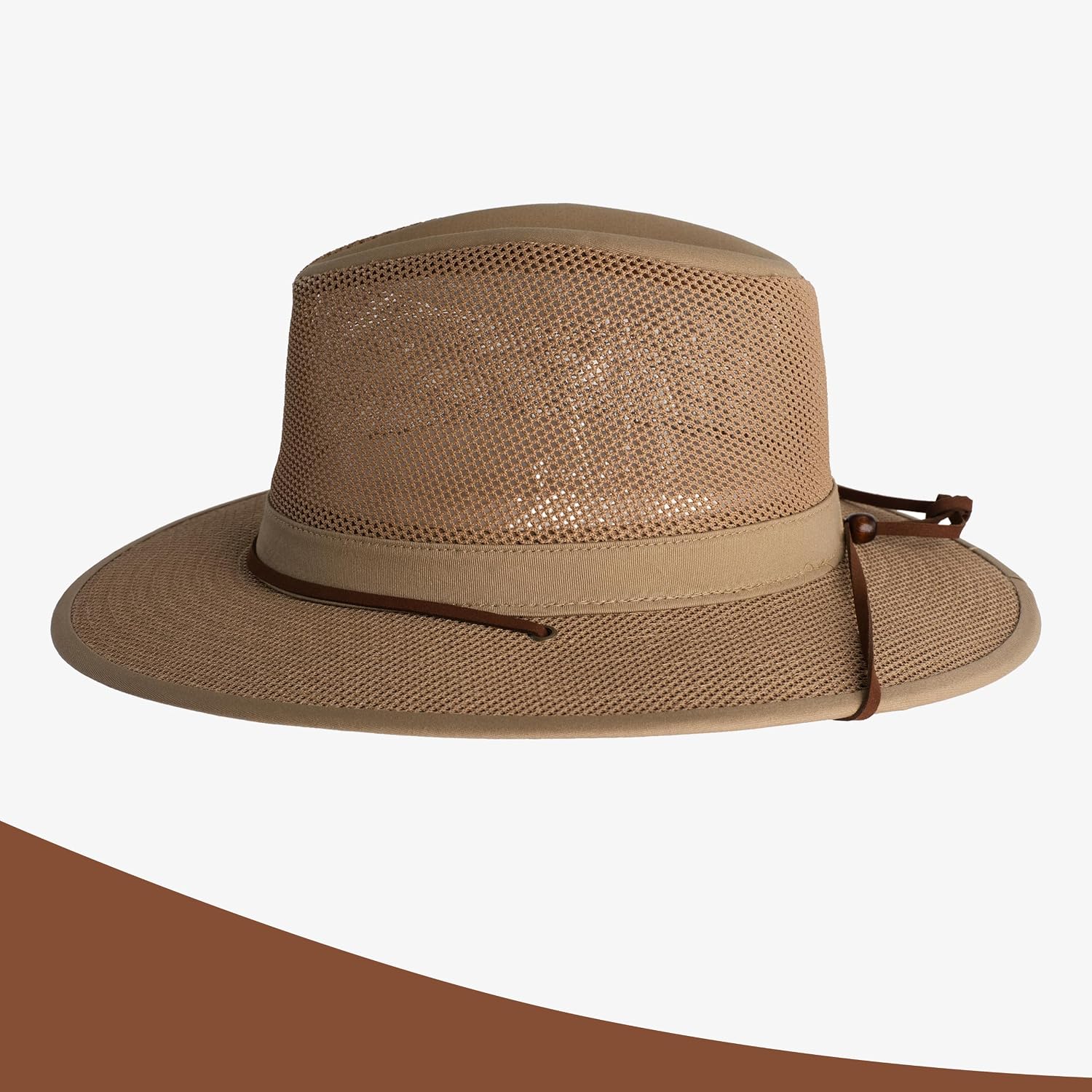
The Henschel Breezer represents a different bet entirely: maximum airflow as the primary design goal, achieved through an open-weave crown (the top portion of the hat) that sacrifices some UV coverage in exchange for dramatically cooler wear on hot, still days. Henschel Breezer owners are strikingly consistent in their language — phrases like “much cooler than any brim hat I’ve owned” appear repeatedly across aggregated owner reports — but the same owners are equally consistent that this hat is not suited for rain. That’s not a defect. It’s the honest consequence of building for ventilation first.
Consumer Reports, in their Hat and Sun Protection Buyer’s Guide overview, notes that perceived temperature comfort under a hat is heavily influenced by crown airflow, and the Breezer’s open-weave design addresses this more directly than any closed-crown competitor at a comparable price point.
Henschel
$59.00
In stock on Amazon
Check price on AmazonWallaroo Outback Fedora: Proven Long-Term Durability
The Wallaroo Outback Fedora anchors the comparison on longevity. Owners reporting six to eight years of daily or near-daily use represent the strongest durability signal in this group. If you’re not changing your hat philosophy in the next decade and you want a fedora silhouette — the pinched crown and medium-brim shape common to classic outback headwear — the Wallaroo’s longevity data is the most compelling case in this field. Australian Geographic, in their ongoing sun safety editorial coverage, emphasises that hats used in sustained high-UV conditions are doing serious protective work every single day, which makes multi-year durability a genuine cost-of-ownership consideration rather than a luxury specification.
Tilley
$96.00
In stock on Amazon
Check price on AmazonBrim Geometry: Where the Real Coverage Differences Live
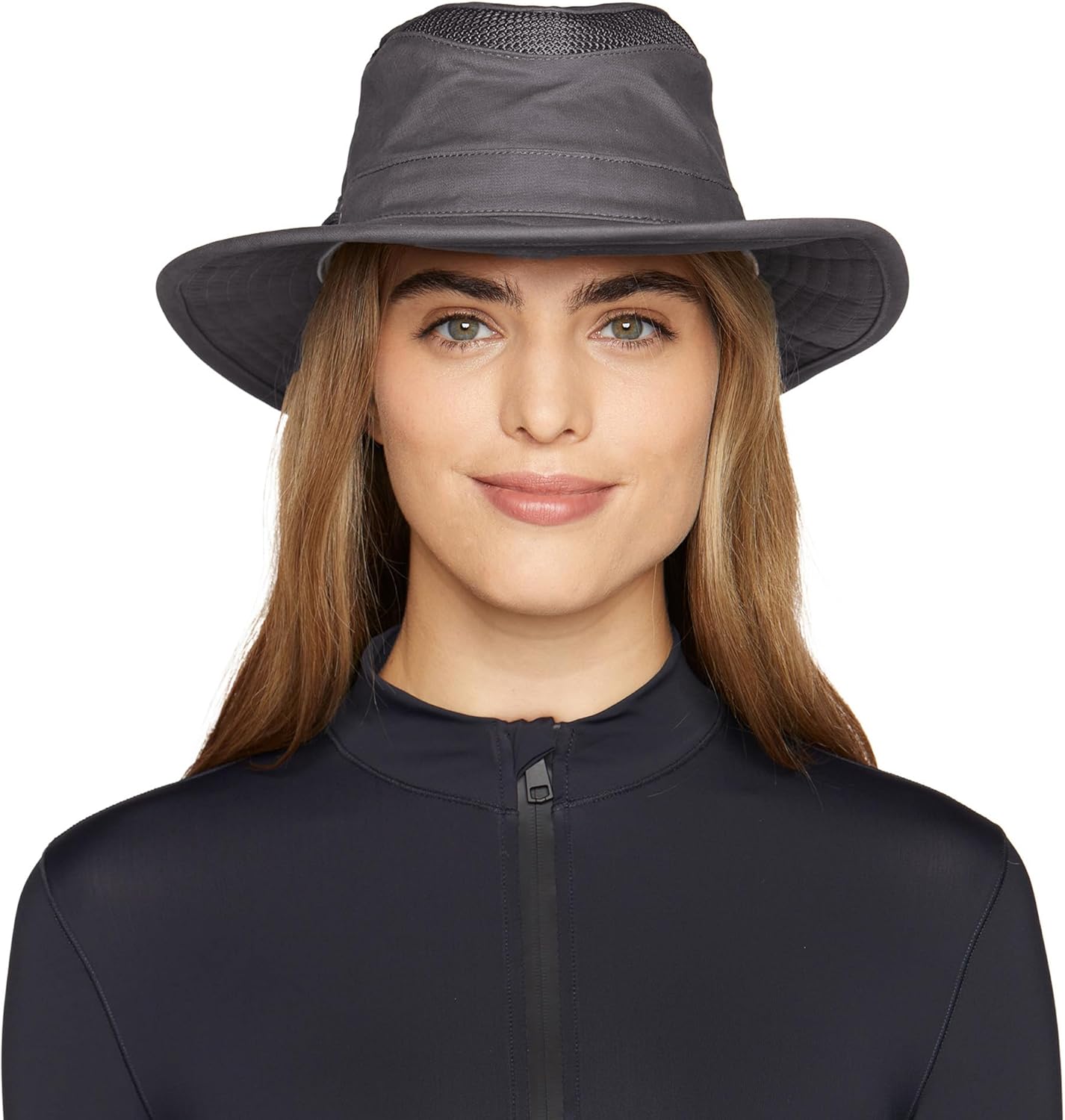
This is where the T4MO Hiker separates itself most visibly from the rest of the field. Multiple reviewers of the T4MO — including at least one who measured brim dimensions directly — describe an asymmetric brim: approximately 3.5 inches at the front (the part shading your face) and 2.5 inches on the sides. That asymmetry is deliberate. A wider front brim keeps direct overhead sun off your nose and forehead during midday hours when the sun is highest; the narrower side allows better peripheral vision and reduces wind resistance. The dual wind-cord system on the T4MO — two independent cords rather than a single cinch — is a technical detail that matters in practice: it allows differential tension adjustment so the hat sits securely without distorting the crown shape.
The LTM6 Airflo runs a more symmetrical brim — reported consistently at around 3 inches across — which gives it a cleaner silhouette and makes it slightly more versatile as a travel hat. One LTM5 owner (the LTM5 is the predecessor model with near-identical brim geometry) reported using the hat in Hawaii with trade winds quantified at 10–15 mph, confirming the hat stayed on with the wind cord deployed. Above 15 mph is a different conversation, addressed directly in the FAQ below.
The Henschel Breezer’s brim sits in the 3-inch range depending on the variant, but its protection story is complicated by the open crown. Wirecutter, in their 2025 update to “The Best Sun Hats,” notes that UV protection requires both brim coverage and fabric density; an open weave that allows airflow will also allow diffuse UV scatter to reach the scalp. This is not a deal-breaker for most wearers — the brim still does the primary shielding work for face and neck — but it is a real consideration for anyone with a bald scalp or significant hair thinning who will wear this hat in sustained direct sun.
The Wallaroo Outback Fedora typically runs a 3.5-inch brim in its wider variant, with a structured profile that holds its shape over years of use. Owners consistently note the brim doesn’t flop or curl unevenly after extended wear — a meaningful point given that brim collapse is the most common long-term failure mode in fabric sun hats.
By the numbers:
| Hat | Approx. Brim Width | Brim Type | Wind Retention |
|---|---|---|---|
| Tilley LTM6 Airflo | ~3 in (symmetric) | Structured fabric | Single snap-cord |
| Tilley T4MO Hiker | 3.5 in front / 2.5 in side | Asymmetric structured | Dual wind-cord |
| Henschel Breezer | ~3 in (variant-dependent) | Semi-structured | Minimal/optional |
| Wallaroo Outback Fedora | ~3.5 in (wide variant) | Structured, fedora-profile | Drawcord chinstrap |
Ventilation, Sweat, and the Long Hot Day
The Henschel Breezer’s open-weave crown is genuinely in a different class for ventilation on dry, hot days with light wind. Owners consistently use superlative language — “nothing comes close for airflow” appears as a recurring sentiment. The honest framing is this: if your primary condition is a hot, relatively still environment where rain is unlikely (think inland Australia in summer, or high-UV desert travel), the Breezer’s ventilation advantage is real and meaningful. Don’t buy it for rainy or variable-weather travel.
The LTM6 Airflo earns its name through ventilation holes positioned around the crown. They are smaller apertures than the Breezer’s open weave, which means meaningfully better rain resistance but less raw airflow. Outside Online’s 2024 sun hat roundup positions the LTM6 as the strongest all-conditions performer across climates — the ventilation holes do real work on hot days without creating the wet-weather vulnerability of a fully open crown.
The Wallaroo sits between these poles. Its construction allows moderate airflow without the open-weave vulnerability of the Breezer. Owners reporting multi-year daily use frequently mention that the hat continued to hold its structure and breathe reasonably well even after years of sweat loading. Australian Geographic’s sun safety editorial context is relevant here: in persistently high-UV environments, wearing a hat every day without exception is the baseline recommendation, which means sweat resistance and washability aren’t peripheral concerns — they are core functional requirements.
Longevity and the Value Argument Over Time
The Wallaroo’s six-to-eight-year daily wear reports are the most striking durability signal in this comparison. A hat doing protective work every day in high-UV conditions forces a re-purchase cycle when it fails prematurely, which erodes any apparent cost advantage of cheaper options. Consumer Reports’ hat buyer’s guide overview explicitly accounts for cost-per-year-of-use as a more meaningful metric than sticker price for outdoor protective gear — and by that measure, the Wallaroo’s longevity record makes a compelling case.
The Tilley lifetime guarantee has been a brand cornerstone for decades. What it actually covers in practice is worth stating plainly: Tilley’s published guarantee terms cover defects in materials and workmanship, with the notable inclusion of the hat being replaced if lost to an unusual circumstance — the brand’s marketing has long cited stories of hats surviving animal encounters. What the guarantee does not routinely cover is normal wear degradation: a sweat-stained lining, UV fading of the fabric colour, or brim deformation from improper storage. This distinction matters because some buyers treat “lifetime guarantee” as equivalent to “indestructible,” which it isn’t. It’s closer to a strong defect warranty with goodwill provisions — generous by industry standards, but not unconditional.
The Henschel Breezer’s longevity picture is thinner in the owner record, likely because buyers who take it into rain or sustained wet conditions discover its limitations early and don’t reach multi-year ownership. Owners who use it correctly — dry conditions, storage out of rain — report solid construction, but the sample of long-term owners is smaller than the Wallaroo or Tilley camps.
The Decision Frame: If X, Then Y
These aren’t close calls once you’re honest about your primary conditions:
If your primary use is high-UV, low-rain inland conditions and heat comfort is your dominant concern: The Henschel Breezer’s ventilation advantage is real, and the open-crown UV limitation is manageable with sunscreen on the scalp. Don’t buy it for rainy or variable-weather travel.
If you want one hat that handles variable conditions — including occasional rain, wind above 10 mph, and long travel days: The Tilley LTM6 Airflo is the most defensible all-conditions choice, supported by the strongest owner loyalty data in this group and a track record across climates that neither the Breezer nor the Wallaroo can match in breadth.
If ear and neck coverage is your priority — hiking, station work, high-UV equestrian use: The T4MO Hiker’s asymmetric brim (wider at front) and dual wind-cord give it a technical edge over the LTM6 for face-forward, active-use scenarios. The tradeoff is a more utilitarian appearance that doesn’t translate as cleanly off the trail.
If you want a fedora-profile hat for long-term daily use with genuine durability confidence: The Wallaroo Outback Fedora’s six-to-eight-year owner reports are your most reliable signal. It doesn’t match the Tilley’s all-conditions engineering or the Breezer’s peak ventilation, but it wins on aesthetic versatility and proven longevity for steady, everyday use.
Frequently Asked Questions
Does the Tilley LTM6 brim actually stay stiff in sustained wind above 15 mph? Owner reports are mixed above 15 mph without the wind cord deployed. With the cord cinched under the chin, the hat performs reliably — one LTM5 owner confirmed this at 10–15 mph trade wind conditions in Hawaii. Above 15 mph sustained, any hat without a firm chin cord will eventually catch air; the LTM6 is not exempt from physics. The cord is functional, not decorative — use it in serious wind.
Is the Henschel Breezer’s open weave safe for prolonged direct sun on a bald scalp? This requires an honest “it depends.” The open-weave crown allows diffuse UV scatter to reach the scalp directly beneath it, even in full sun. Wirecutter’s 2025 update to “The Best Sun Hats” specifically flags open-crown construction as a consideration for wearers with scalp sun sensitivity. For a bald scalp in sustained direct sun, either apply sunscreen to the scalp or choose a closed-crown alternative. The Breezer’s brim still protects your face and neck regardless.
What does the Tilley lifetime guarantee actually cover in practice? Per Tilley’s published guarantee terms, it covers defects in materials and workmanship and extends goodwill provisions for unusual loss scenarios. It does not routinely cover: normal UV fading, sweat staining, brim deformation from storage, or general wear-and-tear degradation. Think of it as a strong defect warranty with a generous brand culture behind it — not an unconditional replacement policy.
How does the T4MO’s asymmetric brim compare to the LTM6 for ear and neck coverage? The T4MO’s 3.5-inch front brim provides more face shading than the LTM6’s symmetric ~3-inch brim, but the 2.5-inch side measurement means slightly less direct ear coverage than a fully symmetric wide-brim design. If ear coverage is your priority, a hat with a wider symmetric brim — or a hat with a neck flap attachment — will outperform the T4MO on that specific metric.
Can the Wallaroo Outback Fedora be machine washed after years of sweat? Wallaroo’s published care instructions advise hand washing for best results. However, owners in multi-year wear reports frequently describe machine washing on gentle cycles with cold water and air-drying flat — and describe the hat maintaining its shape across repeated cycles. The fedora profile (a shaped, pinched crown) is more vulnerable to machine agitation than a floppy-brim crushable, so a mesh laundry bag and a gentle cycle are strongly advisable. Air-drying flat on a towel rather than hanging is the consistent owner recommendation for maintaining brim shape.