June 22, 2026 • Callum Dray • 11 min reading time • Prices verified June 6, 2026
Wool Felt Outback Hats Under $150: Which Brands Deliver Real Quality and Which Disappoint
If you’ve started looking at outback-style hats and noticed that most options under $150 are made of wool felt rather than fur felt, you’re already asking the right question. Here’s the short version: fur felt — the material used in heritage Australian hats like the Akubra — is made from compressed animal fur (rabbit or hare), giving it exceptional water resistance, durability, and that silky finish you’ll notice immediately. Wool felt, by contrast, is made from compressed wool fibres. It’s heavier, absorbs moisture more readily, and won’t hold a complex shape as crisply over years of hard use. It is, however, substantially cheaper to produce, which is why the $80–$150 price tier is almost entirely wool felt territory. None of the hats reviewed in this article are Australian-made — that’s a critical baseline to set before we go any further — and understanding that distinction honestly is the whole point of this piece. What you can get in this tier is a capable, good-looking hat with genuine outdoor utility, if you pick the right one.
| EDITOR'S PICK[Stetson Gallatin Outdoor Hat Sa…](https://www.amazon.com/dp/B0041M5D9Q?tag=greenflower20-20) | Mid-tierB&S Premium Lewis - Wide Brim F… | Budget pick[Outback Trading Company Men's 1…](https://www.amazon.com/dp/B00G59Y4BG?tag=greenflower20-20) | |
|---|---|---|---|
| Material | — | 100% Wool Felt | Australian Wool |
| Water Resistant | — | ✓ | ✓ |
| UPF Rating | — | — | UPF 50 |
| Crushable | — | — | ✓ |
| Brim Width | — | Wide Brim | — |
| Leather Band | — | ✓ | — |
| Price | $144.99 | $96.95 | $79.99 |
| See on Amazon → | See on Amazon → | See on Amazon → |
The Honest Price-Tier Framework: What Wool Felt Can and Can’t Do
Before naming names, it’s worth mapping the territory. Heddels, in their felt hat guide “Wool vs Fur Felt Explained,” draws a clear line: wool felt sits below fur felt on every durability axis — resilience to rain, ability to hold a blocked shape (a shape set under steam and pressure by a hatter), and long-term surface integrity. Country Life, in their guide “How to Buy a Felt Hat That Lasts,” reinforces this, noting that the fibre density achievable in fur felt simply cannot be replicated in wool at a comparable price point.
That said, wool felt is not a failure category. It’s the material used in millions of working hats globally, and the relevant question isn’t “is this as good as an Akubra?” — it obviously isn’t — but “does it do what I need it to do for the next one to three years at this price?”
By the numbers — what separates the tier:
| Tier | Material | Typical Origin | Expected Lifespan (hard use) | Rain Resistance |
|---|---|---|---|---|
| Heritage ($200–$400) | Fur felt | Australia (Akubra) | 10–20+ years | High |
| Mid-range ($80–$150) | Wool felt | China, Ecuador, USA | 1–4 years | Moderate |
| Entry ($30–$60) | Canvas, synthetic felt | Various | 1–2 seasons | Low–Moderate |
The mid-range tier earns its place when you need a credible silhouette with reasonable sun coverage and you’re not putting the hat through the specific conditions — daily rain, heavy sweat, constant reshaping — that expose wool felt’s limitations fastest.
Brand-by-Brand: What Owner Reports Actually Tell You
Bigalli: The Serial Returner’s Landing Point — With an Origin Caveat
Bigalli has built a specific reputation in aggregated owner reviews as the hat that ends the search for buyers who have cycled through multiple cheaper alternatives. The pattern that recurs across review threads is a buyer who ordered and returned several other hats before settling on the Bigalli, with Chinese-manufactured alternatives named as the repeated failure point. The implicit argument is that Bigalli’s construction — tighter felt density, cleaner brim geometry, better sweatband finishing — separates it from the mass-produced outback shapes that look right in product photos and disappoint immediately in person.
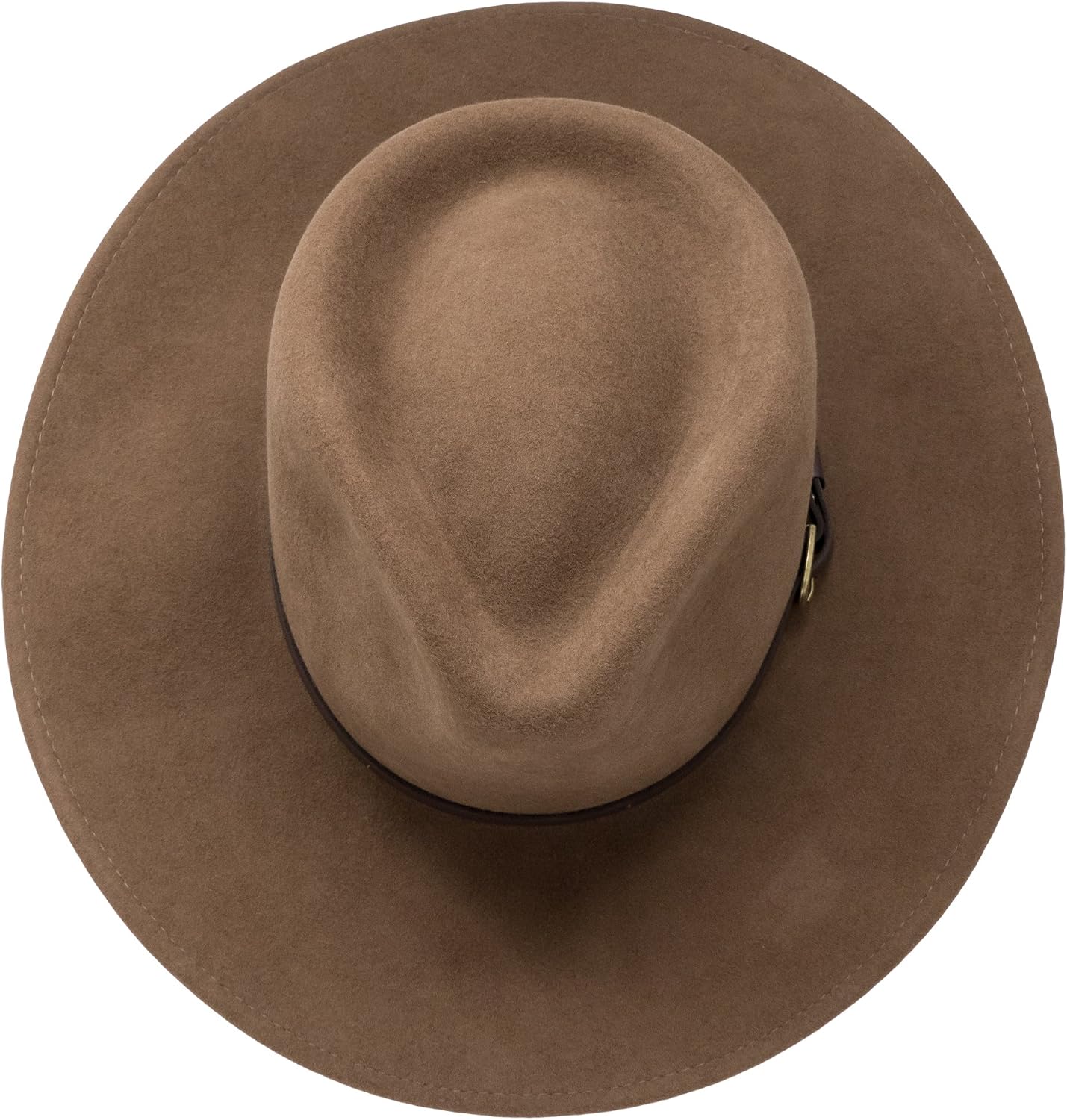
Here’s where editorial honesty requires a specific flag: Bigalli hats are made in Ecuador, not Australia. Several buyers have noted this as a positive differentiator from Chinese-manufactured alternatives, and on pure construction quality that comparison may hold. But for buyers who care about Australian provenance, Ecuador origin is a meaningful distinction. This is not an Australian hat. It draws on the outback silhouette — typically a wide brim and a teardrop crown, a crown shape that tapers slightly toward the top and is associated with classic drover styling — without any connection to Australian manufacturing heritage.
What owners consistently report in favour: the brim arrives with actual shape and holds it without post-purchase intervention, the felt density reads as noticeably superior to cheaper wool alternatives, and the hat seats comfortably on a range of head shapes. For a buyer whose primary need is a credible, wearable outback silhouette at this price point and who has been burned by shapeless imports, Bigalli delivers on the practical brief.
Best for: Style-focused buyers who have already tried and returned cheaper alternatives and want a step up in construction quality without crossing into the fur felt tier.
B&S
$96.95
In stock on Amazon
Check price on AmazonB&S Premium Lewis: The Durability Benchmark in This Tier
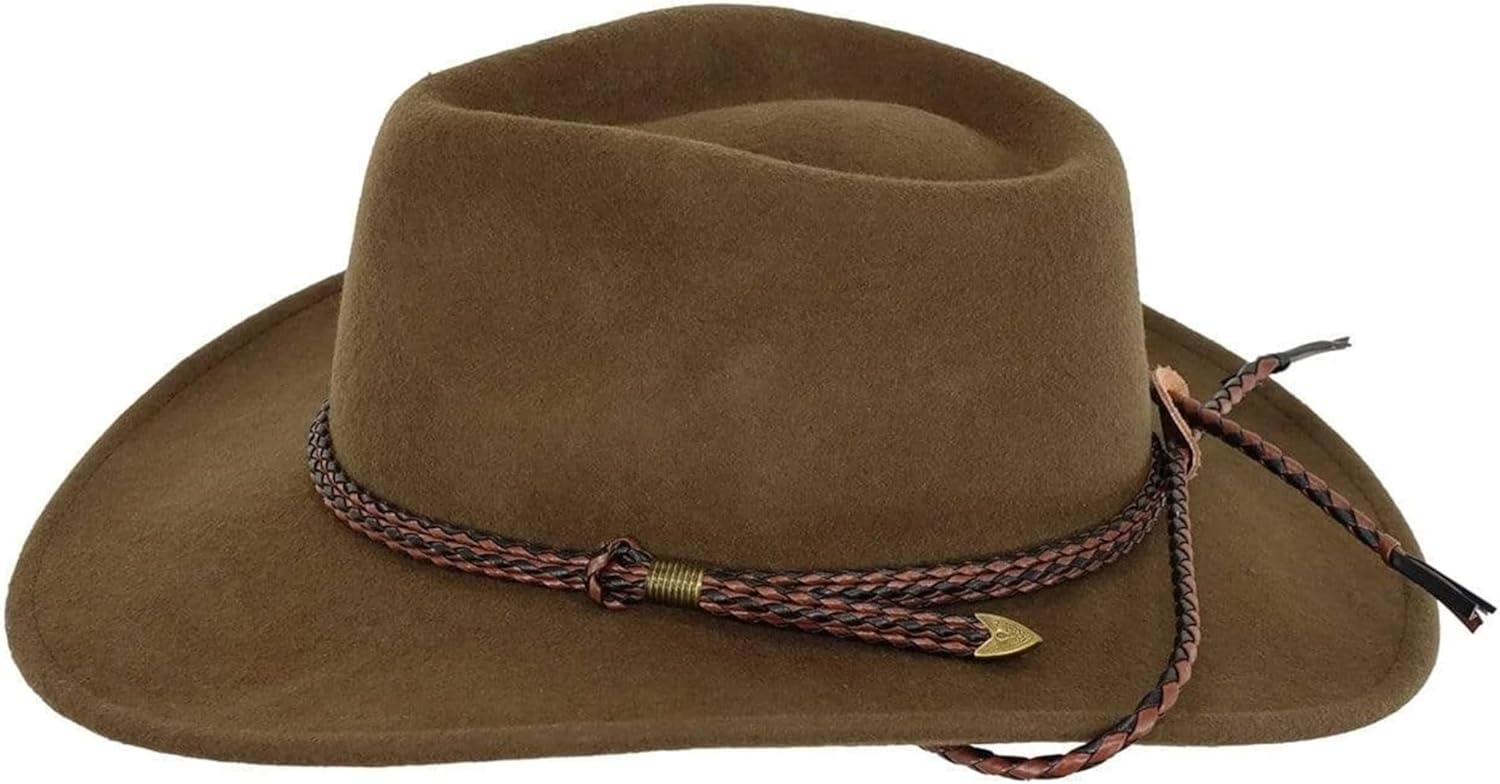
The most specific long-run durability evidence in this price category belongs to the B&S Premium Lewis wool hat. Owner accounts from farm workers who sweat heavily and work daily with animals — conditions that stress both the felt and the sweatband — describe the hat holding up remarkably after a full year of that kind of use. That level of specificity is genuinely unusual for a sub-$150 hat and should carry real weight in any purchase decision.
Outside Online, in their coverage of outdoor work hats, identifies sweat as the primary degradation mechanism for wool felt: salt and moisture weaken the felt structure over time and cause sweatband delamination. A hat that survives a year of heavy daily farm use under those conditions has passed a meaningful real-world test. The B&S Premium Lewis doesn’t generate the aesthetic enthusiasm that Bigalli does among style-focused buyers, but if your use case is genuinely hard outdoor work — station days, equestrian pursuits, high-UV environments — owner evidence suggests it’s the most durability-credible option in this tier.
The decision rule: If you are buying for hard outdoor use or durability above all else, the B&S Premium Lewis has stronger real-world evidence behind it than any other option at this price point.
Best for: Working outdoor buyers who need proven sweat-and-wear durability over aesthetic finish.
B&S
$96.95
In stock on Amazon
Check price on AmazonOztrala HW01: Capable Felt, But Not Ready-to-Wear Out of the Box
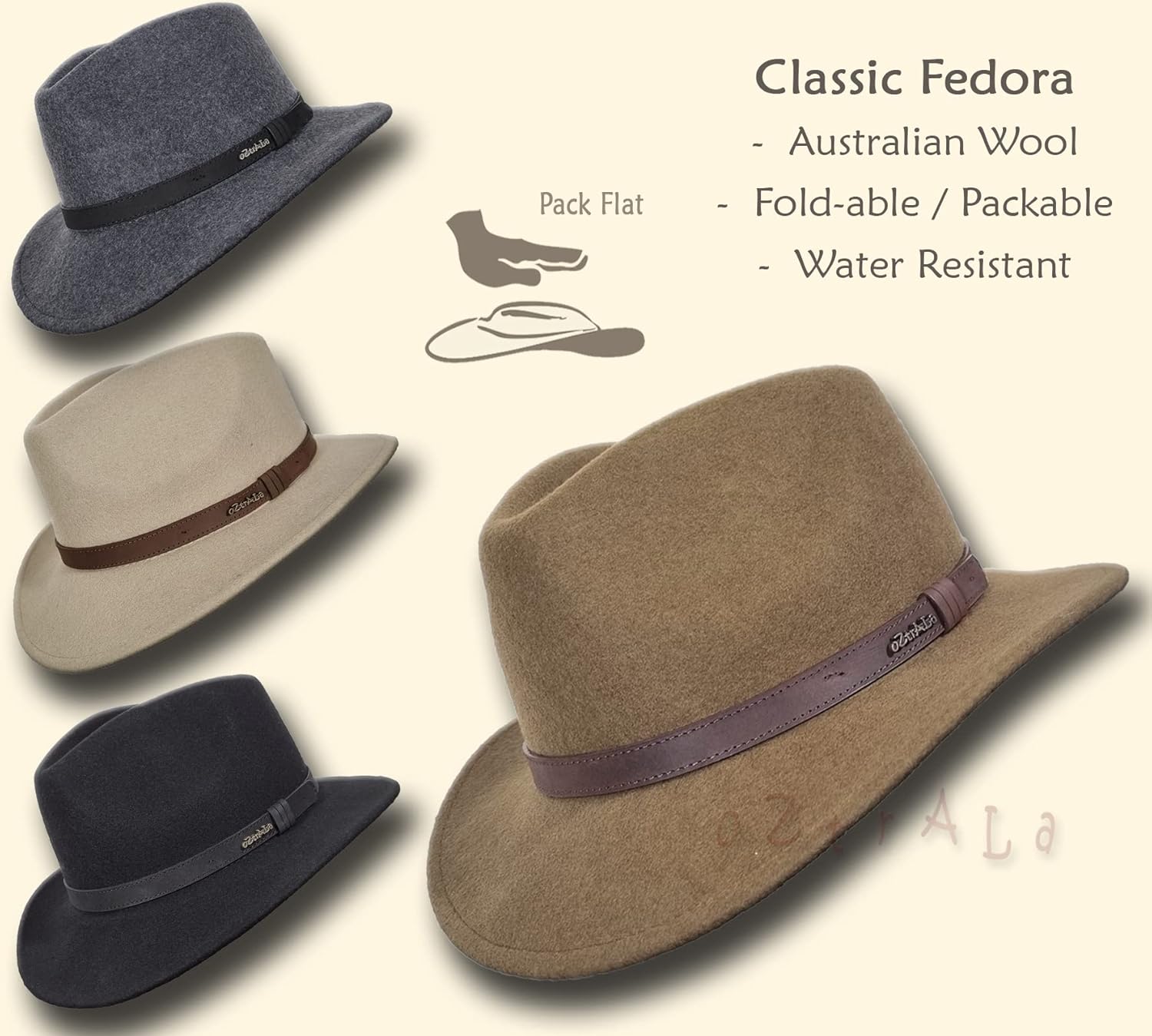
The Oztrala HW01 comes with a specific caveat buried in owner reviews that matters enormously for managing expectations: it does not arrive shaped to a finished outback profile. Owner guidance to use a steam iron and a cushion to reshape the brim — with the confirming note that it holds the shape permanently once properly set — tells you two things simultaneously. First, the wool felt quality is apparently sufficient to hold a shape long-term once correctly steamed and formed. Second, you are buying a hat that requires a post-purchase shaping session before it looks the way the product photography suggests.
For a buyer comfortable with the steam-and-reshape process (it’s approachable with patience and a decent iron), this may represent genuine value — a felt quality that punches above its price point, accessible only if you put in the work. For a buyer who expects a ready-to-wear finished hat, the Oztrala HW01 will disappoint at the exact moment of unboxing. Name the tradeoff clearly and choose accordingly.
Oztrala also runs notably large in sizing. Owner consensus across reviews is consistent: order at least one full size down from your usual measurement. This is not a minor fit quirk — it’s a reliable enough pattern that buying without accounting for it typically produces a hat that won’t seat properly regardless of how well you shape the brim.
Best for: Patient buyers on a tighter budget who are willing to do the shaping work and size down accordingly.
Outback
$79.99
In stock on Amazon
Check price on AmazonStetson Gallatin and Hawk: The Brand Premium, and Its Honest Limits
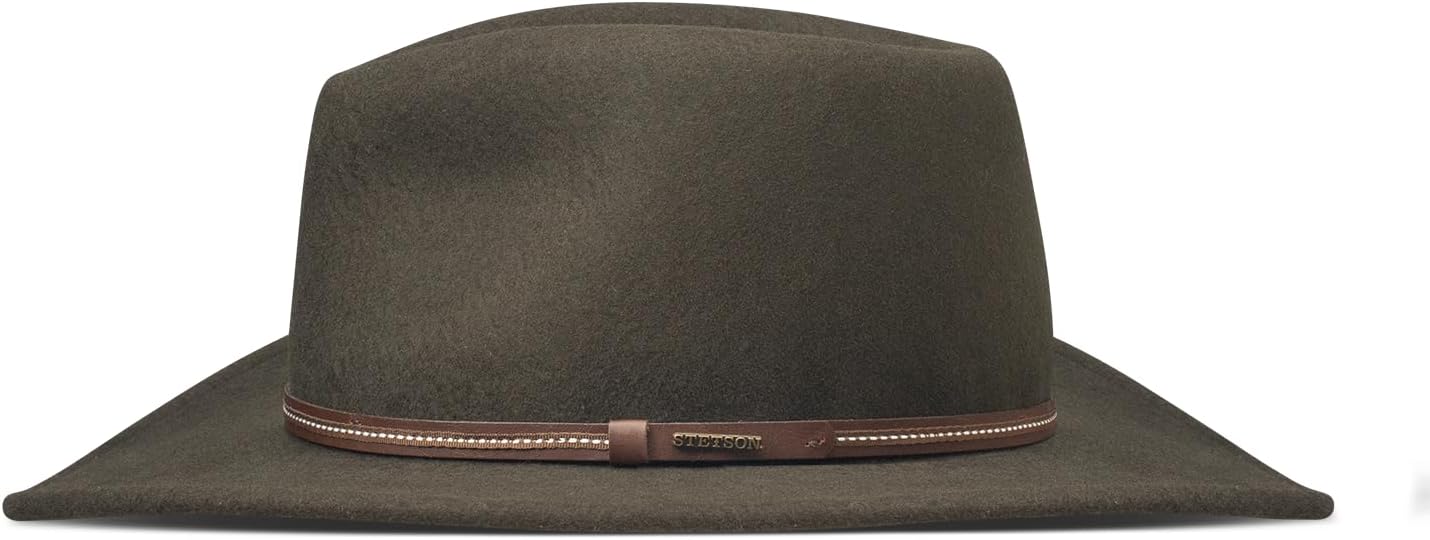
Stetson carries genuine hat-making heritage — the brand’s American lineage in quality felt construction is well-documented — but it’s worth being precise about what that heritage actually delivers at this price point. The Gallatin and Hawk models that appear in the under-$150 tier are not the same category of product as a high-end Stetson fur felt western. They are wool felt hats competing against Bigalli and B&S Premium on construction, not on legacy.
The Gallatin generates the same flat-brim complaint that dogs several hats in this tier: it arrives with minimal brim shape and requires post-purchase effort to achieve the curled profile most buyers are purchasing it for. The Hawk adds a specific seasonal concern from owner reports — wool felt’s insulating properties make it a genuinely warm hat in summer conditions, and buyers in hot climates describe it as uncomfortably warm for extended outdoor wear. Australian Geographic, in their feature “The Akubra: Australia’s Iconic Hat,” consistently emphasises heat management as a primary functional requirement for outback headwear; a hat that retains significant body heat compromises one of the core reasons to wear a wide-brimmed hat in a high-UV environment.
The honest question is whether the Stetson name premium — these models sit toward the upper end of the tier — delivers construction quality that justifies the gap over Bigalli or B&S Premium. Based on aggregated owner reports, the answer is: not reliably. The brand equity is real, but at this price tier it doesn’t translate to meaningfully superior felt density, shape retention, or durability evidence relative to the two brands above.
Best for: Buyers for whom the Stetson name and American heritage carry personal value, and who are not primarily concerned with summer heat performance.
Stetson
$144.99
In stock on Amazon
Check price on AmazonThe Upgrade Question: When Does This Tier Make Sense, and When Should You Save?
Country Life, in their guide “How to Buy a Felt Hat That Lasts,” makes a point that applies directly here: the gap between $150 wool felt and $250 fur felt is not marginal — it’s categorical. If you wear a hat hard for more than three years, the fur felt tier almost certainly returns better value over time. The B&S Premium Lewis durability evidence is the best case for the wool felt tier — a year of strong performance under farm conditions — but there is no equivalent ten-year owner testimony for wool felt at this price point, because the material doesn’t reliably produce it.
Where the under-$150 tier makes genuine sense:
- You need a credible outback silhouette for occasional wear — travel, seasonal events, weekend outdoor use — and don’t need decade-long durability
- You’re new to the category and want to learn what crown shapes and brim widths suit you before committing to a heritage hat
- You have a specific 1–3 year use case (a working season, a long trip) after which the hat’s role changes anyway
Where it doesn’t:
- Daily hard outdoor work beyond 18 months — the felt will show degradation that fur felt absorbs without consequence
- Wet environments — wool felt’s moisture absorption becomes a genuine problem in sustained rain
- You care about Australian manufacturing provenance — nothing in this tier delivers it
Heddels, in “Wool vs Fur Felt Explained,” puts the material difference plainly: fur felt’s fibre compression creates a water-shedding surface that wool felt simply cannot match at equivalent weight. If rain resistance is a primary requirement, the honest advice is to either invest in the fur felt tier or treat this tier as a dry-weather solution.
Frequently Asked Questions
Is Bigalli wool felt actually made in Australia, and does the Ecuador origin affect quality? No — Bigalli hats are made in Ecuador, not Australia. For buyers prioritising Australian provenance, this is a disqualifier. On construction quality relative to Chinese-manufactured competitors at a similar price, owner reviews suggest Bigalli compares favourably. The Ecuador origin appears to reflect genuine craftsmanship investment rather than lowest-cost manufacturing, but it carries no connection to Australian hat-making heritage.
How do I reshape a wool felt brim that arrived flat or misshapen? The standard approach — confirmed by Oztrala owners and consistent with general millinery guidance — is to use a steam iron (not directly on the felt; hold the steam above the surface or use a damp cloth as a barrier) to introduce moisture and heat, then work the brim gently over a curved surface like a cushion or rolled towel to establish the desired curl. Hold the shape while it cools. Wool felt holds a reset shape reasonably well once properly set, provided you allow full cooling before releasing pressure.
Can a $100 wool felt hat hold up to genuine daily farm or outdoor work for more than a year? Based on available owner evidence, the B&S Premium Lewis is the clearest yes in this tier — farm workers with demanding daily conditions report a year of strong performance. That’s the benchmark. Most wool felt hats at this price point don’t generate equivalent long-run durability testimony, which is itself informative about the material’s ceiling.
Why do Oztrala wool felt hats run large — what size should I order? Owner consensus is consistent: order one full size smaller than your usual measurement. The sizing runs large enough that this isn’t a borderline adjustment — it’s reliable guidance across multiple reviews. Measure your head circumference accurately with a tape measure just above your ears and across your forehead, then apply the one-size-down adjustment before ordering.
Is the Stetson brand name worth the premium over Bigalli or B&S Premium at this price point? Based on owner reports, not reliably. Stetson’s heritage is genuine, but the models competing in the sub-$150 wool felt tier don’t translate that heritage into meaningfully superior construction evidence over their direct competitors. If the Stetson silhouette and name matter to you personally, that’s a legitimate reason to choose it. If you’re optimising for durability or shape-retention, the evidence in this tier points elsewhere.